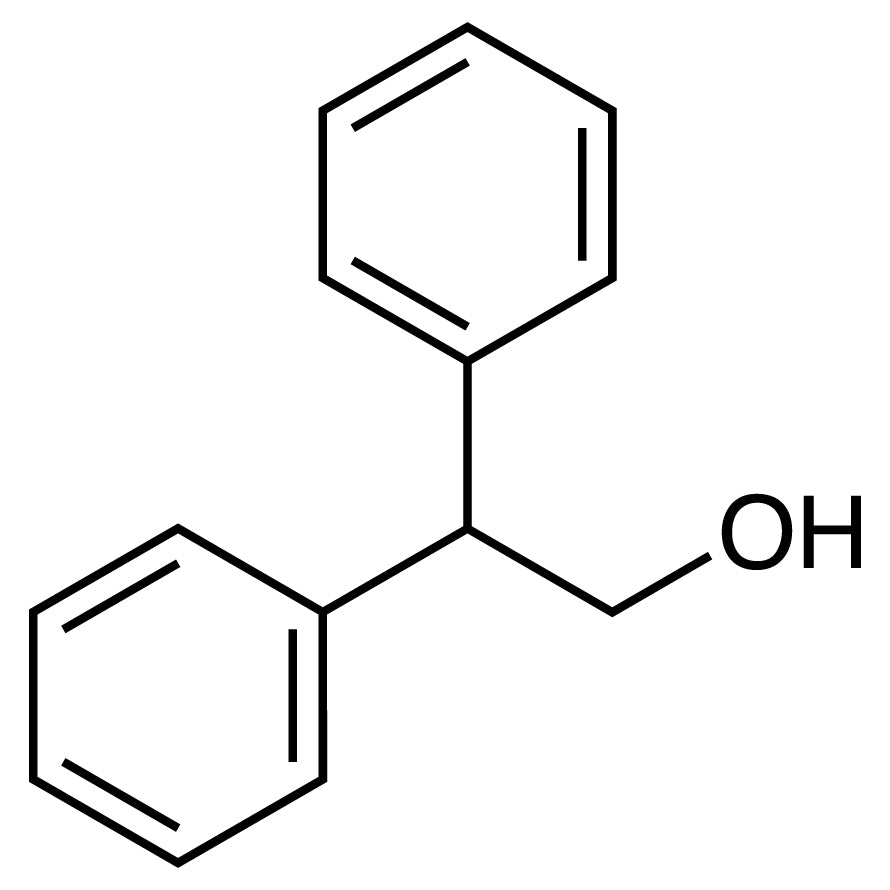
2,2-Diphenylethan-1-ol is an organic compound widely used as a foundational building block in the synthesis of more complex chemical structures. It is commonly encountered in chemical reactions that require a carbon chain with phenyl groups at both ends. In the laboratory, this compound plays a crucial role as a versatile reagent, enabling the development of new compounds across various fields, including pharmaceuticals, industrial chemicals, and organic synthesis. Its presence in research settings underscores its importance in both academic and industrial applications.
The chemical stability and controlled reactivity of 2,2-Diphenylethan-1-ol make it a preferred choice for chemists. These properties allow for predictable outcomes in synthesis processes under specific conditions, enhancing the efficiency of laboratory workflows. Its ability to participate in a range of reactions, such as substitution, oxidation, and reduction, further solidifies its position as a go-to compound for synthetic chemists. The compound’s reliability and consistent performance contribute to its widespread use in both research and educational environments.
In Indonesian laboratories, 2,2-Diphenylethan-1-ol is frequently utilized by researchers and students in organic synthesis and chemical analysis. Its availability in various packaging formats supports both small-scale and larger experimental needs. The ease of access and comprehensive technical information available make it a reliable and popular choice for chemical investigations in the region.
- Organic synthesis: This compound is ideal for constructing complex molecules due to its stable structure and reactivity.
- Pharmaceutical research: It serves as a key intermediate in the development of new drug compounds through synthetic pathways.
- Industrial chemical production: Its utility in creating specialty chemicals makes it valuable for manufacturing processes.
- Analytical chemistry: It is used as a standard in chromatographic and spectroscopic analyses for compound identification.
- Educational experiments: It provides a practical example for teaching fundamental organic chemistry concepts and reaction mechanisms.
| Brand | TCI |
|---|---|
| CAS number | 1883-32-5 |
| Molecular formula | — |
| Purity | — |
| Category | Chemistry > Building Blocks > Non-Heterocyclic Building Blocks |
| Pack sizes | Available in various sizes to suit different laboratory needs |
| Physical form | Liquid |
| Storage | Store in a cool, dry place away from direct sunlight |
This compound should be stored in a cool, dry environment, away from direct sunlight and sources of heat. It is recommended to use airtight containers to prevent exposure to moisture and air, which could affect its stability. Proper labeling of storage containers is essential for safety and identification. In a laboratory setting, it should be handled with appropriate personal protective equipment, including gloves and safety goggles. Due to its chemical nature, it should be kept separate from incompatible substances to avoid potential reactions. Regular inspection of storage conditions ensures the compound remains in optimal condition for use.
—
Produk Terkait
-
1,1-Diphenylethanol TCI D0295
Regular price From Rp 875.700,00Regular price -
2-Bromo-1-phenylethan-1-ol TCI B6616
Regular price Rp 2.518.950,00Regular price -
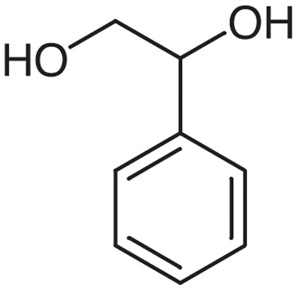
1-Phenylethane-1,2-diol TCI P0686
Regular price From Rp 2.889.600,00Regular price -
2-Methoxy-2-phenylethanol TCI M3426
Regular price From Rp 1.167.600,00Regular price -
2-Chloro-1-phenylethanol TCI C3832
Regular price Rp 3.367.350,00Regular price -
Triphenylene(purifiedbysublimation) TCI T3267
Regular price From Rp 3.367.350,00Regular price -
Triphenylene TCI T0513
Regular price From Rp 848.400,00Regular price -
2-PhenylethylMethylEther TCI P1263
Regular price From Rp 769.650,00Regular price