

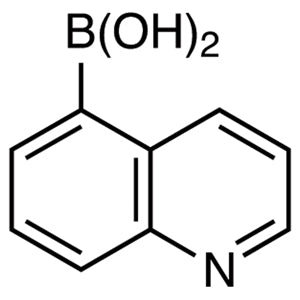
Quinoline-5-boronic Acid is a chemical compound widely used in organic reactions, particularly in the synthesis of heterocyclic compounds and boron-containing substances. This reagent is essential in modern synthetic chemistry due to its unique structure, which combines a boronic acid group with a quinoline ring. Its molecular design enables it to participate in various reaction mechanisms, making it a versatile tool in the laboratory. The presence of boron and the aromatic quinoline framework contribute to its reactivity and compatibility with a range of synthetic strategies.
The compound is known for its stability under controlled conditions and its ability to react with transition metals and organic solvents. Its variable anhydride content enhances its functional versatility, allowing for a broader range of chemical transformations. This characteristic makes it particularly suitable for advanced synthetic applications where reactivity and adaptability are crucial. The compound is also favored for its compatibility with coupling reactions, such as the Suzuki-Miyaura reaction, which is widely used in the synthesis of complex organic molecules.
In Indonesian laboratories, Quinoline-5-boronic Acid is a key reagent in scientific research related to organic synthesis and pharmaceutical development. It is used in the creation of new compounds, drug candidates, and materials with specific chemical properties. Its application is particularly relevant in academic and industrial research settings where high reactivity and flexibility are required. The compound's role in the development of new therapeutic agents and chemical materials underscores its importance in the scientific community.
TCI brochures (PDF)
- Suzuki-Miyaura Cross Coupling Reaction 2025-12-01 · p. 14
- Boron Compounds 2025-10-07 · p. 13
Related TCI products
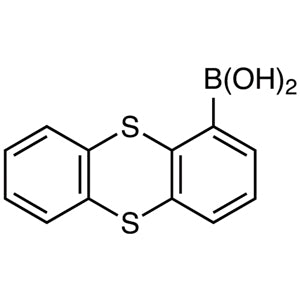
- TCI T3706 108847-76-3 1-Thianthrenylboronic Acid (contains varying amounts of Anhydride)
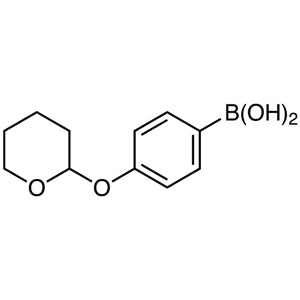
- TCI T3325 182281-01-2 4-(Tetrahydro-2H-pyran-2-yloxy)phenylboronic Acid (contains varying amounts of Anhydride)
- TCI T2621 160032-40-6 Thieno[3,2-b]thiophene-2-boronic Acid (contains varying amounts of Anhydride)
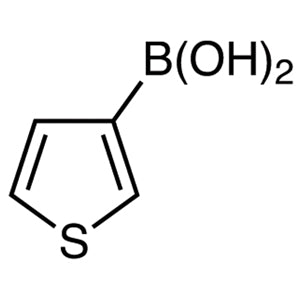
- TCI T1975 6165-69-1 3-Thiopheneboronic Acid (contains varying amounts of Anhydride)
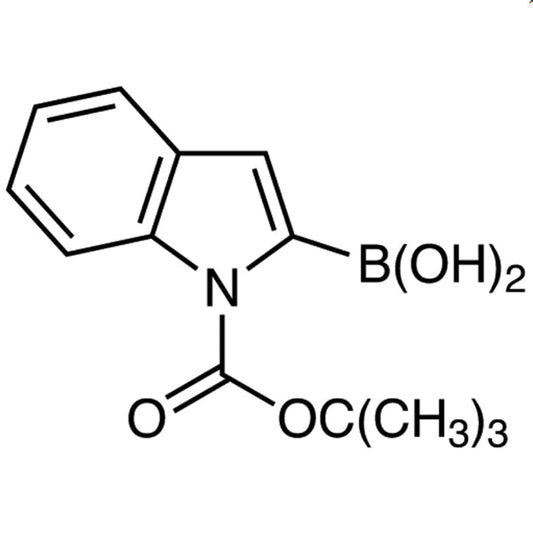
- TCI B5145 213318-44-6 1-(tert-Butoxycarbonyl)indole-2-boronic Acid (contains varying amounts of Anhydride)
- TCI B4774 113893-08-6 Benzo[b]thiophene-3-boronic Acid (contains varying amounts of Anhydride)
- Organic synthesis of heterocyclic compounds due to its boronic acid functionality and quinoline ring structure.
- Coupling reactions like Suzuki-Miyaura for efficient cross-coupling of aromatic and aliphatic substrates.
- Pharmaceutical research for the development of new drugs and bioactive molecules with boron-containing moieties.
- Material science applications in the creation of advanced polymers and functional materials with tailored properties.
- Analytical chemistry for the synthesis of reference compounds and standard reagents in qualitative and quantitative studies.
| Brand | TCI |
|---|---|
| CAS number | 355386-94-6 |
| Molecular formula | — |
| Purity | — |
| Category | Chemistry > Organometallic Reagents > Organoboron [Organometallic Reagents] |
| Pack sizes | Varies based on supplier availability |
| Physical form | Solid or powder, depending on formulation |
| Storage | Store in a cool, dry place away from moisture and direct sunlight |
Quinoline-5-boronic Acid should be stored in a cool, dry environment to maintain its chemical stability. It is recommended to keep the compound in a sealed container to prevent exposure to moisture and air, which can affect its reactivity. Suitable storage containers include glass or polyethylene vessels that are resistant to chemical degradation. In laboratory settings, it is important to handle the compound with appropriate personal protective equipment, such as gloves and safety goggles, to ensure safety during handling. The compound should be stored away from incompatible materials, such as strong oxidizers, to prevent potential chemical interactions. Proper labeling and storage conditions are essential to maintain the integrity and usability of the reagent in research applications.
—
Produk Terkait
-
1-ThianthrenylboronicAcid(containsvaryingamountsofAnhydride) TCI T3706
Regular price From Rp 610.050,00Regular price -
4-(Tetrahydro-2H-pyran-2-yloxy)phenylboronicAcid(containsvaryingamountsofAnhydride) TCI T3325
Regular price From Rp 1.776.600,00Regular price -
Thieno[3,2-b]thiophene-2-boronicAcid(containsvaryingamountsofAnhydride) TCI T2621
Regular price Rp 5.830.650,00Regular price -
3-ThiopheneboronicAcid(containsvaryingamountsofAnhydride) TCI T1975
Regular price From Rp 823.200,00Regular price -
1-(tert-Butoxycarbonyl)indole-2-boronicAcid(containsvaryingamountsofAnhydride) TCI B5145
Regular price Rp 2.411.850,00Regular price -
Benzo[b]thiophene-3-boronicAcid(containsvaryingamountsofAnhydride) TCI B4774
Regular price From Rp 1.220.100,00Regular price -
1,4-Benzodioxane-6-boronicAcid(containsvaryingamountsofAnhydride) TCI B4181
Regular price Rp 3.551.100,00Regular price -
1-(tert-Butoxycarbonyl)-2-pyrroleboronicAcid(containsvaryingamountsofAnhydride) TCI B4063
Regular price From Rp 1.644.300,00Regular price

![160032-40-6 Thieno[3,2-b]thiophene-2-boronic Acid (contains varying amounts of Anhydride) - AMI Scientific](http://amiscientific.com/cdn/shop/files/TCI2510T2621.jpg?v=1768206488&width=533)

![113893-08-6 Benzo[b]thiophene-3-boronic Acid (contains varying amounts of Anhydride) - AMI Scientific](http://amiscientific.com/cdn/shop/files/TCI2510B4774_65b85fee-ce4d-45b9-ad87-4962d8f3452c.jpg?v=1767853515&width=533)

