Rhodanine, with the CAS number 141-84-4, is a chemical compound widely used in laboratory settings for the synthesis of heterocyclic compounds. It plays a crucial role in organic chemistry, particularly in reactions that require high reactivity and stability. This compound is commonly employed as a building block in the creation of molecules with biological activity, making it a valuable tool for researchers in various scientific fields. Its versatility allows it to participate in a range of chemical transformations, including substitution and cyclization reactions, which are essential in the development of pharmaceutical and material science applications.
Rhodanine is favored for its unique chemical properties, including its ability to react with a variety of functional groups. Its high reactivity makes it suitable for complex synthetic pathways, while its stability under certain conditions ensures reliable performance in laboratory experiments. These characteristics make it a preferred choice for chemists working on the synthesis of bioactive compounds. The compound's ability to form stable intermediates further enhances its utility in multi-step organic syntheses, contributing to its widespread use in both academic and industrial research environments.
In Indonesian laboratories, Rhodanine is commonly used in organic chemistry and pharmaceutical research. It is a key component in the development of new drugs and materials, supporting scientific innovation in the region. Its role in synthetic chemistry is essential for advancing research in both academic and applied settings, making it a staple in many laboratory workflows. The compound's reliability and effectiveness have made it a trusted reagent in Indonesian scientific communities.
- Organic synthesis of heterocyclic compounds due to its reactivity and ability to form stable intermediates.
- Pharmaceutical research for the development of bioactive molecules with therapeutic potential.
- Material science applications in the creation of functional polymers and advanced materials.
- Structural chemistry studies for understanding molecular interactions and reaction mechanisms.
- Analytical chemistry as a reference compound for spectroscopic and chromatographic analyses.
| Brand | TCI |
|---|---|
| CAS number | 141-84-4 |
| Molecular formula | — |
| Purity | — |
| Category | Chemistry > Building Blocks > Heterocyclic Building Blocks |
| Pack sizes | Available in various quantities as per standard laboratory supply |
| Physical form | Solid |
| Storage | Store in a cool, dry place away from light and moisture |
Rhodanine should be stored in a cool, dry environment, away from direct light and moisture to maintain its chemical integrity. It is recommended to use airtight containers to prevent exposure to air and humidity, which could affect its stability. Proper labeling of storage containers is essential for safety and traceability. Laboratory personnel should handle the compound with care, using appropriate personal protective equipment such as gloves and safety goggles. While it is generally stable under normal laboratory conditions, it should be kept away from incompatible substances to avoid any potential chemical reactions. Regular monitoring of storage conditions ensures the compound remains suitable for use in research applications.
—
Produk Terkait
-
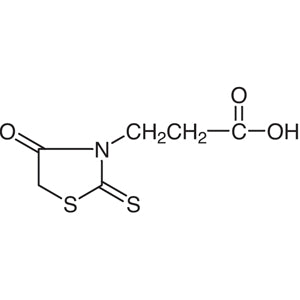
Rhodanine-3-propionicAcid TCI R0060
Regular price Rp 1.670.550,00Regular priceRp 1.183.350,00Sale price Rp 1.670.550,00 -
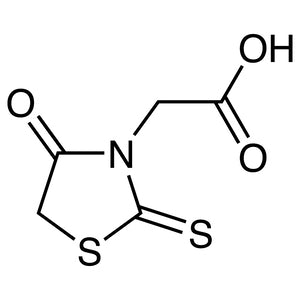
Rhodanine-3-aceticAcid TCI R0054
Regular price From Rp 795.900,00Regular priceRp 572.250,00Sale price From Rp 795.900,00 -
5-[4-(Diethylamino)benzylidene]rhodanine TCI D0464
Regular price From Rp 822.150,00Regular priceRp 590.100,00Sale price From Rp 822.150,00 -
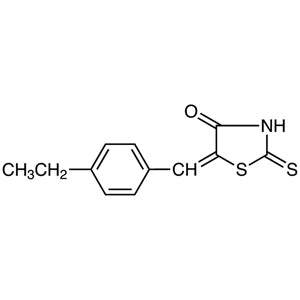
5-(4-Ethylbenzylidene)rhodanine TCI E0959
Regular price Rp 2.359.350,00Regular priceRp 1.665.300,00Sale price Rp 2.359.350,00