


Rhodanine-3-propionic Acid (TCI R0060), with CAS number 7025-19-6, is a chemical compound widely used in organic synthesis reactions within laboratory settings. It serves as a key building block in the development of heterocyclic compounds and complex molecular structures. This compound is particularly valued for its role in facilitating substitution and cyclization reactions, which are essential in synthetic chemistry. Its unique molecular structure, featuring a carbonyl group and a rhodanine ring, makes it a versatile reagent in various chemical processes.
Rhodanine-3-propionic Acid is preferred due to its high reactivity and stability under a range of reaction conditions. Its molecular framework allows for efficient participation in multiple chemical transformations, making it a reliable choice for researchers. The compound’s ability to undergo various functional group modifications enhances its utility in creating diverse chemical derivatives. These properties make it an essential tool in both academic and industrial research environments.
In Indonesian laboratories, Rhodanine-3-propionic Acid is commonly used in the synthesis of new compounds with potential applications in medicine, industry, and environmental science. Its availability in the local market supports ongoing research efforts in pure and applied chemistry. It plays a crucial role in the development of advanced materials and pharmaceutical compounds, contributing to scientific innovation in the region.
Related TCI products
- Organic synthesis applications benefit from Rhodanine-3-propionic Acid's ability to participate in cyclization and substitution reactions, enabling the creation of complex heterocyclic structures.
- Pharmaceutical research utilizes this compound for the development of new drug molecules, leveraging its reactivity in modifying functional groups.
- Material science applications rely on its structural versatility to synthesize advanced polymers and functional materials with specific properties.
- Environmental chemistry studies use it to create compounds for pollutant detection and remediation processes.
- Academic research in chemistry employs it as a standard reagent for teaching and experimentation in synthetic pathways.
| Brand | TCI |
|---|---|
| CAS number | 7025-19-6 |
| Molecular formula | — |
| Purity | — |
| Category | Chemistry > Building Blocks > Heterocyclic Building Blocks |
| Pack sizes | Available in standard laboratory quantities |
| Physical form | Solid powder |
| Storage | Store in a cool, dry place away from direct light |
Rhodanine-3-propionic Acid should be stored in a cool, dry environment to maintain its chemical integrity. It is recommended to keep the compound in a sealed container to prevent moisture absorption and contamination. Due to its reactivity, it should be handled in a well-ventilated area, preferably under a fume hood, to ensure safety. Avoid exposure to strong oxidizing agents or incompatible substances. Always use appropriate personal protective equipment, such as gloves and safety goggles, when handling this material. Proper storage and handling practices are essential to maintain the compound's effectiveness and ensure laboratory safety.
—
Produk Terkait
-
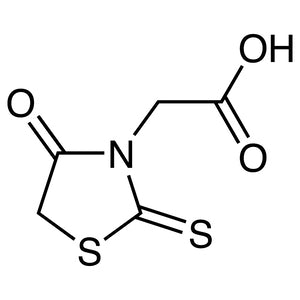
Rhodanine-3-aceticAcid TCI R0054
Regular price From Rp 743.400,00Regular price -
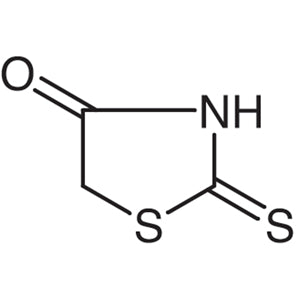
Rhodanine TCI R0017
Regular price From Rp 1.749.300,00Regular price -
5-[4-(Diethylamino)benzylidene]rhodanine TCI D0464
Regular price From Rp 769.650,00Regular price -
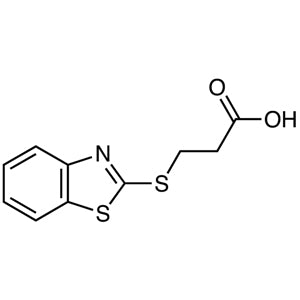
3-(2-Benzothiazolylthio)propionicAcid TCI B1942
Regular price From Rp 955.500,00Regular price -
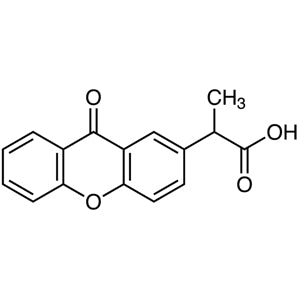
2-(9-Oxoxanthen-2-yl)propionicAcid TCI O0395
Regular price Rp 8.956.500,00Regular price -
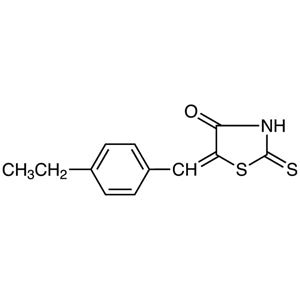
5-(4-Ethylbenzylidene)rhodanine TCI E0959
Regular price Rp 2.306.850,00Regular price -
3-(3-Trifluoromethylphenyl)propionicAcid TCI T2931
Regular price From Rp 795.900,00Regular price -
3-[4-(Trifluoromethyl)phenyl]propionicAcid TCI T2927
Regular price From Rp 557.550,00Regular price
![5-[4-(Diethylamino)benzylidene]rhodanine (CAS 35778-58-6) - TCI D0464 - AMI Scientific](http://amiscientific.com/cdn/shop/files/TCI2510D0464.jpg?v=1767101333&width=533)

![53473-36-2 3-[4-(Trifluoromethyl)phenyl]propionic Acid - AMI Scientific](http://amiscientific.com/cdn/shop/files/TCI2510T2927.jpg?v=1768363503&width=533)