

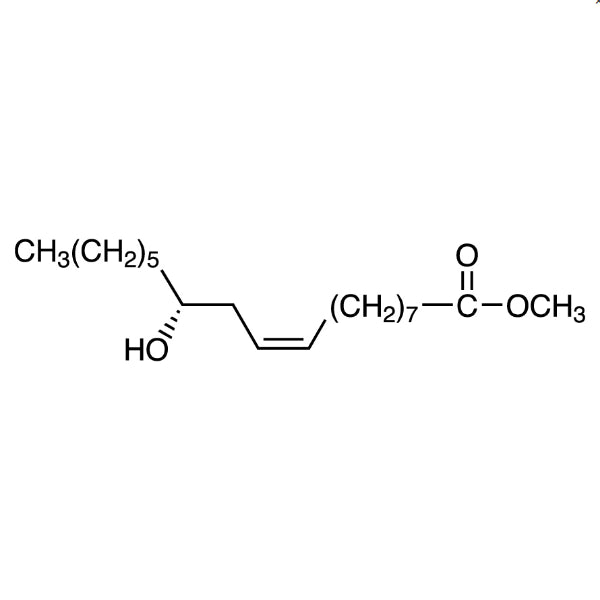
Methyl Ricinoleate is a chemical compound widely used in scientific and industrial applications, particularly in the fields of biochemistry and environmental science. As an ester of ricinoleic acid, which is naturally found in hempseed oil, this compound serves as a key reagent in laboratory settings. Its chemical stability and solubility in organic solvents make it a versatile material for various experimental procedures. In research environments, it is essential for the synthesis of complex compounds, testing biological activities, and studying lipid structures and metabolic processes.
The properties of Methyl Ricinoleate, including its chemical stability and solubility in solvents such as ethyl acetate and chloroform, make it a preferred choice for laboratory use. These characteristics allow it to be easily incorporated into molecular interaction studies, lipid mixture preparations, and enzymatic activity tests. Its non-toxic nature and ease of handling further enhance its appeal for use in research requiring safety and consistency. These attributes contribute to its reliability in both academic and industrial research settings.
In Indonesian laboratories, Methyl Ricinoleate is commonly used in biochemical, pharmacological, and environmental science research. It plays a crucial role in the development of new technologies and the advancement of scientific knowledge. Its relevance extends to research institutions and universities that are actively engaged in innovation and discovery. The compound’s utility in various experimental applications ensures its continued importance in the scientific community.
TCI brochures (PDF)
- Lipids 2025-12-17 · p. 9
- Biochemical Synthesis: Methyl Ricinoleate is ideal for creating complex organic compounds due to its chemical stability and reactivity.
- Biological Activity Testing: It is used to assess the effects of lipid-based compounds on biological systems, supporting pharmacological research.
- Lipid Structure Analysis: Its role in lipid research helps scientists understand the structural and functional properties of biological membranes.
- Enzymatic Reaction Studies: The compound is suitable for testing enzyme activity, offering insights into metabolic pathways and biochemical processes.
- Environmental Toxicology Research: It is employed in studies evaluating the impact of organic compounds on ecosystems and environmental health.
| Brand | TCI |
|---|---|
| CAS number | 141-24-2 |
| Molecular formula | — |
| Purity | — |
| Category | Life Science > Biochemicals and Reagents > Lipids |
| Pack sizes | Available in standard laboratory quantities |
| Physical form | Solid or liquid, depending on formulation |
| Storage | Store in a cool, dry place away from direct sunlight |
Methyl Ricinoleate should be stored in a cool, dry environment to maintain its chemical stability. It is recommended to keep it in airtight containers to prevent exposure to moisture and air, which can affect its integrity. While it is generally non-toxic, standard laboratory safety practices should be followed, including the use of personal protective equipment when handling. Proper labeling and storage conditions ensure the compound remains safe and effective for use in research applications. Regular monitoring of storage conditions helps maintain its quality and usability over time.
—
Product Categories
Produk Terkait
-
ButylRicinoleate TCI R0045
Regular price From Rp 610.050,00Regular priceRp 442.050,00Sale price From Rp 610.050,00 -
MethylO-Acetylricinoleate TCI A0879
Regular price From Rp 900.900,00Regular priceRp 645.750,00Sale price From Rp 900.900,00 -
RicinoleicAcid TCI R0027
Regular price From Rp 557.550,00Regular priceRp 405.300,00Sale price From Rp 557.550,00


