Rotenone is a chemical compound widely used in scientific experiments, particularly in biochemistry and disease research. It plays a crucial role in preparing animal disease models, especially in studies related to oxidative stress and mitochondrial metabolic disorders. This compound is essential for understanding the mechanisms behind neurodegenerative diseases and metabolic conditions. Its ability to inhibit mitochondrial complex I in the electron transport chain makes it a valuable tool for researchers aiming to replicate and study disease pathways in controlled environments.
Rotenone is preferred due to its chemical stability under specific conditions and its effectiveness in interacting with biological systems. It is sensitive to light and moisture, which requires careful handling and storage. Its complex molecular structure enables consistent and measurable biological effects, making it a reliable reagent for various experimental setups. Researchers rely on its predictable behavior to ensure reproducibility in their studies, which is vital for scientific accuracy and progress.
In Indonesian laboratories, rotenone is commonly used in pharmacology, biomedical, and toxicological research. It is integral to experiments involving toxic effect testing on test animals and the study of disease mechanisms. Its application supports both basic and applied research, contributing to advancements in understanding and treating various health conditions. The compound's versatility and reliability make it a key component in the scientific toolkit of Indonesian researchers.
- Oxidative Stress Studies - Rotenone is used to induce oxidative stress in cell cultures to study its effects on cellular function and antioxidant responses.
- Mitochondrial Dysfunction Research - It is a key reagent for investigating mitochondrial impairments and their role in neurodegenerative diseases.
- Toxicological Testing - Rotenone is employed in assessing the toxicity of compounds on animal models, providing insights into potential harmful effects.
- Pharmacological Screening - It is used to evaluate the efficacy of drugs in modulating mitochondrial function and metabolic pathways.
- Disease Model Development - Rotenone helps in creating accurate animal models for studying metabolic and neurodegenerative disorders.
| Brand | TCI |
|---|---|
| CAS number | 83-79-4 |
| Molecular formula | — |
| Purity | — |
| Category | Life Science > Biochemicals and Reagents > Animal Disease Models Preparation |
| Pack sizes | Available in various quantities as per supplier specifications |
| Physical form | Solid powder |
| Storage | Store in a cool, dark place away from light and moisture |
Rotenone should be stored in a cool, dark environment to prevent degradation due to light and moisture exposure. It is recommended to use airtight containers made of glass or inert plastic to maintain its stability. Laboratory personnel should wear appropriate personal protective equipment when handling this compound to ensure safety. Due to its potential toxicity, it should be handled in a fume hood to minimize inhalation risks. Proper labeling and storage conditions are essential to maintain its effectiveness and ensure safe usage in research settings.
—
Product Categories
- Biochemicals and ReagentsAnimal Disease Models PreparationReagents for Central Nervous System Disease Models
- Biochemicals and ReagentsPhenylpropanoids, Aromatic PolyketidesAromatic Polyketides
- Cell BiologyNutrition ResearchAgrochemical Research Reagents (for Experimental Use)
- Cell BiologyNutrition ResearchPhytochemicals
- Cell BiologyMitochondria ResearchMitochondrial Inhibitors
- Molecular BiologyPlant BiotechnologyAgrochemical Research Reagents (for Experimental Use)
Produk Terkait
-
(-)-Epicatechin TCI E1226
Regular price From Rp 2.704.800,00Regular price -
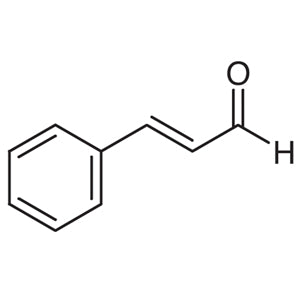
trans-Cinnamaldehyde TCI C0352
Regular price From Rp 477.750,00Regular price -
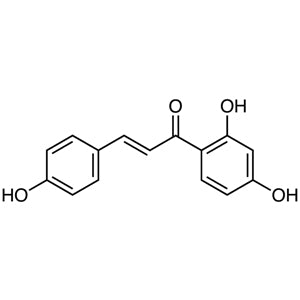
Isoliquiritigenin TCI I0822
Regular price From Rp 1.035.300,00Regular price -
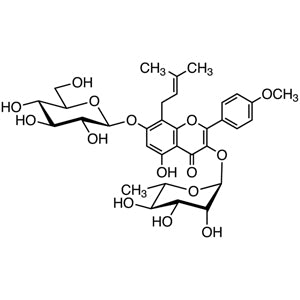
Icariin TCI I0862
Regular price From Rp 1.829.100,00Regular price -
AbieticAcid TCI A0001
Regular price From Rp 1.510.950,00Regular price -
Xanthohumol TCI X0068
Regular price Rp 13.249.950,00Regular price -
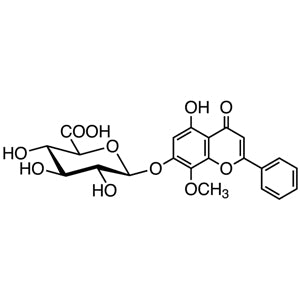
Wogonoside TCI W0012
Regular price From Rp 5.672.100,00Regular price -
Wogonin TCI W0010
Regular price From Rp 4.188.450,00Regular price