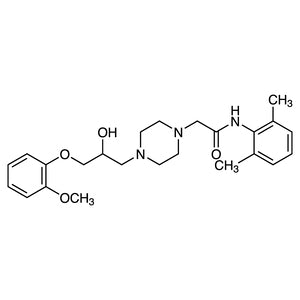
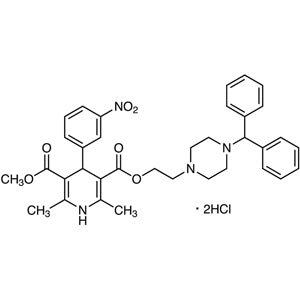
Ranolazine Dihydrochloride (TCI R0112 95635-56-6) is a chemical compound widely used in pharmaceutical research and biochemical studies. It serves as a key reagent in experimental settings where the evaluation of pharmacological effects on biological systems is required. This compound is commonly found in laboratories conducting drug development and mechanism-of-action studies. Its role is critical in understanding how drugs interact with cellular processes and how they can be optimized for therapeutic applications.
Ranolazine Dihydrochloride is valued for its chemical stability and high purity, making it a preferred choice for researchers. It maintains its integrity under specific storage conditions, ensuring consistent results in experiments. Its non-reactive nature in controlled environments simplifies handling and enhances its versatility across various analytical methods. The compound’s reliability and reproducibility make it suitable for high-precision experiments, contributing to the accuracy of scientific findings.
In Indonesian laboratories, Ranolazine Dihydrochloride is frequently used in drug research and pharmacological studies. It plays a vital role in academic and industrial settings where the development of new therapeutic agents is the focus. Its application supports both basic and applied research, helping scientists explore the molecular mechanisms underlying drug efficacy and safety. This compound is essential for institutions aiming to advance pharmaceutical science in the region.
TCI brochures (PDF)
- Pharmaceutical Ingredients for Research and Experimental Use 2026-03-09 · p. 47
- Pharmaceutical Research: Used to evaluate drug efficacy and mechanism of action in cellular and tissue models.
- Biochemical Analysis: Ideal for studying metabolic pathways and enzyme interactions in controlled environments.
- Drug Development: Supports preclinical testing by providing a reliable compound for pharmacological screening.
- Toxicological Studies: Enables assessment of drug toxicity and safety profiles in experimental models.
- Academic Research: Widely used in university labs for teaching and experimental studies in pharmacology and biochemistry.
| Brand | TCI |
|---|---|
| CAS number | 95635-56-6 |
| Molecular formula | — |
| Purity | — |
| Category | Life Science > Biochemicals and Reagents > Pharmaceutical Research Reagents |
| Pack sizes | Available in various quantities suitable for both small and large-scale experiments |
| Physical form | Solid powder |
| Storage | Store in a cool, dry place away from moisture and direct sunlight |
Ranolazine Dihydrochloride should be stored in a cool, dry place, away from moisture and direct sunlight to maintain its chemical stability. It is recommended to use airtight containers to prevent exposure to humidity, which could affect its purity. In laboratory settings, it should be handled with standard safety precautions, including the use of gloves and appropriate ventilation. The compound is non-reactive under normal conditions, making it relatively safe to work with, but care should still be taken to avoid contamination. It is suitable for use in a wide range of analytical techniques, provided it is stored correctly and handled in accordance with standard laboratory protocols.
—
Product Categories
- Biochemicals and ReagentsPharmaceutical Research Reagents (for Experimental Use)Pharmaceutical Research Reagents (Others)
- Cell BiologyCell Signaling and NeuroscienceLipids in Cell Signaling
- Pharmaceutical Development and Drug Discovery ResearchPharmaceutical Research Reagents (for Experimental Use)Pharmaceutical Research Reagents (Others)
Produk Terkait
-
Ranolazine TCI R0247
Regular price From Rp 1.881.600,00Regular priceRp 1.331.400,00Sale price From Rp 1.881.600,00 -
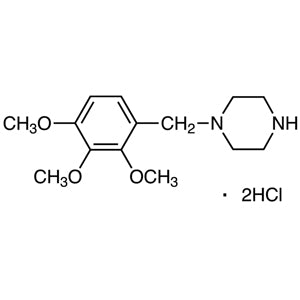
TrimetazidineDihydrochloride TCI T2726
Regular price From Rp 1.538.250,00Regular priceRp 1.090.950,00Sale price From Rp 1.538.250,00 -
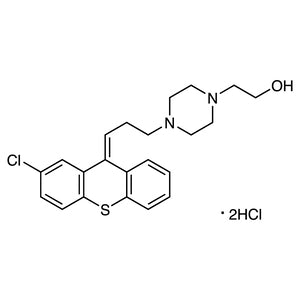
ClopenthixolDihydrochloride TCI C3996
Regular price Rp 4.876.200,00Regular priceRp 3.425.100,00Sale price Rp 4.876.200,00 -
Latanoprost TCI L0262
Regular price From Rp 5.672.100,00Regular priceRp 3.981.600,00Sale price From Rp 5.672.100,00 -
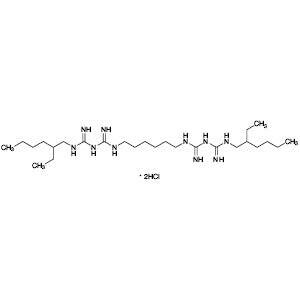
AlexidineDihydrochloride TCI A3389
Regular price From Rp 1.988.700,00Regular priceRp 1.405.950,00Sale price From Rp 1.988.700,00 -
PirenzepineDihydrochloride TCI P2457
Regular price From Rp 1.908.900,00Regular priceRp 1.350.300,00Sale price From Rp 1.908.900,00 -
ManidipineDihydrochloride TCI M2225
Regular price Rp 5.883.150,00Regular priceRp 4.129.650,00Sale price Rp 5.883.150,00 -
TrifluoperazineDihydrochloride TCI T2849
Regular price From Rp 2.147.250,00Regular priceRp 1.517.250,00Sale price From Rp 2.147.250,00