Rubusoside is a chemical compound classified under glycosides, known for its complex molecular structure and significant role in chemical biology research. As a natural product derived from certain plant extracts, particularly those of the Rubus genus, it is widely utilized in laboratory settings for its biological activity and chemical versatility. This compound is essential in various biochemical studies, where it serves as a key component in the synthesis of other compounds or as a control material in biological assays. Its presence in natural sources makes it a valuable resource for researchers exploring the pharmacological potential of plant-derived substances.
The unique chemical properties of Rubusoside make it a preferred choice in scientific research. It exhibits high purity and stability, ensuring reliable results in experimental procedures. Its solubility in organic solvents facilitates easy handling and analysis, making it suitable for a wide range of laboratory applications. Additionally, Rubusoside’s ability to interact with other molecules and its controlled reactivity contribute to its effectiveness in various biochemical processes. These characteristics make it a sought-after compound for studies involving antioxidant, antitumor, and antibacterial activities.
In Indonesian laboratories, Rubusoside is commonly used in chemical biology and pharmacology research. Scientists in Indonesia rely on this compound to explore the potential of natural substances in drug development and therapeutic applications. Its availability and consistent quality support ongoing research efforts aimed at discovering new treatments and understanding the mechanisms of natural compounds. As a result, Rubusoside remains a critical material in the scientific community’s pursuit of innovative medical solutions.
TCI brochures (PDF)
- Obesity_Diabete Research Reagents 2026-07-10 · p. 1
- Terpenes 2025-09-22 · p. 8
- Antioxidant Activity Testing – Rubusoside is ideal for assessing the antioxidant properties of natural compounds due to its stability and solubility in organic solvents.
- Antitumor Compound Synthesis – Its complex molecular structure makes it a valuable starting material for the synthesis of potential antitumor agents.
- Antibacterial Research – Rubusoside’s chemical versatility allows it to be used in studies evaluating its antibacterial effects against various microbial strains.
- Phytochemical Analysis – Its presence in plant extracts makes it suitable for analyzing the chemical composition of natural products.
- Pharmacological Screening – Rubusoside serves as a control material in biological assays to evaluate the efficacy of new drug candidates.
| Brand | TCI |
|---|---|
| CAS number | 64849-39-4 |
| Molecular formula | — |
| Purity | — |
| Category | Chemistry > Chemical Biology > Glycoscience |
| Pack sizes | Available in various quantities as per standard laboratory supply |
| Physical form | Solid or powder, depending on the specific product variant |
| Storage | Store in a cool, dry place away from direct sunlight |
Rubusoside should be stored in a cool, dry environment to maintain its stability and prevent degradation. It is recommended to keep it in airtight containers to minimize exposure to moisture and air. Due to its chemical properties, it is important to handle it with appropriate personal protective equipment, such as gloves and safety goggles, to ensure laboratory safety. While it is generally stable under normal storage conditions, it should be kept away from incompatible substances to avoid any unwanted reactions. Proper labeling and storage practices are essential to ensure the integrity of the compound and the safety of laboratory personnel.
—
Product Categories
- GlycoscienceFunctional OligosaccharidesNatural Glycosides [Functional Oligosaccharides]
- GlycoscienceMonosaccharides [Glycoscience]Glucoses [Glycoscience]
- Biochemicals and ReagentsCrude Medicine Ingredients for Research and Experimental Use
- Biochemicals and ReagentsTerpenesDiterpenes
- Cell BiologyNutrition ResearchPhytochemicals
- Cell BiologyNutrition ResearchSweetener Research Reagents (for Experimental Use)
- Cell BiologyObesity and Diabetes ResearchSweetener Research Reagents (for Experimental Use)
- Pharmaceutical Development and Drug Discovery ResearchCrude Medicine Ingredients for Research and Experimental Use
Produk Terkait
-
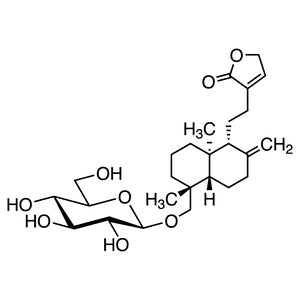
Neoandrographolide TCI N1127
Regular price Rp 8.850.450,00Regular priceRp 6.204.450,00Sale price Rp 8.850.450,00 -
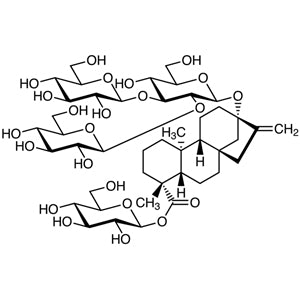
Stevioside TCI S0594
Regular price Rp 2.730.000,00Regular priceRp 1.924.650,00Sale price Rp 2.730.000,00 -
RebaudiosideA TCI R0095
Regular price From Rp 1.881.600,00Regular priceRp 1.331.400,00Sale price From Rp 1.881.600,00 -
Paeoniflorin TCI P1876
Regular price Rp 4.611.600,00Regular priceRp 3.240.300,00Sale price Rp 4.611.600,00 -
LoganicAcid TCI L0323
Regular price Rp 8.613.150,00Regular priceRp 6.038.550,00Sale price Rp 8.613.150,00 -
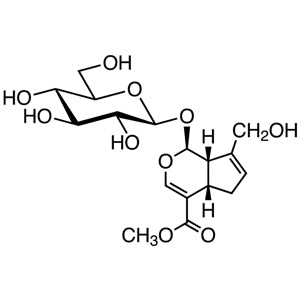
Geniposide TCI G0385
Regular price From Rp 1.881.600,00Regular priceRp 1.331.400,00Sale price From Rp 1.881.600,00 -
Arbutin TCI A0522
Regular price From Rp 505.050,00Regular priceRp 368.550,00Sale price From Rp 505.050,00 -
PotengriffiosideA TCI T4196
Regular price Rp 7.897.050,00Regular priceRp 5.537.700,00Sale price Rp 7.897.050,00