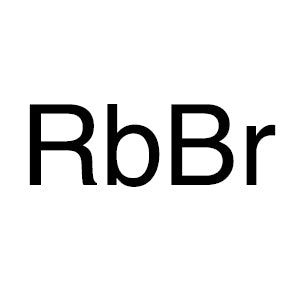
Rubidium Bromide (RbBr) is a solid chemical compound widely used in laboratory settings for its versatile applications in chemical reactions and catalytic processes. As a metallic salt, it exhibits ionic properties that enhance its reactivity in various chemical environments. This compound is commonly utilized as a catalyst or reactant in the synthesis of both organic and inorganic compounds. Its role extends to pH regulation and as an auxiliary in redox reactions, making it an essential component in many experimental protocols.
The physical and chemical properties of RbBr make it a preferred choice for laboratory use. It is highly soluble in water and has a high melting point, allowing it to remain stable under a wide range of reaction conditions. These characteristics enable its use in diverse chemical processes without significant degradation. Additionally, its ionic nature allows it to act as a bromide ion source in chemical reactions, enhancing its utility in both basic and advanced experiments.
In Indonesian laboratories, Rubidium Bromide is frequently employed in chemical research, particularly in catalysis and compound synthesis. It is a common reagent in both undergraduate and postgraduate experiments, supporting a wide range of chemical investigations. Its availability in solid form and ease of handling make it a practical and reliable choice for researchers and students alike. Its presence in laboratory supplies underscores its importance in maintaining the quality and efficiency of chemical experiments in Indonesia.
TCI brochures (PDF)
- Metallic Salts 2025-11-06 · p. 4
Related TCI products
- TCI T3573 10031-24-0 Tin(II) Bromide [for Perovskite precursor]
- TCI L0346 10031-22-8 Lead(II) Bromide (Low water content) [for Perovskite precursor]
- TCI L0288 10031-22-8 Lead(II) Bromide [for Perovskite precursor]
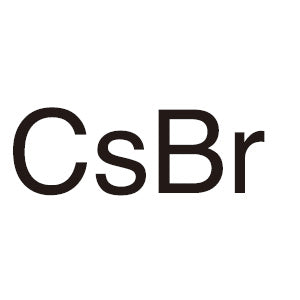
- TCI C2202 7787-69-1 Cesium Bromide
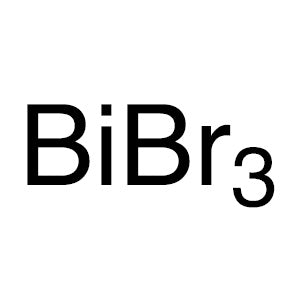
- TCI B6339 7787-58-8 Bismuth(III) Bromide
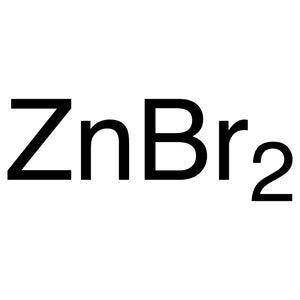
- TCI Z0013 7699-45-8 Zinc Bromide
- Catalytic Reactions: Rubidium Bromide is used in catalytic processes due to its ability to facilitate chemical reactions by providing bromide ions, which can act as nucleophiles or participate in redox mechanisms.
- Organic Synthesis: It serves as a reagent in the synthesis of organic compounds, particularly in reactions where bromide ions are required for substitution or elimination processes.
- Inorganic Chemistry Experiments: Its ionic nature makes it suitable for inorganic reactions, where it can act as a source of bromide ions or participate in precipitation reactions.
- pH Regulation: Due to its solubility in water, RbBr is used to adjust the pH of aqueous solutions, which is critical in many analytical and preparative procedures.
- Redox Reactions: It functions as a reagent in redox experiments, where bromide ions can be oxidized or reduced, influencing the reaction pathway and product formation.
| Brand | TCI |
|---|---|
| CAS number | 7789-39-1 |
| Molecular formula | — |
| Purity | — |
| Category | Chemistry > Catalysis and Inorganic Chemistry > Metallic Salts |
| Pack sizes | Available in standard laboratory quantities |
| Physical form | Solid |
| Storage | Store in a cool, dry place away from moisture and light |
Rubidium Bromide should be stored in a cool, dry place, away from moisture and direct light to maintain its chemical integrity. It is recommended to use airtight containers to prevent exposure to humidity, which can affect its solubility and reactivity. As an ionic compound, it is generally stable under normal laboratory conditions but should be handled with care to avoid contamination. Proper labeling and storage in a designated chemical storage area are essential to ensure safety and prevent accidental exposure. Always use appropriate personal protective equipment when handling this compound to minimize risk.
—
Product Categories
Produk Terkait
-
Tin(II)Bromide[forPerovskiteprecursor] TCI T3573
Regular price From Rp 1.565.550,00Regular priceRp 1.094.100,00Sale price From Rp 1.565.550,00 -
Lead(II)Bromide(Lowwatercontent)[forPerovskiteprecursor] TCI L0346
Regular price From Rp 1.115.100,00Regular priceRp 779.100,00Sale price From Rp 1.115.100,00 -
Lead(II)Bromide[forPerovskiteprecursor] TCI L0288
Regular price From Rp 689.850,00Regular priceRp 481.950,00Sale price From Rp 689.850,00 -
CesiumBromide TCI C2202
Regular price From Rp 2.466.450,00Regular priceRp 1.724.100,00Sale price From Rp 2.466.450,00 -
Bismuth(III)Bromide TCI B6339
Regular price From Rp 769.650,00Regular priceRp 537.600,00Sale price From Rp 769.650,00 -
ZincBromide TCI Z0013
Regular price From Rp 610.050,00Regular priceRp 426.300,00Sale price From Rp 610.050,00 -
StrontiumBromide TCI T4155
Regular price From Rp 2.359.350,00Regular priceRp 1.649.550,00Sale price From Rp 2.359.350,00 -
Thallium(I)Bromide TCI T4083
Regular price From Rp 2.862.300,00Regular priceRp 2.001.300,00Sale price From Rp 2.862.300,00