![10031-22-8 Lead(II) Bromide (Low water content) [for Perovskite precursor] - AMI Scientific](http://amiscientific.com/cdn/shop/files/TCI2510L0346.jpg?v=1767121754&width=1946)
![10031-22-8 Lead(II) Bromide (Low water content) [for Perovskite precursor] - AMI Scientific](http://amiscientific.com/cdn/shop/files/TCI2510L0346.jpg?v=1767121754&width=1445)
Lead(II) Bromide (PbBr₂) is an inorganic compound widely used in chemical reactions, particularly in the synthesis of complex compounds such as perovskites. As a metallic salt, it plays a crucial role in catalysis and inorganic chemistry, serving as a foundational material in the preparation of perovskite precursors. In laboratory settings, PbBr₂ is essential for creating high-quality perovskite materials, which are vital for organic solar cells and optoelectronic devices. Its chemical stability under controlled conditions makes it a reliable component in advanced chemical processes.
The low water content of PbBr₂ makes it a preferred choice for applications requiring high purity and minimal contamination. This property ensures that the material remains chemically stable and maintains its integrity during synthesis processes. Its sensitivity to moisture also means it must be handled with care to prevent degradation, making it ideal for use in research environments where precision and consistency are critical. The combination of chemical stability and low moisture content enhances its effectiveness in scientific experiments.
In Indonesian laboratories, PbBr₂ is commonly used in material and inorganic chemistry research. It supports the development of local technology, especially in renewable energy and electrochemistry. Researchers and students at various higher education institutions rely on PbBr₂ as a key reagent in scientific experiments, contributing to advancements in both academic and industrial applications.
- Perovskite Precursor Synthesis: PbBr₂ is used to create perovskite materials, which are essential for solar cell and optoelectronic device development.
- Inorganic Chemistry Research: It serves as a metallic salt in various chemical reactions, supporting the study of complex inorganic compounds.
- Semiconductor Material Preparation: PbBr₂ is integral in the production of semiconductor materials, which have applications in advanced electronic technologies.
- Electrochemical Studies: It is used in electrochemical experiments to investigate the behavior of materials under different conditions.
- High-Purity Chemical Processes: Its low water content makes it suitable for applications requiring minimal contamination and high chemical purity.
| Brand | TCI |
|---|---|
| CAS number | 10031-22-8 |
| Molecular formula | — |
| Purity | — |
| Category | Chemistry > Catalysis and Inorganic Chemistry > Metallic Salts |
| Pack sizes | — |
| Physical form | Solid |
| Storage | Store in a dry, cool, and well-ventilated area, away from moisture and heat. |
Lead(II) Bromide should be stored in a dry, cool, and well-ventilated area to prevent moisture absorption, which can lead to degradation. It is recommended to use airtight containers made of materials that are chemically inert, such as glass or polyethylene, to ensure long-term stability. Handling should be done with appropriate personal protective equipment, including gloves and safety goggles, to avoid direct contact. Due to its sensitivity to moisture, it is crucial to maintain a controlled environment during storage and use. Always ensure that the material is kept away from sources of heat and direct sunlight to preserve its chemical integrity. Proper storage and handling are essential to maintain the quality and effectiveness of PbBr₂ in laboratory applications.
—
Produk Terkait
-
TCI B5774 5,10-Bis(4,4,5,5-tetramethyl-1,3,2-dioxaborolan-2-yl)naphtho[1,2-c:5,6-c']bis([1,2,5]oxadiazole)
Regular price Rp 10.255.350,00Regular price -
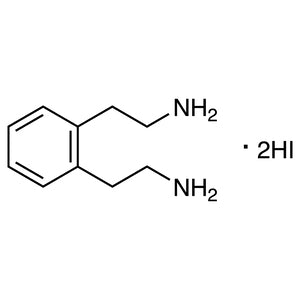
Dihydroiodide TCI B6569
Regular price From Rp 1.936.200,00Regular price -
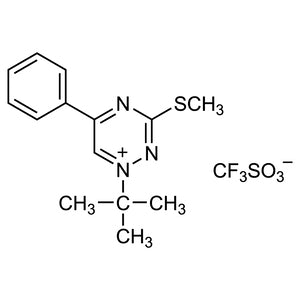
Trifluoromethanesulfonate TCI B7003
Regular price From Rp 1.936.200,00Regular price
![5,10-Bis(4,4,5,5-tetramethyl-1,3,2-dioxaborolan-2-yl)naphtho[1,2-c:5,6-c']bis([1,2,5]oxadiazole) - TCI B5774 - AMI Scientific](http://amiscientific.com/cdn/shop/files/TCI2510B5774.jpg?v=1769180228&width=533)