Cesium Lead Tribromide (CsPbBr₃) is an inorganic compound known for its unique crystalline structure and intriguing optical properties. This material plays a crucial role in modern laboratory research, particularly in physical chemistry and materials science. It is widely used as a catalyst in chemical reactions that require electrostatic activation or molecular interaction. Its versatility makes it an essential component in various scientific investigations. Due to its optical characteristics, CsPbBr₃ is also utilized in the development of advanced materials and photovoltaic technologies.
CsPbBr₃ is prized for its chemical stability under specific conditions and its low water content, which enhances its usability in high-purity environments. The compound exhibits good solubility in organic solvents, making it suitable for a wide range of synthesis processes. Its well-ordered crystalline structure facilitates detailed analysis using techniques like X-ray diffraction. These properties make it a preferred choice for researchers working on nanomaterials and optoelectronic applications.
In Indonesian laboratories, CsPbBr₃ is commonly used in experiments related to the synthesis of new materials and molecular structure characterization. Its low moisture content ensures reliability in cleanroom environments, while its solubility in organic solvents supports diverse chemical reactions. Researchers in both academic and industrial settings rely on its consistent performance and compatibility with various analytical techniques.
Advantages (TCI brochure)
- Low water content
TCI brochures (PDF)
- Zinc Compound to Enhance the Efficiency of Perovskite Solar Cells (C6F5)2Zn 2025-08-25 · p. 1
- Organic-Inorganic Perovskite Precursors 2026-09-01 · p. 7
- Solar Cell Materials 2026-04-21 · p. 4
- Metallic Salts 2025-11-06 · p. 4
Related TCI products
- TCI C3570 18041-25-3 Cesium Lead Triiodide (Low water content)
- TCI L0346 10031-22-8 Lead(II) Bromide (Low water content) [for Perovskite precursor]
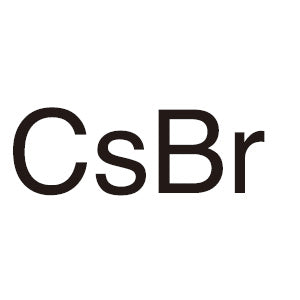
- TCI C2202 7787-69-1 Cesium Bromide
- TCI C2205 7789-17-5 Cesium Iodide
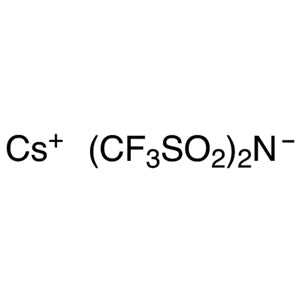
- TCI C3264 91742-16-4 Cesium(I) Bis(trifluoromethanesulfonyl)imide
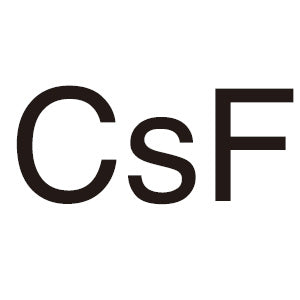
- TCI C2204 13400-13-0 Cesium Fluoride
- Used in physical chemistry experiments for studying molecular interactions and electrostatic activation due to its catalytic properties.
- Applied in nanomaterial synthesis for creating high-quality inorganic compounds with controlled crystalline structures.
- Utilized in photovoltaic research for its ability to absorb light in specific spectral ranges, aiding in solar cell development.
- Employed in material characterization studies for its compatibility with X-ray diffraction analysis and other structural analysis techniques.
- Incorporated in advanced chemical synthesis processes for its solubility in organic solvents and stability under controlled laboratory conditions.
| Brand | TCI |
|---|---|
| CAS number | 15243-48-8 |
| Molecular formula | — |
| Purity | — |
| Category | Chemistry > Catalysis and Inorganic Chemistry > Main-group Elements |
| Pack sizes | Available in various quantities as per supplier specifications |
| Physical form | Solid |
| Storage | Store in a dry, cool, and dark place away from moisture and oxidizing agents |
CsPbBr₃ should be stored in a dry, cool, and dark environment to prevent moisture absorption and degradation. It is recommended to use airtight containers made of glass or inert plastic to maintain its low water content. Due to its sensitivity to oxidation, it should be kept away from strong oxidizing agents and moisture sources. In laboratory settings, it is important to handle the compound with care, using appropriate personal protective equipment. Regular monitoring of storage conditions ensures the material remains stable and suitable for scientific use. Proper labeling and segregation from incompatible substances are essential for safe handling and long-term preservation.
—
Product Categories
- Catalysis and Inorganic ChemistryMain-group Elements [Catalysis and Inorganic Chemistry]Cesium [Catalysis and Inorganic Chemistry]
- Catalysis and Inorganic ChemistryMain-group Elements [Catalysis and Inorganic Chemistry]Lead [Catalysis and Inorganic Chemistry]
- Catalysis and Inorganic ChemistryMetallic Salts [Catalysis and Inorganic Chemistry]Bromide Salts [Metallic Salts]
Produk Terkait
-
CesiumLeadTriiodide(Lowwatercontent) TCI C3570
Regular price From Rp 1.483.650,00Regular priceRp 1.053.150,00Sale price From Rp 1.483.650,00 -
Lead(II)Bromide(Lowwatercontent)[forPerovskiteprecursor] TCI L0346
Regular price From Rp 1.115.100,00Regular priceRp 779.100,00Sale price From Rp 1.115.100,00 -
CesiumBromide TCI C2202
Regular price From Rp 2.466.450,00Regular priceRp 1.724.100,00Sale price From Rp 2.466.450,00 -
CesiumIodide TCI C2205
Regular price From Rp 848.400,00Regular priceRp 2.072.700,00Sale price From Rp 848.400,00Sale -
Cesium(I)Bis(trifluoromethanesulfonyl)imide TCI C3264
Regular price Rp 2.384.550,00Regular priceRp 1.683.150,00Sale price Rp 2.384.550,00 -
CesiumFluoride TCI C2204
Regular price From Rp 1.803.900,00Regular priceRp 1.261.050,00Sale price From Rp 1.803.900,00 -
CesiumCarbonate TCI C2160
Regular price From Rp 1.378.650,00Regular priceRp 979.650,00Sale price From Rp 1.378.650,00 -
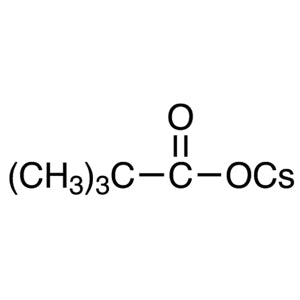
CesiumPivalate TCI C3230
Regular price From Rp 1.193.850,00Regular priceRp 834.750,00Sale price From Rp 1.193.850,00