


Salicylaldoxime is a chemical compound widely used in laboratory settings for its ability to form complexes with heavy metals such as lead, mercury, and tin. This reagent plays a critical role in qualitative and quantitative analysis, particularly in the separation and identification of metal ions from complex mixtures. Its unique chemical structure allows it to bind strongly to metal ions, making it an essential tool in analytical chemistry. In Indonesian laboratories, it is frequently used to isolate metals from environmental samples, supporting research in environmental and chemical analysis.
The compound is valued for its chemical stability and reactivity towards a variety of metal ions. Its ability to form stable complexes with heavy metals ensures accurate and reliable results in analytical procedures. The molecular structure of Salicylaldoxime enables it to act as a selective ligand, enhancing the efficiency of metal separation processes. These properties make it a preferred choice for researchers and analysts who require precise and reproducible outcomes in their experiments.
In Indonesian laboratories, Salicylaldoxime is commonly used in chemical research and environmental analysis. It is a standard reagent in many academic and research institutions, supporting studies that require the detection and quantification of heavy metals in various samples. Its reliability and effectiveness have made it a staple in both teaching and applied research environments, contributing to the advancement of analytical techniques in the region.
- Heavy Metal Qualitative Analysis: Salicylaldoxime is used to detect the presence of heavy metals in environmental samples due to its ability to form stable complexes with metal ions.
- Lead Isolation from Chemical Mixtures: It is employed in chemical reactions to separate lead from complex mixtures, facilitating accurate identification and quantification.
- Environmental Sample Analysis: The compound is widely used in laboratories to analyze heavy metal contamination in soil and water samples, supporting environmental research.
- Chemical Research in Academic Institutions: It is a common reagent in university and research labs for studying metal-ligand interactions and complex formation.
- Metal Ion Identification in Analytical Chemistry: Its strong binding properties make it ideal for identifying specific metal ions in analytical procedures.
| Brand | TCI |
|---|---|
| CAS number | 94-67-7 |
| Molecular formula | — |
| Purity | — |
| Category | Chemistry > Building Blocks > Non-Heterocyclic Building Blocks |
| Pack sizes | Available in various quantities as per standard laboratory supply |
| Physical form | Solid |
| Storage | Store in a cool, dry place away from direct sunlight and moisture |
Salicylaldoxime should be stored in a cool, dry environment to maintain its chemical stability. It is recommended to keep it in a tightly sealed container to prevent exposure to moisture and air. Due to its reactivity with certain metals, it should be handled with care in laboratory settings. Avoid contact with strong acids or bases to prevent unwanted chemical reactions. Proper labeling and storage in a designated chemical storage area are essential for safety. Always use appropriate personal protective equipment when handling this compound to ensure laboratory safety.
—
Produk Terkait
-
3,5-Dibromosalicylaldoxime TCI D0210
Regular price Rp 1.193.850,00Regular price -
Acetaldoxime TCI A0006
Regular price Rp 1.035.300,00Regular price -
3-Bromo-5-nitrosalicylaldehyde TCI B3198
Regular price From Rp 1.167.600,00Regular price -
5-Bromo-3-nitrosalicylaldehyde TCI B0908
Regular price From Rp 769.650,00Regular price -
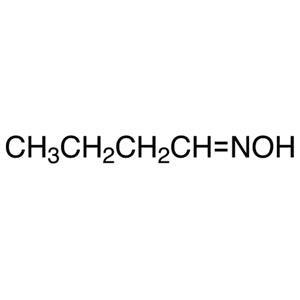
Butyraldoxime TCI B0753
Regular price From Rp 1.565.550,00Regular price -
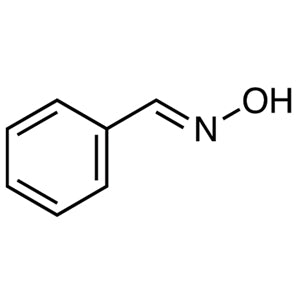
alpha-Benzaldoxime TCI B0011
Regular price From Rp 1.565.550,00Regular price -
syn-4-Nitrobenzaldoxime[DeprotectingAgent] TCI N0487
Regular price From Rp 1.167.600,00Regular price -
syn-2-Nitrobenzaldoxime[DeprotectingAgent] TCI N0486
Regular price From Rp 848.400,00Regular price


![3717-19-9 syn-4-Nitrobenzaldoxime [Deprotecting Agent] - AMI Scientific](http://amiscientific.com/cdn/shop/files/TCI2510N0487.jpg?v=1767129926&width=533)
![4836-00-4 syn-2-Nitrobenzaldoxime [Deprotecting Agent] - AMI Scientific](http://amiscientific.com/cdn/shop/files/TCI2510N0486.jpg?v=1767129922&width=533)