Dimethyl Succinate from TCI is the dimethyl ester of succinic acid, classified as a non-heterocyclic building block in organic chemistry. It is the simplest succinate ester, which makes it a common starting material for preparing succinate derivatives, polyester monomers, and a wide range of synthetic intermediates. In the laboratory, dimethyl succinate is used in transesterification, condensation, and reduction reactions. It also serves as a reference compound in the chromatographic analysis of aliphatic esters, where analysts need a well-defined, simple ester for comparison.
Chemists often choose this compound because its methyl ester groups are small and reasonably reactive. As a result, transesterification with diols proceeds efficiently, and the methanol released during the reaction is easy to remove, which drives the equilibrium toward the desired product. This behaviour is especially valuable in the synthesis of succinate-based polyesters. Dimethyl succinate has a melting point close to room temperature, so it may look like a liquid or a solid depending on storage temperature. When needed, gentle warming makes the material easy to pour and measure.
In Indonesia, Dimethyl Succinate is relevant to organic chemistry laboratories, polymer technology groups, and bioplastics research teams developing biodegradable polyesters from renewable resources. University research laboratories can use it for teaching and exploring esterification and polycondensation chemistry. Industrial R&D teams can use it to evaluate new succinate-based materials. Analytical laboratories can include it as a standard when building chromatographic methods for aliphatic esters. Its simple structure and predictable reactivity make it a practical, versatile reagent for many routine and research workflows.
TCI brochures (PDF)
- Polymer Additives 2026-04-16 · p. 3
- Polyester synthesis: transesterification with diols proceeds efficiently, and the methanol by-product is easily removed to push the reaction toward high-conversion succinate polyesters.
- Preparation of succinate derivatives: as the simplest succinate ester, it is a convenient starting material for building more complex succinate-based intermediates and functionalized compounds.
- Condensation reactions: the reactive methyl ester groups take part readily in condensation chemistry, giving organic chemists a dependable building block for constructing new carbon frameworks.
- Reduction reactions: the ester groups can be reduced in the laboratory to obtain corresponding reduced products, making it useful in teaching and synthetic research on ester reduction.
- Chromatographic reference standard: its simple, well-defined aliphatic ester structure suits it for use as a standard compound in chromatographic analysis of aliphatic esters.
| Brand | TCI (product code S0104) |
|---|---|
| CAS number | 106-65-0 |
| Molecular formula | — |
| Purity | — |
| Category | Chemistry > Building Blocks > Non-Heterocyclic Building Blocks |
| Pack sizes | available in the standard TCI pack sizes listed on the product page |
| Physical form | liquid or solid depending on ambient temperature, since its melting point is close to room temperature |
| Storage | keep tightly closed in a cool, dry, well-ventilated place; warm gently if solidified |
Store Dimethyl Succinate in its original, tightly sealed container in a cool, dry, well-ventilated area, away from heat sources, open flames, and strong oxidizing agents. Glass or other chemically compatible containers with secure closures are suitable for keeping the material and any portions transferred from it. Because the compound may solidify at lower temperatures, warm it gently and evenly before dispensing rather than applying direct, intense heat. Follow standard laboratory precautions: wear safety glasses, chemical-resistant gloves, and a lab coat, and handle the material in a fume hood or well-ventilated space. Avoid contact with skin and eyes and avoid breathing vapours. Always read the supplier's Safety Data Sheet before use and dispose of waste according to local regulations.
—
Produk Terkait
-
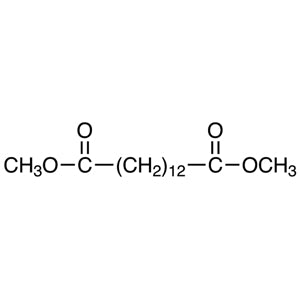
DimethylTetradecanedioate TCI T1726
Regular price From Rp 2.464.350,00Regular priceRp 1.738.800,00Sale price From Rp 2.464.350,00 -
DimethylPhthalate TCI P0302
Regular price From Rp 505.050,00Regular priceRp 352.800,00Sale price From Rp 505.050,00 -
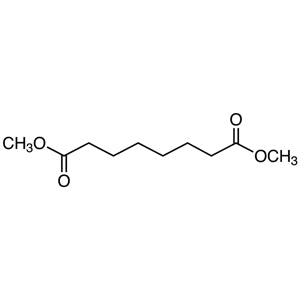
DimethylSuberate TCI O0183
Regular price From Rp 2.623.950,00Regular priceRp 1.850.100,00Sale price From Rp 2.623.950,00 -
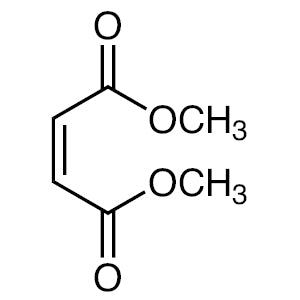
DimethylMaleate TCI M0012
Regular price From Rp 557.550,00Regular priceRp 405.300,00Sale price From Rp 557.550,00 -
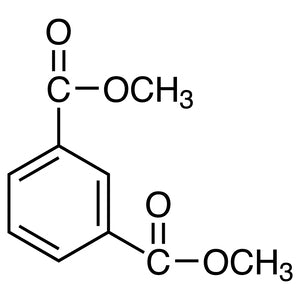
DimethylIsophthalate TCI I0157
Regular price From Rp 452.550,00Regular priceRp 316.050,00Sale price From Rp 452.550,00 -
DimethylIcosanedioate TCI E0330
Regular price From Rp 3.021.900,00Regular priceRp 2.128.350,00Sale price From Rp 3.021.900,00 -
DimethylHexadecanedioate TCI D3554
Regular price From Rp 4.266.150,00Regular priceRp 2.998.800,00Sale price From Rp 4.266.150,00 -
DimethylOctadecanedioate TCI D3540
Regular price From Rp 4.823.700,00Regular priceRp 3.388.350,00Sale price From Rp 4.823.700,00