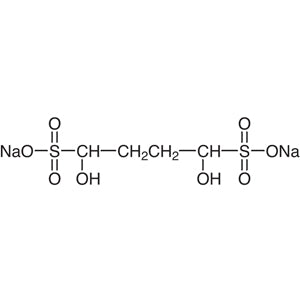
Succinaldehyde Disodium Bisulfite from TCI is the bisulfite adduct of succinaldehyde, an aliphatic dialdehyde with four carbon atoms. Free succinaldehyde is unstable and polymerizes easily, so it is hard to store for long periods. In the disodium bisulfite adduct, both aldehyde groups are protected as a more stable solid salt. This makes the compound a practical building block in the laboratory. Chemists can release reactive succinaldehyde when they need it by adjusting the reaction conditions.
Researchers choose this form because it is stable and easy to handle. As a solid, the bisulfite adduct can be weighed accurately. It can then be decomposed with acid or base to release succinaldehyde directly in the reaction mixture. This means researchers do not have to prepare and store the free dialdehyde, which degrades easily. It also gives more consistent stoichiometry, less material lost to polymerization, and a simpler workflow for multistep synthesis. These are useful advantages in teaching and research laboratories where reagents may be stored for long periods between experiments.
In Indonesia, this compound is relevant to synthetic organic chemistry laboratories at universities and research institutions that build cyclic and heterocyclic frameworks. Succinaldehyde is an important intermediate for building five-membered rings. Well-known examples are pyrrole synthesis through condensation with primary amines and the classic tropinone synthesis with methylamine and acetonedicarboxylic acid. Postgraduate research groups, natural product chemistry teams, and laboratories doing synthetic methodology studies can use this reagent as a reliable, storable source of a reactive four-carbon dialdehyde.
Related TCI products
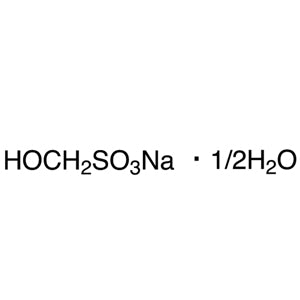
- TCI S0880 63148-74-3 Formaldehyde Sodium Bisulfite Hemihydrate
- TCI H0260 870-72-4 Formaldehyde Sodium Bisulfite
- TCI A0308 853-68-9 Disodium Anthraquinone-2,6-disulfonate
- TCI V0037 330581-20-9 Disodium 1-Naphthol-3,6-disulfonate Hydrate
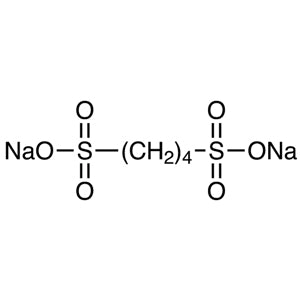
- TCI B0676 36589-61-4 Disodium 1,4-Butanedisulfonate
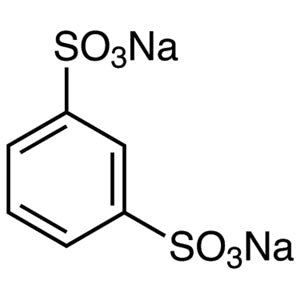
- TCI B0023 831-59-4 Disodium 1,3-Benzenedisulfonate
- Pyrrole synthesis: succinaldehyde released from the adduct condenses with primary amines to form pyrrole rings, so it suits laboratories preparing N-substituted pyrroles.
- Classic tropinone synthesis: it supplies the four-carbon dialdehyde for the classic reaction with methylamine and acetonedicarboxylic acid, a well-known teaching and research example of tandem ring construction.
- Construction of five-membered rings: it is a stable precursor for building five-membered rings, because the protected dialdehyde can be released under controlled acid or base conditions when needed.
- In situ generation of succinaldehyde: researchers can weigh the stable solid accurately and release succinaldehyde directly in the reaction mixture, which avoids handling the unstable free dialdehyde.
- Synthetic methodology and teaching: it gives university laboratories a convenient, storable building block for showing protecting-group strategies and how bisulfite adducts are used in aldehyde chemistry.
| Brand | TCI (product code S0216) |
|---|---|
| CAS number | 5450-96-4 |
| Molecular formula | — |
| Purity | — |
| Category | Chemistry > Building Blocks > Non-Heterocyclic Building Blocks |
| Pack sizes | please refer to the available options on the product page |
| Physical form | solid salt (disodium bisulfite adduct) |
| Storage | follow the conditions on the TCI label and Safety Data Sheet |
Store Succinaldehyde Disodium Bisulfite in its original tightly closed container, in a cool, dry, well-ventilated area away from moisture, strong acids, strong bases, and oxidizing agents. Contact with acid or base can release reactive succinaldehyde, so keep it away from incompatible materials. Wear standard laboratory protective equipment, including gloves, safety glasses, and a lab coat. Avoid creating or breathing in dust, and handle the material in a fume hood where possible. Before use, always read the Safety Data Sheet supplied with the product and follow local regulations for chemical waste disposal.
—
Produk Terkait
-
FormaldehydeSodiumBisulfiteHemihydrate TCI S0880
Regular price From Rp 1.167.600,00Regular price -
FormaldehydeSodiumBisulfite TCI H0260
Regular price Rp 557.550,00Regular price -
DisodiumAnthraquinone-2,6-disulfonate TCI A0308
Regular price From Rp 5.247.900,00Regular price -
Disodium1-Naphthol-3,6-disulfonateHydrate TCI V0037
Regular price Rp 584.850,00Regular price -
Disodium1,4-Butanedisulfonate TCI B0676
Regular price Rp 4.691.400,00Regular price -
Disodium1,3-Benzenedisulfonate TCI B0023
Regular price From Rp 505.050,00Regular price -
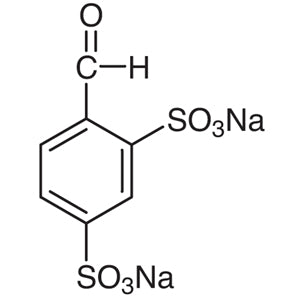
Disodium4-Formylbenzene-1,3-disulfonate TCI B0008
Regular price Rp 1.431.150,00Regular price -
Anthraquinone-1,5-disulfonicAcidDisodiumSalt TCI A0506
Regular price Rp 2.306.850,00Regular price