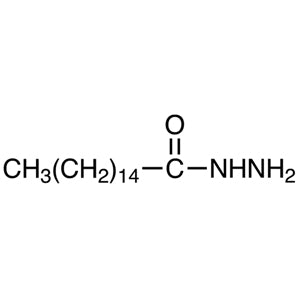
Stearic Hydrazide from TCI is a hydrazide derivative of stearic acid. In this compound, the carboxylic acid group of the C18 fatty acid has been converted into a reactive hydrazide group. The molecule combines a long, saturated, strongly hydrophobic alkyl chain with a polar, nucleophilic hydrazide head group. In the laboratory, it serves as a non-heterocyclic building block for preparing hydrazones, nitrogen-containing heterocycles, and amphiphilic molecules. It is also used in soft-matter research and coordination chemistry, where its two-part structure lets researchers build functional molecules with clearly separated polar and non-polar regions.
Researchers choose stearic hydrazide because its hydrazide group reacts readily with aldehydes and ketones to form hydrazone linkages. Hydrazone bonds are known to be reversible and pH-sensitive, which makes them well suited to controlled-release systems and dynamic covalent chemistry. The long stearyl chain gives the molecule lipophilicity, a tendency to self-assemble, and an affinity for lipid phases and hydrophobic surfaces. Together, these properties make the compound useful for designing surfactants, low-molecular-weight organic gelators, and ligands with hydrophobic tails. Chemists can attach a long lipophilic anchor to a target structure in one simple condensation step.
In Indonesia, this compound is relevant to organic chemistry, materials chemistry, and pharmaceutical laboratories. Typical users include research groups studying lipid-based drug delivery systems, organogels, and self-assembling amphiphilic materials. University research teams and institutional laboratories can use it as a starting material to synthesise hydrazone derivatives, to explore pH-responsive linkages, or to prepare hydrophobically modified ligands for coordination studies. AMI Scientific supplies this TCI reagent to support synthesis work and materials research in laboratories across the country.
- Hydrazone synthesis: the reactive hydrazide group condenses readily with aldehydes and ketones, so the compound is a convenient way to form hydrazone linkages that carry a long C18 tail.
- Dynamic covalent chemistry: hydrazone bonds formed from this compound are reversible and pH-sensitive, so researchers can build exchangeable networks and adaptive molecular systems.
- Controlled-release and lipid-based delivery research: the pH-sensitive hydrazone linkage together with the lipophilic stearyl chain supports the design of carriers that release a payload under specific pH conditions.
- Surfactant and organogelator design: a hydrophobic C18 chain paired with a polar hydrazide head gives the self-assembly behaviour needed for amphiphiles and low-molecular-weight organic gelators.
- Coordination chemistry and nitrogen heterocycles: the nucleophilic hydrazide group can be built into ligands with hydrophobic tails or used as a precursor for nitrogen-containing heterocyclic structures.
| Brand | TCI (product code S0222) |
|---|---|
| CAS number | 4130-54-5 |
| Molecular formula | — |
| Purity | — |
| Category | Chemistry > Building Blocks > Non-Heterocyclic Building Blocks |
| Pack sizes | available in TCI's standard pack sizes; please contact AMI Scientific for current options |
| Physical form | please refer to the TCI product specification and Certificate of Analysis |
| Storage | follow the storage conditions on the TCI label and Safety Data Sheet |
Store Stearic Hydrazide in its original, tightly closed container in a cool, dry, well-ventilated place, away from direct sunlight, heat sources, and moisture. Keep it apart from strong oxidising agents and reactive carbonyl compounds to prevent unintended reactions. Always follow the specific storage temperature and conditions on the TCI label and Safety Data Sheet. Handle the material with standard laboratory protective equipment, including gloves, safety glasses, and a lab coat. Avoid breathing in dust and avoid contact with skin and eyes. Weigh and transfer the material in a fume hood or ventilated area, and dispose of waste according to institutional and local regulations.
—
Produk Terkait
-
StearicAcid TCI S0163
Regular price From Rp 477.750,00Regular price -
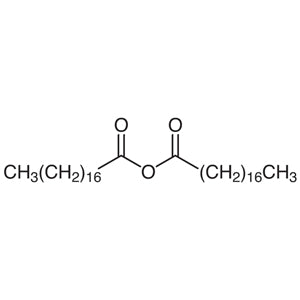
StearicAnhydride TCI S0083
Regular price From Rp 2.466.450,00Regular price -
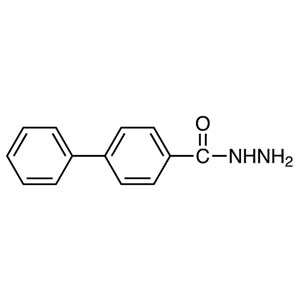
Biphenyl-4-carboxylicHydrazide TCI B4350
Regular price Rp 1.644.300,00Regular price -
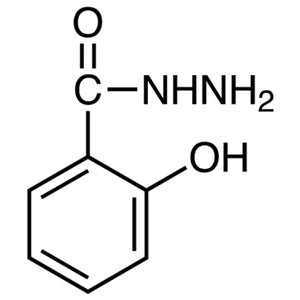
SalicylHydrazide TCI S0242
Regular price Rp 2.545.200,00Regular price -
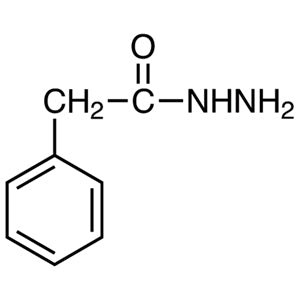
PhenylaceticHydrazide TCI P2203
Regular price From Rp 1.167.600,00Regular price -
PhthalicHydrazide TCI P0354
Regular price From Rp 557.550,00Regular price -
PalmiticAcidHydrazide TCI P0004
Regular price Rp 3.949.050,00Regular price -
3-NitrophthalicHydrazide TCI N0622
Regular price From Rp 875.700,00Regular price