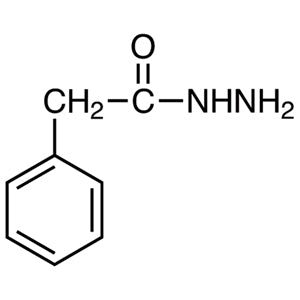
Phenylacetic Hydrazide is a chemical compound widely used in laboratory settings for the synthesis of complex organic compounds. As a key building block in organic chemistry, it plays a crucial role in various synthetic pathways, particularly in reactions involving hydrazine or coupling processes. This compound is essential for the development of heterocyclic structures and other complex molecular frameworks, making it a valuable tool for researchers in both academic and industrial environments. Its versatility allows it to be employed in a range of chemical transformations, contributing to the advancement of pharmaceutical and materials science research.
Phenylacetic Hydrazide is favored for its chemical stability under controlled conditions, which simplifies handling, storage, and manipulation in the laboratory. Its unique reactivity profile enables efficient and selective chemical reactions, making it ideal for applications requiring precision and specificity. The compound’s ability to participate in multiple reaction types, such as condensation and cyclization, enhances its utility in synthetic chemistry. These properties make it a preferred choice for laboratories aiming to achieve high-quality results in complex chemical syntheses.
In Indonesian laboratories, Phenylacetic Hydrazide is commonly used in chemical research, including the synthesis of pharmaceutical compounds, industrial chemicals, and advanced materials. Its relevance extends to educational and research institutions focusing on organic and analytical chemistry. The compound supports innovation in drug development and material science, contributing to the growth of scientific research in Indonesia.
- Synthesis of heterocyclic compounds for the development of new pharmaceuticals due to its reactivity in cyclization reactions.
- Use in hydrazination reactions to create complex organic structures with high efficiency and selectivity.
- Application in the preparation of industrial chemicals where stability and reactivity are essential for process optimization.
- Contribution to material science research by enabling the synthesis of advanced polymers and functional materials.
- Support for analytical chemistry studies through its role in the development of specialized reagents for compound identification.
| Brand | TCI |
|---|---|
| CAS number | 937-39-3 |
| Molecular formula | — |
| Purity | — |
| Category | Chemistry > Building Blocks > Non-Heterocyclic Building Blocks |
| Pack sizes | Available in various quantities as per standard laboratory supply |
| Physical form | Solid (exact form may vary based on supplier packaging) |
| Storage | Store in a cool, dry place away from direct sunlight and moisture |
Phenylacetic Hydrazide should be stored in a cool, dry environment to maintain its chemical stability and prevent degradation. It is recommended to use airtight containers to minimize exposure to moisture and air, which could affect its reactivity. Proper labeling of storage containers is essential for safety and traceability. In laboratory settings, it should be handled with care, using appropriate personal protective equipment such as gloves and safety goggles. Avoid contact with incompatible substances to ensure safe storage and use. Regular inspection of storage conditions helps maintain the integrity of the compound for reliable experimental outcomes.
—
Produk Terkait
-
4-(Bromomethyl)phenylaceticAcid TCI B1351
Regular price From Rp 1.881.600,00Regular price -
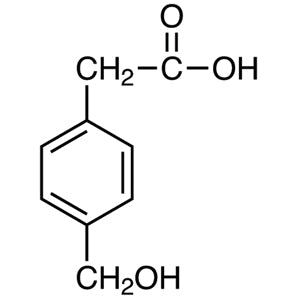
4-(Hydroxymethyl)phenylaceticAcid TCI H1473
Regular price From Rp 955.500,00Regular price -
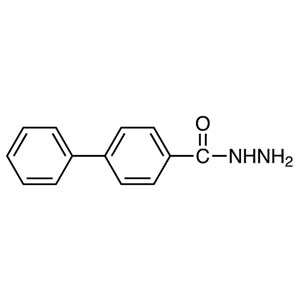
Biphenyl-4-carboxylicHydrazide TCI B4350
Regular price Rp 1.644.300,00Regular price -
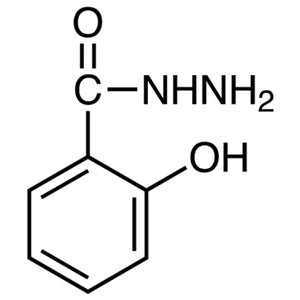
SalicylHydrazide TCI S0242
Regular price Rp 2.545.200,00Regular price -
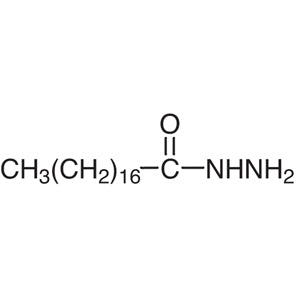
StearicHydrazide TCI S0222
Regular price Rp 4.347.000,00Regular price -
PhthalicHydrazide TCI P0354
Regular price From Rp 557.550,00Regular price -
PalmiticAcidHydrazide TCI P0004
Regular price Rp 3.949.050,00Regular price -
3-NitrophthalicHydrazide TCI N0622
Regular price From Rp 875.700,00Regular price