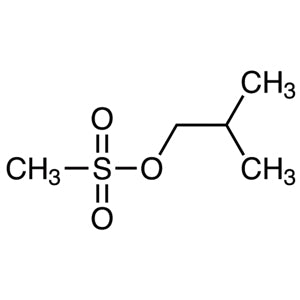
Sodium Methanesulfonate (NaMS), with the CAS number 2386-57-4, is a versatile chemical compound widely used in laboratory settings for its reactivity and utility in organic synthesis. As a non-heterocyclic building block, it plays a crucial role in the development of various chemical compounds, including pharmaceuticals and industrial chemicals. Its simple chemical structure allows it to participate in multiple reaction types, such as substitution and esterification, making it an essential reagent for chemists. This compound is commonly used in research and development processes where precise chemical transformations are required.
The properties of Sodium Methanesulfonate make it a preferred choice for laboratory applications. It is highly soluble in water, which facilitates its use in aqueous reactions and simplifies its handling. Its high melting point ensures stability under normal laboratory conditions, reducing the risk of decomposition. Additionally, its ability to act as an ion-binding agent enhances its utility in chromatographic processes. These characteristics contribute to its reliability and effectiveness in a wide range of chemical experiments.
In Indonesian laboratories, Sodium Methanesulfonate is a commonly used reagent in both academic and industrial research. It is frequently employed in pharmaceutical and chemical research to develop new compounds and improve existing formulations. Its availability through suppliers like AMI Scientific ensures that it is accessible for use in various scientific studies and experiments conducted in Indonesia.
Related TCI products
- Organic synthesis reactions benefit from Sodium Methanesulfonate due to its ability to act as a versatile reagent in substitution and esterification processes.
- It is widely used in pharmaceutical research for the development of new drug compounds and the modification of existing ones.
- Sodium Methanesulfonate is an essential component in ion-binding applications, particularly in chromatographic techniques for separating and analyzing complex mixtures.
- Its solubility in water makes it suitable for aqueous-based experiments, including those involving solution-based reactions and purification processes.
- In industrial chemical production, it serves as a key building block for the synthesis of various chemical intermediates and final products.
| Brand | TCI |
|---|---|
| CAS number | 2386-57-4 |
| Molecular formula | — |
| Purity | — |
| Category | Chemistry > Building Blocks > Non-Heterocyclic Building Blocks |
| Pack sizes | Available in various quantities as per supplier specifications |
| Physical form | Solid |
| Storage | Store in a cool, dry place away from moisture and direct sunlight |
Sodium Methanesulfonate should be stored in a cool, dry place, away from moisture and direct sunlight to maintain its chemical integrity. It is recommended to use airtight containers to prevent exposure to humidity, which could affect its solubility and stability. As a reactive chemical, it should be handled with appropriate personal protective equipment, such as gloves and safety goggles, to ensure laboratory safety. Proper ventilation is also necessary when working with this compound to minimize inhalation risks. Due to its chemical nature, it should not be stored near incompatible materials, such as strong bases or oxidizing agents. Regular inspection of storage conditions is advised to ensure long-term usability and safety in the laboratory.
—
Produk Terkait
-
2-Propyn-1-ylMethanesulfonate TCI P3022
Regular price From Rp 2.068.500,00Regular price -
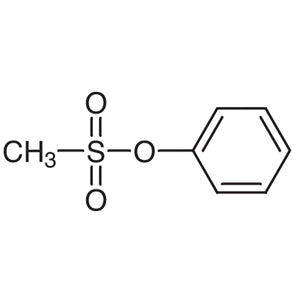
PhenylMethanesulfonate TCI P1852
Regular price Rp 2.359.350,00Regular price -
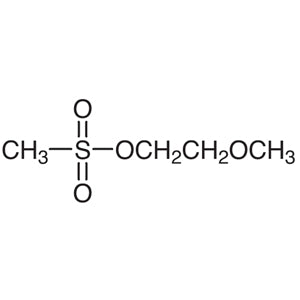
2-MethoxyethylMethanesulfonate TCI M1446
Regular price From Rp 2.359.350,00Regular price -
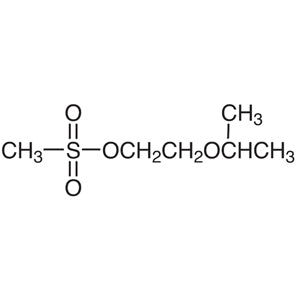
2-IsopropoxyethylMethanesulfonate TCI M1297
Regular price Rp 2.279.550,00Regular price -
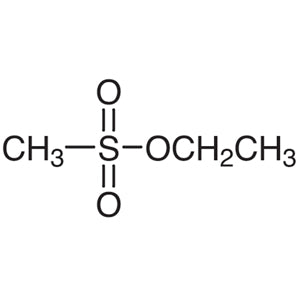
EthylMethanesulfonate TCI M0607
Regular price From Rp 2.041.200,00Regular price -
PotassiumMethanesulfonate TCI M0550
Regular price From Rp 2.837.100,00Regular price -
CalciumMethanesulfonate TCI M0549
Regular price From Rp 2.782.500,00Regular price -
IsobutylMethanesulfonate TCI I1062
Regular price From Rp 1.035.300,00Regular price