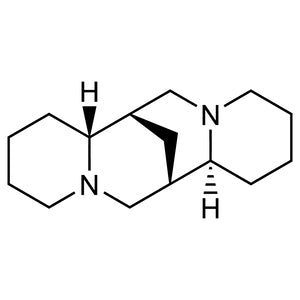
(+)-Sparteine is a chiral compound widely used in asymmetric synthesis, playing a crucial role in chemical reactions that require chiral catalysts. This compound is particularly valuable in the laboratory for its ability to direct the formation of products with specific spatial configurations. Its unique molecular structure enables it to act as a chiral reagent or catalyst, facilitating the synthesis of organic compounds with high biological activity. In modern chemical research, (+)-Sparteine is essential for achieving enantioselectivity, which is vital in pharmaceutical and fine chemical applications.
One of the key properties that make (+)-Sparteine a preferred choice is its chemical stability and compatibility with various substrates under controlled reaction conditions. It has the ability to form complexes with transition metals, significantly enhancing the efficiency of chemical reactions. Additionally, its good solubility in organic solvents simplifies processing and separation steps in laboratory workflows. These characteristics make it a reliable and versatile tool for chemists working in both academic and industrial settings.
In Indonesian laboratories, (+)-Sparteine is commonly used in organic chemistry research, especially in pharmacology and drug synthesis. Its availability and effectiveness in producing high-purity asymmetric products make it a popular choice among researchers. The compound's ability to provide precise control over stereochemistry is highly valued in the development of new therapeutic agents and specialty chemicals.
TCI brochures (PDF)
- Chiral Ligands 2024-12-13 · p. 2
- Alkaloids 2025-10-10 · p. 3
- Asymmetric Synthesis 2026-03-18 · p. 7
- Phytochemicals 2025-12-17 · p. 4
- Ligands 2025-12-01 · p. 3
- Asymmetric synthesis in pharmaceutical research due to its ability to produce enantiomerically pure compounds.
- Chiral catalyst in organic reactions requiring high stereocontrol for drug molecule development.
- Transition metal complex formation for enhanced catalytic efficiency in synthetic pathways.
- Organic solvent dissolution for easy integration into reaction mixtures and purification processes.
- Biologically active compound synthesis in medicinal chemistry for drug discovery and development.
| Brand | TCI |
|---|---|
| CAS number | 492-08-0 |
| Molecular formula | — |
| Purity | — |
| Category | Chemistry > Asymmetric Synthesis > Chiral Catalysts, Chiral Ligands, Chiral Reagents |
| Pack sizes | Available in various sizes as per supplier specifications |
| Physical form | Solid or crystalline, depending on purity and storage conditions |
| Storage | Store in a cool, dry place away from light and moisture |
(+)-Sparteine should be stored in a cool, dry environment, away from direct sunlight and moisture to maintain its chemical stability. It is recommended to use airtight containers made of glass or high-density polyethylene to prevent contamination and degradation. In laboratory settings, it is important to handle the compound with care, using appropriate personal protective equipment such as gloves and safety goggles. Due to its chiral nature, it is crucial to maintain the integrity of the compound during storage and handling to ensure consistent performance in chemical reactions. Proper labeling and storage conditions help in preserving its effectiveness for research and industrial applications.
—
Product Categories
Produk Terkait
-
(-)-Sparteine TCI S0461
Regular price Rp 9.671.550,00Regular priceRp 6.778.800,00Sale price Rp 9.671.550,00 -
Tetrahydropalmatine TCI T3650
Regular price From Rp 1.643.250,00Regular priceRp 1.164.450,00Sale price From Rp 1.643.250,00 -
TomatinefromTomato TCI T3636
Regular price Rp 4.849.950,00Regular priceRp 3.407.250,00Sale price Rp 4.849.950,00 -
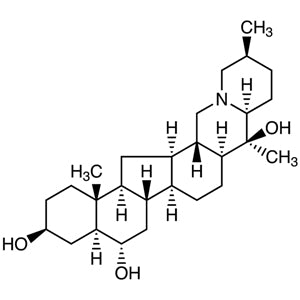
Peimine TCI P2610
Regular price From Rp 1.618.050,00Regular priceRp 1.146.600,00Sale price From Rp 1.618.050,00 -
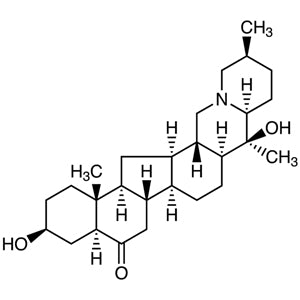
Peiminine TCI P2609
Regular price From Rp 3.207.750,00Regular priceRp 2.258.550,00Sale price From Rp 3.207.750,00 -
Piperlongumine TCI P2361
Regular price Rp 2.093.700,00Regular priceRp 1.479.450,00Sale price Rp 2.093.700,00 -
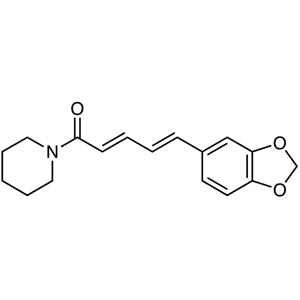
Piperine TCI P0460
Regular price From Rp 822.150,00Regular priceRp 590.100,00Sale price From Rp 822.150,00 -
SophocarpineMonohydrate TCI O0505
Regular price From Rp 2.518.950,00Regular priceRp 1.776.600,00Sale price From Rp 2.518.950,00