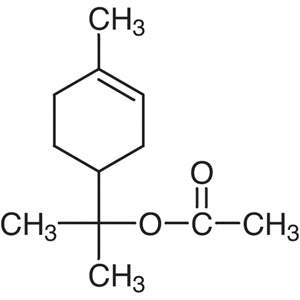
Terpinyl Acetate (mixture of isomers), with CAS number 80-26-2, is a chemical compound widely used in various chemical reactions and the synthesis of complex molecules. As a key component in the field of organic chemistry, it plays a crucial role in laboratory settings where the creation of new compounds or the modification of existing ones is required. Its versatility makes it an essential building block in the development of pharmaceuticals, fragrances, and other specialty chemicals. This compound is particularly valued for its ability to participate in multiple reaction types, including substitution, esterification, and oxidation, making it a fundamental tool for chemists working in research and development.
One of the main reasons Terpinyl Acetate is preferred is its excellent solubility in organic solvents such as ethyl acetate and ethanol. This property facilitates its use in a wide range of experimental procedures. Additionally, its high reactivity allows for efficient chemical transformations, reducing the need for additional reagents or complex reaction conditions. The compound also possesses a distinctive aroma, which can serve as a visual indicator during certain reactions, aiding in the monitoring of chemical processes. These characteristics make it a reliable and effective choice for both academic and industrial laboratories.
In Indonesian laboratories, Terpinyl Acetate is commonly used in organic chemistry research, drug development, and the production of raw materials for the cosmetic and fragrance industries. Its stability and availability ensure that it remains a popular choice among researchers and chemists. Due to its broad applications and reliable performance, it is frequently found in both educational and commercial laboratory environments.
TCI brochures (PDF)
- Terpenes 2025-09-22 · p. 4
Related TCI products
- TCI M3866 10458-14-7 Menthone (mixture of isomers)
- TCI M3399 89-48-5 (+/-)-Menthyl Acetate
- TCI T4002 42594-17-2 Tricyclo[5210~2,6~]decanedimethanol Diacrylate (mixture of isomers) (stabilized with MEHQ)
- TCI T2701 6809-52-5 Teprenone [mixture of (5E,9E,13E)- and (5Z,9E,13E)- isomers]
- TCI T2605 14049-11-7 2,2,6-Trimethyl-6-vinyltetrahydropyran-3-ol (mixture of isomers)
- TCI B3371 14765-30-1 2-sec-Butylcyclohexanone (mixture of isomers)
- Organic synthesis reactions where Terpinyl Acetate serves as a versatile building block for creating complex molecular structures.
- Pharmaceutical research and development, as it can act as a precursor in the synthesis of bioactive compounds.
- Aroma and fragrance formulation, due to its distinctive scent and compatibility with organic solvents.
- Cosmetic industry applications, where it is used in the production of perfumes and personal care products.
- Teaching and research in academic institutions, where it is used to demonstrate chemical reactivity and solubility properties.
| Brand | TCI |
|---|---|
| CAS number | 80-26-2 |
| Molecular formula | — |
| Purity | — |
| Category | Chemistry > Building Blocks > Non-Heterocyclic Building Blocks |
| Pack sizes | Available in various quantities as per supplier specifications |
| Physical form | Liquid |
| Storage | Store in a cool, dry place away from direct sunlight |
Terpinyl Acetate should be stored in a cool, dry environment, away from direct sunlight and sources of heat. It is recommended to use airtight containers made of glass or high-density polyethylene to prevent contamination and evaporation. Due to its reactivity, it should be handled in a well-ventilated area, and appropriate personal protective equipment such as gloves and safety goggles should be worn. Avoid contact with incompatible substances, and ensure that storage areas are secure to prevent accidental spills or exposure. Regular monitoring of storage conditions is essential to maintain the compound's integrity and ensure safe laboratory practices.
—
Produk Terkait
-
Menthone(mixtureofisomers) TCI M3866
Regular price From Rp 1.008.000,00Regular priceRp 720.300,00Sale price From Rp 1.008.000,00 -
(+/-)-MenthylAcetate TCI M3399
Regular price Rp 1.803.900,00Regular priceRp 1.261.050,00Sale price Rp 1.803.900,00 -
Tricyclo[5210~2,6~]decanedimethanolDiacrylate(mixtureofisomers)(stabilizedwithMEHQ) TCI T4002
Regular price From Rp 1.273.650,00Regular priceRp 890.400,00Sale price From Rp 1.273.650,00 -
Teprenone[mixtureof(5E,9E,13E)-and(5Z,9E,13E)-isomers] TCI T2701
Regular price From Rp 2.147.250,00Regular priceRp 1.501.500,00Sale price From Rp 2.147.250,00 -
2,2,6-Trimethyl-6-vinyltetrahydropyran-3-ol(mixtureofisomers) TCI T2605
Regular price Rp 1.670.550,00Regular priceRp 1.183.350,00Sale price Rp 1.670.550,00 -
2-sec-Butylcyclohexanone(mixtureofisomers) TCI B3371
Regular price Rp 1.113.000,00Regular priceRp 793.800,00Sale price Rp 1.113.000,00 -
DiisononylAdipate(mixtureofbranchedchainisomers) TCI A1387
Regular price From Rp 584.850,00Regular priceRp 408.450,00Sale price From Rp 584.850,00 -
TetrapropenylsuccinicAnhydride(mixtureofbranchedchainisomers) TCI T0170
Regular price From Rp 557.550,00Regular priceRp 405.300,00Sale price From Rp 557.550,00