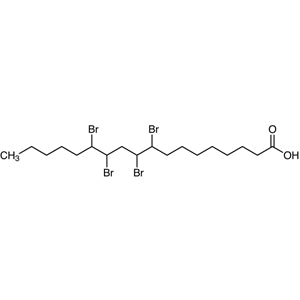
9,10,12,13-Tetrabromostearic Acid is a chemical compound widely used in laboratory settings for various chemical reactions, particularly in the synthesis of complex organic compounds. As a non-heterocyclic building block, it serves as a fundamental component in the development of new materials and pharmaceuticals. Its molecular structure is based on a long-chain fatty acid with bromine atoms strategically positioned at specific sites, making it a versatile reagent for chemical modifications and functional group introductions. This compound is valued for its ability to participate in a wide range of chemical transformations, including esterification, halogenation, and coupling reactions.
The compound’s unique chemical properties, including its stability and reactivity under controlled conditions, make it a preferred choice for researchers. Its brominated structure allows for the introduction of functional groups, which is essential in the design of flame-retardant materials and polymer additives. The compound’s ability to form stable intermediates in synthetic pathways enhances its utility in organic synthesis. Additionally, its compatibility with various solvents and reagents ensures its applicability across different experimental setups. These characteristics contribute to its popularity among chemists and material scientists.
In Indonesian laboratories, 9,10,12,13-Tetrabromostearic Acid is commonly used in research related to organic chemistry, pharmaceutical development, and polymer science. It is a key reagent in experiments aimed at creating new materials with specific properties, such as flame resistance or enhanced mechanical strength. Its availability and reliability make it a valuable resource for academic and industrial research in Indonesia.
Related TCI products
- TCI H0052 4167-08-2 Hexabromostearic Acid
- TCI T1528 576-55-6 3,4,5,6-Tetrabromo-o-cresol
- TCI T1430 37721-75-8 2,3,5,6-Tetrabromo-p-cresol
- TCI N0534 13209-16-0 4-Nitro-alpha,alpha,alpha',alpha'-tetrabromo-o-xylene
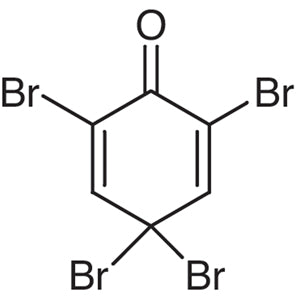
- TCI T1235 20244-61-5 2,4,4,6-Tetrabromo-2,5-cyclohexadienone
- TCI T1026 22612-89-1 1,1,3,3-Tetrabromoacetone
- Organic synthesis applications benefit from its brominated structure, enabling the creation of complex organic molecules with tailored properties.
- Flame-retardant material development utilizes its bromine content to enhance fire resistance in polymer-based products.
- Polymer science research employs it as a functional additive to modify the properties of plastics and elastomers.
- Pharmaceutical research uses it as a building block for the synthesis of bioactive compounds and drug intermediates.
- Material characterization studies incorporate it to investigate the effects of bromination on molecular interactions and physical properties.
| Brand | TCI |
|---|---|
| CAS number | 1794-89-4 |
| Molecular formula | — |
| Purity | — |
| Category | Chemistry > Building Blocks > Non-Heterocyclic Building Blocks |
| Pack sizes | Available in various quantities as per supplier specifications |
| Physical form | Solid powder |
| Storage | Store in a cool, dry place away from direct sunlight and moisture |
This compound should be stored in a cool, dry environment to maintain its chemical stability. It is recommended to keep it in a sealed container to prevent exposure to moisture and air, which could lead to degradation. Due to its brominated nature, it is advisable to handle it with appropriate personal protective equipment, such as gloves and safety goggles, to minimize direct contact. It should be stored away from incompatible substances like strong oxidizers to ensure safety. In laboratory settings, it is important to maintain proper ventilation and follow standard chemical handling protocols to ensure safe usage and storage.
—
Produk Terkait
-
HexabromostearicAcid TCI H0052
Regular price Rp 4.611.600,00Regular priceRp 3.240.300,00Sale price Rp 4.611.600,00 -
3,4,5,6-Tetrabromo-o-cresol TCI T1528
Regular price Rp 610.050,00Regular priceRp 426.300,00Sale price Rp 610.050,00 -
2,3,5,6-Tetrabromo-p-cresol TCI T1430
Regular price Rp 2.147.250,00Regular priceRp 1.501.500,00Sale price Rp 2.147.250,00 -
4-Nitro-alpha,alpha,alpha',alpha'-tetrabromo-o-xylene TCI N0534
Regular price Rp 3.498.600,00Regular priceRp 2.446.500,00Sale price Rp 3.498.600,00 -
2,4,4,6-Tetrabromo-2,5-cyclohexadienone TCI T1235
Regular price Rp 1.458.450,00Regular priceRp 1.035.300,00Sale price Rp 1.458.450,00 -
1,1,3,3-Tetrabromoacetone TCI T1026
Regular price Rp 2.411.850,00Regular priceRp 1.702.050,00Sale price Rp 2.411.850,00 -
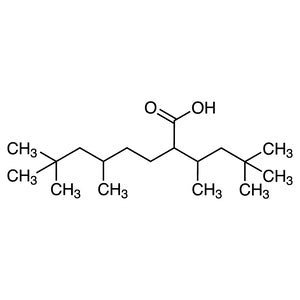
IsostearicAcid(=2,2,4,8,10,10-Hexamethylundecane-5-carboxylicAcid) TCI I0184
Regular price Rp 664.650,00Regular priceRp 464.100,00Sale price Rp 664.650,00 -
3,3',5,5'-Tetrabromo-2,2'-bithiophene TCI T2699
Regular price Rp 822.150,00Regular priceRp 590.100,00Sale price Rp 822.150,00