

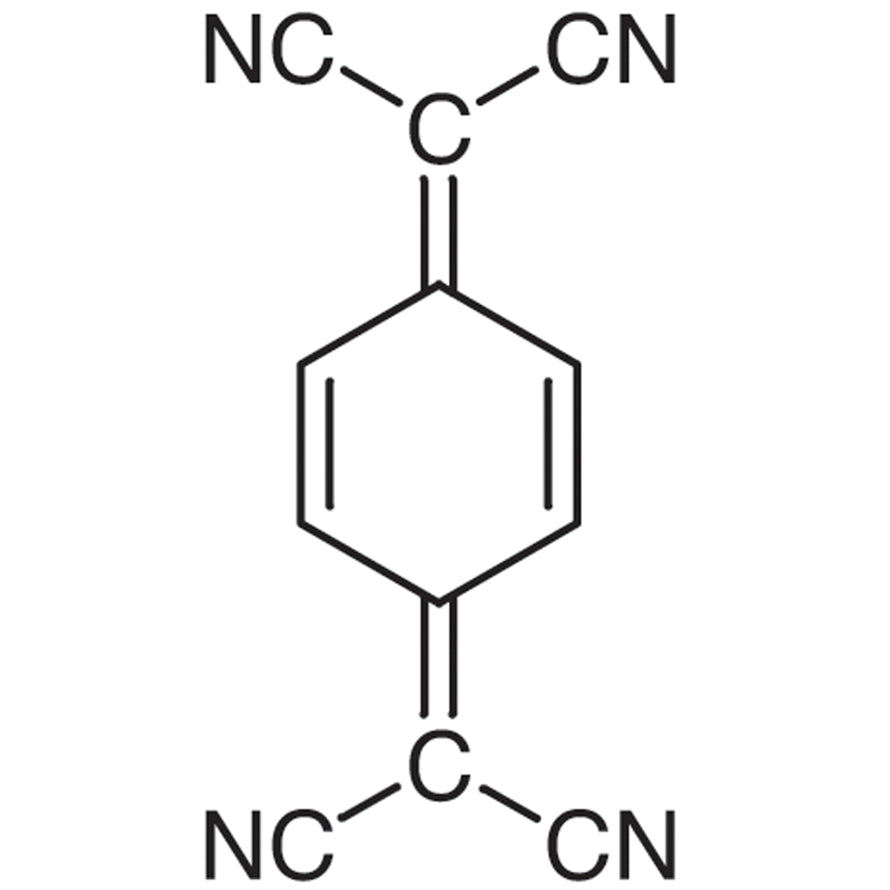
7,7,8,8-Tetracyanoquinodimethane (TCNQ) is a highly specialized organic compound with a complex molecular structure that exhibits unique electronic conductivity properties. This material plays a crucial role in laboratory research, particularly in the study of molecular conductors and electronic interactions. Its ability to act as both an electron donor and acceptor under different conditions makes it a versatile tool for exploring electronic behavior in various chemical systems. TCNQ is widely used in materials science to investigate the electronic properties of molecular systems, offering insights into conductivity, charge transfer, and molecular interactions. Its significance extends to the development of advanced electronic and optical materials, where its unique properties are leveraged for innovative applications.
TCNQ is preferred due to its exceptional reactivity and electronic properties, which make it ideal for studying charge transfer phenomena and molecular conductivity. Its chemical versatility allows it to be used in a wide range of experimental setups, from basic research to applied material development. The compound's ability to form stable molecular complexes and its tunable electronic properties contribute to its popularity among researchers. Additionally, TCNQ's stability under specific conditions ensures that it remains a reliable material for consistent experimental results. These characteristics make it a valuable component in the development of new materials and technologies.
In Indonesian laboratories, TCNQ is commonly used in material science research, particularly in the fields of electronics and solid-state physics. Researchers rely on TCNQ to explore molecular conductivity, crystal structure, and chemical reactivity. Its application in synthesizing complex compounds and developing new materials further highlights its importance in both academic and industrial research settings. The compound's unique properties make it an essential tool for advancing scientific understanding in the field of electronic materials.
Advantages (TCI brochure)
- Acceptor molecule with an electron carrier
TCI brochures (PDF)
- Dopants for Organic Electronics Research 2025-06-06 · p. 1
- Organic Transistor (OFET) Materials 2026-05-07 · p. 17
- Molecular Conductors 2025-11-13 · p. 3
Related TCI products
- TCI T3034 1518-16-7 7,7,8,8-Tetracyanoquinodimethane (purified by sublimation)
- TCI T1131 29261-33-4 Tetrafluorotetracyanoquinodimethane (purified by sublimation)
- TCI T2468 40210-84-2 Tetrathiafulvalene - 7,7,8,8-Tetracyanoquinodimethane Complex
- TCI F0509 69857-37-0 2-Fluoro-7,7,8,8-tetracyanoquinodimethane
- TCI D3200 73318-02-2 2,5-Difluoro-7,7,8,8-tetracyanoquinodimethane
- TCI D2021 1487-82-7 2,5-Dimethyl-7,7,8,8-tetracyanoquinodimethane
- Electronic Conductivity Studies: TCNQ is used to investigate the electronic properties of molecular systems, offering insights into charge transfer and conductivity mechanisms.
- Molecular Crystal Structure Analysis: Its unique molecular structure makes it ideal for studying crystalline behavior and electronic interactions in solid-state materials.
- Charge Transfer Complex Formation: TCNQ's ability to act as both an electron donor and acceptor enables the formation of stable charge transfer complexes, useful in material synthesis.
- Optical Material Development: Its electronic properties are leveraged in the creation of advanced optical materials with tailored conductivity and light interaction characteristics.
- Research in Conductive Polymers: TCNQ is employed to study the behavior of conductive polymers and their potential applications in electronic devices and sensors.
From the TCI brochure
- Acceptor molecule for molecular conductors
| Brand | TCI |
|---|---|
| CAS number | 1518-16-7 |
| Molecular formula | — |
| Purity | — |
| Category | Materials Science > Electronic Materials > Molecular Conductors |
| Pack sizes | Available in various quantities as per standard laboratory requirements |
| Physical form | Solid powder |
| Storage | Store in a cool, dry place away from moisture and light |
TCNQ should be stored in a cool, dry environment to maintain its chemical stability and prevent degradation. It is recommended to use airtight containers to protect it from moisture and light exposure. Due to its reactivity, TCNQ should be handled with care, using appropriate personal protective equipment such as gloves and safety goggles. It is important to ensure that the storage area is well-ventilated to minimize the risk of inhalation of any vapors. TCNQ should be kept away from incompatible substances to avoid any potential chemical reactions. Proper labeling of storage containers is essential to ensure safe handling and prevent accidental exposure.
—
Produk Terkait
-
7,7,8,8-Tetracyanoquinodimethane(purifiedbysublimation) TCI T3034
Regular price From Rp 2.730.000,00Regular priceRp 1.924.650,00Sale price From Rp 2.730.000,00 -
Tetrafluorotetracyanoquinodimethane(purifiedbysublimation) TCI T1131
Regular price From Rp 3.578.400,00Regular priceRp 2.517.900,00Sale price From Rp 3.578.400,00 -
Tetrathiafulvalene-7,7,8,8-TetracyanoquinodimethaneComplex TCI T2468
Regular price Rp 8.718.150,00Regular priceRp 6.112.050,00Sale price Rp 8.718.150,00 -
2-Fluoro-7,7,8,8-tetracyanoquinodimethane TCI F0509
Regular price Rp 7.844.550,00Regular priceRp 5.500.950,00Sale price Rp 7.844.550,00 -
2,5-Difluoro-7,7,8,8-tetracyanoquinodimethane TCI D3200
Regular price Rp 8.638.350,00Regular priceRp 6.056.400,00Sale price Rp 8.638.350,00 -
2,5-Dimethyl-7,7,8,8-tetracyanoquinodimethane TCI D2021
Regular price From Rp 5.910.450,00Regular priceRp 4.148.550,00Sale price From Rp 5.910.450,00 -
FullereneC70 TCI B1694
Regular price Rp 4.957.050,00Regular priceRp 3.466.050,00Sale price Rp 4.957.050,00 -
FullereneC60(pure) TCI B1641
Regular price From Rp 1.458.450,00Regular priceRp 1.019.550,00Sale price From Rp 1.458.450,00


