1-Tetradecanol from TCI, also known as myristyl alcohol, is a saturated straight-chain fatty alcohol with fourteen carbon atoms and a single hydroxyl group at the end of the chain. It is classed as a non-heterocyclic building block, and laboratories use it as a starting material for esters, ethers, alkyl halides, and surfactants. It is also used as a component in research on cosmetic formulations, phase-change materials, and monomolecular layers at interfaces. This makes it a useful reagent for both synthetic and materials-oriented work.
Researchers choose this material mainly because it is amphiphilic. The polar hydroxyl group sits at one end of the molecule, and the long hydrophobic alkyl chain makes up the rest. Because of this structure, it interacts readily with oil–water interfaces and can form ordered layers. The same structure also makes it a good starting material for surfactants such as alkyl sulfates and alkyl ethoxylates. Its primary hydroxyl group is easy to modify by esterification, oxidation, or substitution, so chemists can use it to build many different long-chain derivatives from a single starting reagent.
In Indonesia, 1-Tetradecanol is relevant to oleochemical, cosmetic, and pharmaceutical laboratories that develop emulsions, creams, and surfactants. Formulation teams use it to study how fatty alcohols affect texture, stability, and emulsion behaviour. Synthesis groups use it as a reliable long-chain building block. University research groups working on interfacial chemistry and phase-change materials also use it in experimental work, and quality control laboratories can keep it as a reference fatty alcohol for comparison studies.
TCI brochures (PDF)
- Lipids 2025-12-17 · p. 15
- Building Blocks for Organic Semiconductor 2026-03-24 · p. 42
- Ester synthesis: the primary hydroxyl group undergoes esterification easily, so the material is a convenient way to add a fourteen-carbon chain to ester products for research.
- Surfactant preparation: its amphiphilic structure makes it a good starting material for alkyl sulfates and alkyl ethoxylates studied in detergent and emulsifier development work.
- Cosmetic formulation research: formulators use it as a fatty alcohol component in creams and emulsions to study texture, consistency, and how well oil–water systems hold together.
- Phase-change material studies: the long saturated alkyl chain makes it a useful candidate component when researchers investigate organic materials for thermal energy storage applications.
- Monolayer and interfacial research: the polar head group and hydrophobic tail let it form ordered layers at interfaces, which supports studies of surface and interfacial behaviour.
| Brand | TCI (product code T0084) |
|---|---|
| CAS number | 112-72-1 |
| Molecular formula | — |
| Purity | — |
| Category | Chemistry > Building Blocks > Non-Heterocyclic Building Blocks |
| Pack sizes | available in TCI's standard pack sizes; please confirm the options with AMI Scientific |
| Physical form | soft solid that may become liquid at warm room temperatures |
| Storage | keep tightly closed in a cool, dry place |
Store 1-Tetradecanol in its original, tightly sealed container in a cool, dry, well-ventilated area, away from heat sources and strong oxidizing agents. It can soften or melt at warm room temperatures, which are common in Indonesian laboratories. When this happens, let the material reach a uniform state before you take a sample, and use clean, dry spatulas or pipettes as needed. Wear standard laboratory protective equipment, including gloves, safety glasses, and a lab coat. Avoid contact with the skin and eyes, and do not breathe in dust or vapour. Always read the supplier's Safety Data Sheet before use, and follow local regulations when disposing of waste.
—
Product Categories
Produk Terkait
-
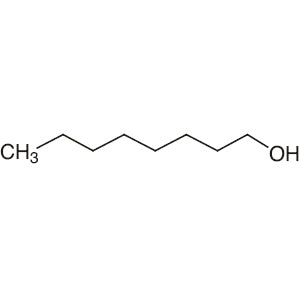
1-Octanol TCI O0036
Regular price Rp 477.750,00Regular priceRp 333.900,00Sale price Rp 477.750,00 -
1-Octadecanol TCI O0006
Regular price Rp 477.750,00Regular priceRp 333.900,00Sale price Rp 477.750,00 -
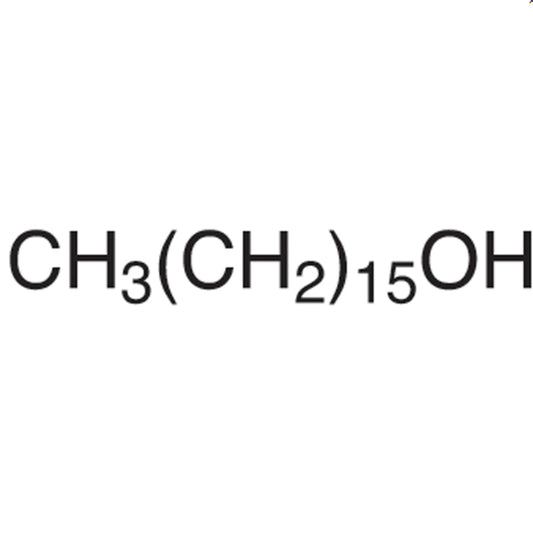
1-Hexadecanol TCI H0071
Regular price Rp 477.750,00Regular priceRp 333.900,00Sale price Rp 477.750,00 -
1-Eicosanol TCI E0004
Regular price Rp 1.776.600,00Regular priceRp 1.242.150,00Sale price Rp 1.776.600,00 -
1-Dodecanol TCI D0978
Regular price Rp 505.050,00Regular priceRp 352.800,00Sale price Rp 505.050,00 -
2-OctyldodecylTetradecanoate TCI O0701
Regular price Rp 2.121.000,00Regular priceRp 1.498.350,00Sale price Rp 2.121.000,00 -
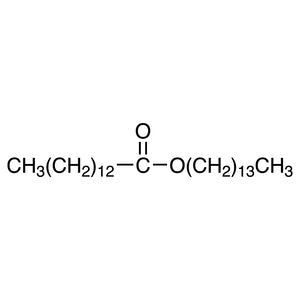
TetradecylTetradecanoate TCI M3623
Regular price Rp 4.636.800,00Regular priceRp 3.258.150,00Sale price Rp 4.636.800,00 -
ValericAcid TCI V0003
Regular price Rp 610.050,00Regular priceRp 426.300,00Sale price Rp 610.050,00