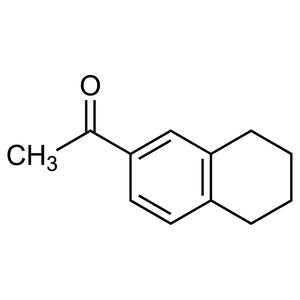
1,2,3,4-Tetrahydronaphthalene, more commonly known as tetralin, is a bicyclic hydrocarbon made by partially hydrogenating naphthalene. Its molecule consists of a benzene ring fused to a saturated cyclohexane ring. In the laboratory, this TCI tetralin serves as a high-boiling solvent, a hydrogen-donor compound, and a starting material for synthesizing tetralin derivatives, a structural motif found in many bioactive molecules. It is an important reagent in organic chemistry, energy research, and petrochemical studies.
Chemists choose tetralin because it is nonpolar, stable at elevated temperatures, and boils well above common organic solvents. That makes it a good fit for reactions that need long heating periods. The benzylic positions on its saturated ring give up hydrogen atoms readily, so it is an effective hydrogen donor in transfer hydrogenation reactions and coal liquefaction processes. Because it combines aromatic and aliphatic character in one structure, it is also a useful model compound for studying hydrogenation, dehydrogenation, and benzylic oxidation reactions.
Indonesia has large coal reserves and an established petroleum refining industry, so tetralin is especially relevant to local research. University chemistry and chemical engineering departments, energy and mineral research institutes, and refinery-linked laboratories use it in coal liquefaction studies, hydrogen-transfer investigations, and catalyst evaluation. Organic and medicinal chemistry groups also use it as a building block when preparing tetralin-based intermediates for exploratory synthesis and structure–activity studies.
Related TCI products
- TCI M3863 1680-51-9 6-Methyl-1,2,3,4-tetrahydronaphthalene
- TCI D0585 447-53-0 1,2-Dihydronaphthalene
- TCI D0088 612-17-9 1,4-Dihydronaphthalene
- TCI T4149 53440-12-3 1,2,3,4-Tetrahydronaphthalene-2-carboxylic Acid
- TCI T3763 530-91-6 1,2,3,4-Tetrahydronaphthalen-2-ol
- TCI T2903 1914-65-4 1,2,3,4-Tetrahydronaphthalene-1-carboxylic Acid
- High-temperature reaction solvent: tetralin is nonpolar, thermally stable, and has a high boiling point, so it holds up through prolonged heating where common low-boiling organic solvents would evaporate.
- Hydrogen donor in transfer hydrogenation: the benzylic hydrogens on its saturated ring are released readily, which lets it supply hydrogen to substrates without handling gaseous hydrogen directly.
- Coal liquefaction research: as an effective hydrogen-donor solvent, tetralin is widely used to study how coal breaks down into liquid products, a topic directly relevant to Indonesia's coal resources.
- Building block for tetralin derivatives: its fused aromatic–aliphatic framework is a convenient starting point for synthesizing substituted tetralins, a scaffold common in bioactive and pharmaceutical molecules.
- Model compound for mechanistic studies: its combined aromatic and saturated ring structure makes it well suited for investigating hydrogenation, dehydrogenation, and benzylic oxidation pathways and for evaluating catalysts.
| Brand | TCI (product code T0107) |
|---|---|
| CAS number | 119-64-2 |
| Molecular formula | — |
| Purity | — |
| Category | Chemistry > Building Blocks > Non-Heterocyclic Building Blocks |
| Pack sizes | available in the standard TCI pack sizes listed on the product page |
| Physical form | liquid at room temperature |
| Storage | keep tightly closed in a cool, dry, well-ventilated place, following the supplier's label and Safety Data Sheet |
Store tetralin in its original tightly sealed container, or in a compatible glass container, in a cool, dry, well-ventilated area away from heat, sparks, open flames, and direct sunlight. Keep it separate from strong oxidizing agents. Like other compounds with benzylic hydrogens, tetralin can slowly oxidize when exposed to air over long periods, so keep containers closed when not in use and check older stock before use. Handle it in a fume hood and wear chemical-resistant gloves, safety glasses, and a laboratory coat. Avoid inhaling vapors and avoid contact with skin and eyes. Always read the TCI Safety Data Sheet for complete hazard, first-aid, and disposal information, and dispose of waste according to local regulations.
—
Produk Terkait
-
6-Methyl-1,2,3,4-tetrahydronaphthalene TCI M3863
Regular price Rp 5.962.950,00Regular price -
1,2-Dihydronaphthalene TCI D0585
Regular price From Rp 928.200,00Regular price -
1,4-Dihydronaphthalene TCI D0088
Regular price From Rp 1.749.300,00Regular price -
1,2,3,4-Tetrahydronaphthalene-2-carboxylicAcid TCI T4149
Regular price From Rp 2.359.350,00Regular price -
1,2,3,4-Tetrahydronaphthalen-2-ol TCI T3763
Regular price Rp 2.889.600,00Regular price -
1,2,3,4-Tetrahydronaphthalene-1-carboxylicAcid TCI T2903
Regular price From Rp 1.565.550,00Regular price -
5,6,7,8-Tetrahydronaphthalene-1-carboxylicAcid TCI T2672
Regular price From Rp 3.498.600,00Regular price -
1-(5,6,7,8-Tetrahydronaphthalen-2-yl)ethan-1-one TCI A3692
Regular price Rp 2.359.350,00Regular price