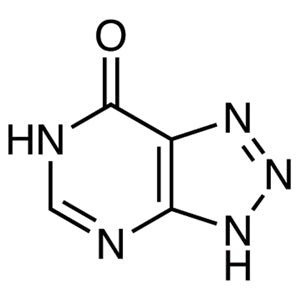
2-Thioxanthine is a chemical compound belonging to the heterocyclic category, characterized by its thioxanthen core structure. It plays a vital role in laboratory settings, particularly in organic chemistry and pharmacology, where it serves as a key building block for the synthesis of complex molecules. This compound is widely used in research to develop compounds with biological activity, including pharmaceuticals and anticancer agents. Its versatility and chemical stability make it an essential tool for researchers aiming to create innovative drug candidates or functional materials.
The chemical properties of 2-Thioxanthine, including its controlled reactivity and structural complexity, make it a preferred choice for synthetic chemists. The presence of a heterocyclic ring allows for various chemical reactions such as substitution, reduction, and oxidation, which are crucial in the development of bioactive compounds. Its stability under standard laboratory conditions ensures consistent results, making it a reliable material for both academic and industrial research. The compound’s ability to participate in diverse synthetic pathways further enhances its utility in advanced chemical applications.
In Indonesian laboratories, 2-Thioxanthine is commonly used in organic chemistry, pharmacology, and biochemical research. It is frequently applied in the synthesis of pharmaceutical intermediates and bioactive compounds. Its availability in various packaging sizes and ease of handling make it a practical choice for researchers working on drug development and molecular design. Its role in advancing scientific discovery is well recognized in the Indonesian scientific community.
TCI brochures (PDF)
- Nucleosides, Nucleotides, Nucleic Acids and Related Reagents 2026-03-23 · p. 9
- Reagents for Biological Research 2025-03-11 · p. 60
- Organic synthesis applications benefit from 2-Thioxanthine due to its heterocyclic structure and reactivity, enabling the creation of complex molecules with biological activity.
- Pharmacological research utilizes this compound to develop new drugs, as it serves as a building block for compounds with therapeutic potential.
- Biochemical studies incorporate 2-Thioxanthine to explore its role in molecular interactions and its potential in drug targeting mechanisms.
- Industrial chemical processes rely on its stability and controlled reactivity to produce high-quality intermediates for pharmaceutical and agrochemical applications.
- Academic research projects use 2-Thioxanthine to investigate its chemical behavior and explore its applications in synthetic chemistry and medicinal chemistry.
| Brand | TCI |
|---|---|
| CAS number | 2487-40-3 |
| Molecular formula | — |
| Purity | — |
| Category | Chemistry > Building Blocks > Heterocyclic Building Blocks |
| Pack sizes | Available in various sizes as per standard laboratory requirements |
| Physical form | Solid |
| Storage | Store in a cool, dry place away from light and moisture |
2-Thioxanthine should be stored in a cool, dry place, away from direct light and moisture to maintain its chemical integrity. It is recommended to use airtight containers to prevent exposure to air and moisture, which could affect its stability. Due to its heterocyclic nature, it is important to handle the compound with care to avoid contamination. In laboratory settings, proper personal protective equipment such as gloves and safety goggles should be worn when handling this material. The compound is generally stable under normal storage conditions, making it suitable for long-term use in research applications. Always ensure that the storage area is well-ventilated and free from incompatible substances to maintain a safe working environment.
—
Produk Terkait
-
6-Thioxanthine TCI T4235
Regular price Rp 5.565.000,00Regular price -
8-Azahypoxanthine TCI A0555
Regular price Rp 13.144.950,00Regular price -
7-Deazahypoxanthine TCI D4324
Regular price Rp 1.115.100,00Regular price -
AdenineHydrochlorideHemihydrate TCI A0150
Regular price From Rp 664.650,00Regular price -
Uracil TCI U0013
Regular price From Rp 689.850,00Regular price -
4-Thiouracil TCI T2757
Regular price Rp 2.782.500,00Regular price -
8-Bromo-7-(2-butyn-1-yl)-3-methylxanthine TCI B4454
Regular price Rp 1.405.950,00Regular price -
O~6~-Benzylguanine TCI B4208
Regular price From Rp 1.167.600,00Regular price