2,4,6-Tribromoaniline is a chemical compound widely used as a building block in various chemical reactions, particularly in the synthesis of aromatic and heterocyclic compounds. This compound plays a crucial role in laboratory settings, where it serves as a versatile reagent for creating more complex molecular structures. Its ability to react with different reagents makes it an essential component in organic chemistry research. In Indonesian laboratories, it is commonly used for developing new chemical compounds and conducting advanced synthesis experiments.
The chemical properties of 2,4,6-Tribromoaniline make it a preferred choice for researchers. It exhibits high reactivity and chemical stability, enabling it to participate in a wide range of reaction conditions. Its aromatic structure allows for substitution and electrophilic reactions, which are key in organic synthesis. Additionally, its solubility in organic solvents facilitates its use in various experimental procedures. These characteristics make it an ideal material for both academic and industrial research applications.
In Indonesian laboratories, 2,4,6-Tribromoaniline is extensively used in organic chemistry research. It is commonly found in research institutions and chemical laboratories where it supports the development of new compounds and materials. Its role in creating complex molecular structures is vital for both teaching and experimental purposes. The compound is also used in the production of intermediate chemical products, contributing to the advancement of chemical science in Indonesia.
- Organic synthesis is a primary application where 2,4,6-Tribromoaniline is used to create complex aromatic and heterocyclic compounds due to its reactivity and structural versatility.
- Intermediate chemical production benefits from this compound as it serves as a key starting material for the synthesis of various functional chemicals.
- Research in pharmaceutical development often incorporates this compound because of its ability to form diverse molecular structures through substitution reactions.
- Analytical chemistry applications utilize this compound for its stability and reactivity in controlled reaction environments.
- Teaching laboratories use it to demonstrate fundamental chemical reactions and structural modifications in organic chemistry.
| Brand | TCI |
|---|---|
| CAS number | 147-82-0 |
| Molecular formula | — |
| Purity | — |
| Category | Chemistry > Building Blocks > Non-Heterocyclic Building Blocks |
| Pack sizes | Available in various quantities as per supplier specifications |
| Physical form | Solid |
| Storage | Store in a cool, dry place away from light and moisture |
This compound should be stored in a cool, dry environment, away from direct light and moisture. It is recommended to use airtight containers to prevent exposure to air and humidity. Due to its reactivity, it should be handled with care, using appropriate personal protective equipment such as gloves and safety goggles. It is important to ensure that it is kept away from incompatible substances such as strong oxidizers. In laboratory settings, proper ventilation is essential to minimize inhalation risks. Always follow standard safety protocols when handling and storing this chemical to ensure a safe working environment.
—
Produk Terkait
-
2,4,6-Tribromoaniline TCI T1088
Regular price Rp 928.200,00Regular priceRp 648.900,00Sale price Rp 928.200,00 -
4-Bromoaniline TCI B1393
Regular price From Rp 1.193.850,00Regular priceRp 834.750,00Sale price From Rp 1.193.850,00 -
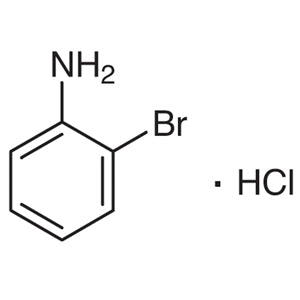
2-BromoanilineHydrochloride TCI B0870
Regular price Rp 1.670.550,00Regular priceRp 1.167.600,00Sale price Rp 1.670.550,00 -
3-Bromoaniline TCI B0542
Regular price From Rp 1.696.800,00Regular priceRp 1.186.500,00Sale price From Rp 1.696.800,00 -
2-Bromoaniline TCI B0541
Regular price From Rp 1.273.650,00Regular priceRp 890.400,00Sale price From Rp 1.273.650,00 -
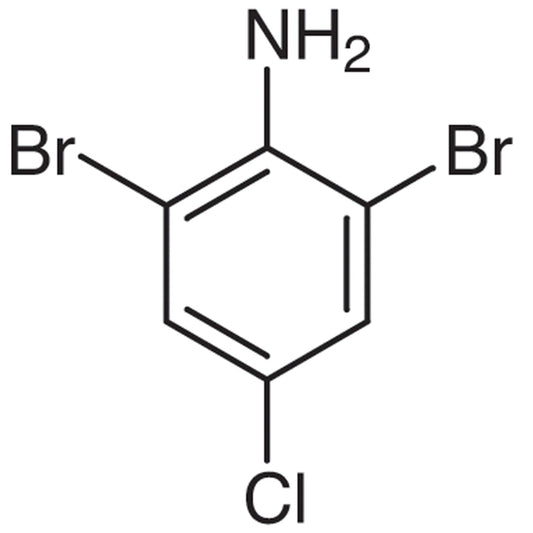
4-Chloro-2,6-dibromoaniline TCI B1516
Regular price Rp 2.068.500,00Regular priceRp 1.445.850,00Sale price Rp 2.068.500,00 -
3,5-Dibromoaniline TCI D4802
Regular price Rp 2.889.600,00Regular priceRp 2.020.200,00Sale price Rp 2.889.600,00 -
2,5-Dibromoaniline TCI D1989
Regular price From Rp 1.326.150,00Regular priceRp 927.150,00Sale price From Rp 1.326.150,00