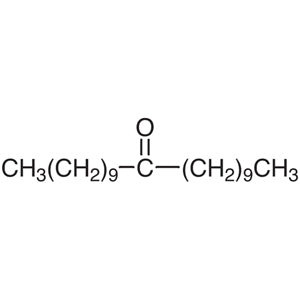
12-Tricosanone is an organic compound widely used as a foundational material in various chemical reactions and the synthesis of complex molecules. It serves as a key building block in laboratory settings, enabling the creation of compounds with specific properties, such as aromatic structures or bioactive molecules. Its unique molecular structure, consisting of a long carbon chain, contributes to its reactivity under different conditions, making it a versatile tool for chemists. This compound is particularly valuable in synthetic chemistry due to its ability to participate in multiple reaction pathways.
The compound’s stable molecular structure and controlled reactivity make it a preferred choice for laboratory applications. It exhibits relatively high melting and boiling points, which facilitate heating and cooling processes during chemical reactions. These physical properties ensure consistent performance in laboratory environments. Additionally, its availability in various packaging options enhances its usability across different experimental scales. The compound’s reliability and predictable behavior contribute to its widespread use in both academic and industrial research settings.
In Indonesian laboratories, 12-Tricosanone is extensively utilized in chemical research, especially in the synthesis of organic compounds and the development of chemical products. It supports studies related to the physical and chemical properties of complex molecules. Its role as a building block is crucial in advancing research in synthetic chemistry and pharmaceutical development. The compound’s versatility and stability make it an essential resource for scientists working in diverse chemical fields.
Related TCI products
- Organic synthesis applications benefit from 12-Tricosanone's reactivity and structural versatility, allowing for the creation of complex molecular frameworks.
- It is ideal for the development of bioactive compounds due to its ability to participate in various reaction mechanisms and its compatibility with functional group modifications.
- In the study of physical and chemical properties of complex molecules, 12-Tricosanone provides a stable and predictable starting material for experimental investigations.
- Its use in aromatic compound synthesis is supported by its long carbon chain structure, which facilitates the formation of aromatic rings through various synthetic routes.
- The compound is well-suited for research in chemical product development, where its predictable behavior and reactivity aid in the design of new materials and formulations.
| Brand | TCI |
|---|---|
| CAS number | 540-09-0 |
| Molecular formula | — |
| Purity | — |
| Category | Chemistry > Building Blocks > Non-Heterocyclic Building Blocks |
| Pack sizes | Available in various packaging options for laboratory use |
| Physical form | — |
| Storage | Store in a cool, dry place away from direct sunlight |
12-Tricosanone should be stored in a cool, dry environment to maintain its chemical stability and prevent degradation. It is recommended to keep the compound in airtight containers to minimize exposure to moisture and air, which could affect its reactivity. Laboratory personnel should handle the compound with care, using appropriate personal protective equipment such as gloves and safety goggles to ensure safe handling. The compound is generally non-hazardous under normal conditions but should be stored away from incompatible materials. Proper labeling of storage containers is essential to ensure safe handling and prevent accidental exposure. Regular inspection of storage conditions is advised to maintain the integrity of the compound throughout its shelf life.
—
Produk Terkait
-
11-Heneicosanone TCI H0532
Regular price From Rp 4.531.800,00Regular priceRp 3.168.900,00Sale price From Rp 4.531.800,00 -
14-Heptacosanone TCI H0512
Regular price Rp 2.837.100,00Regular priceRp 1.983.450,00Sale price Rp 2.837.100,00