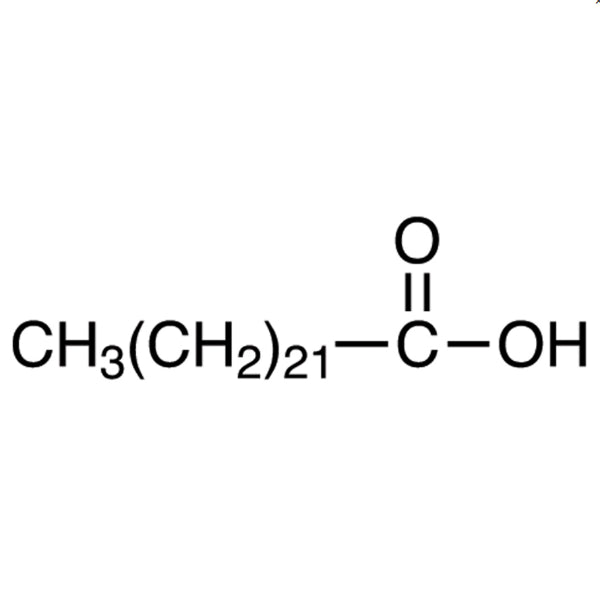
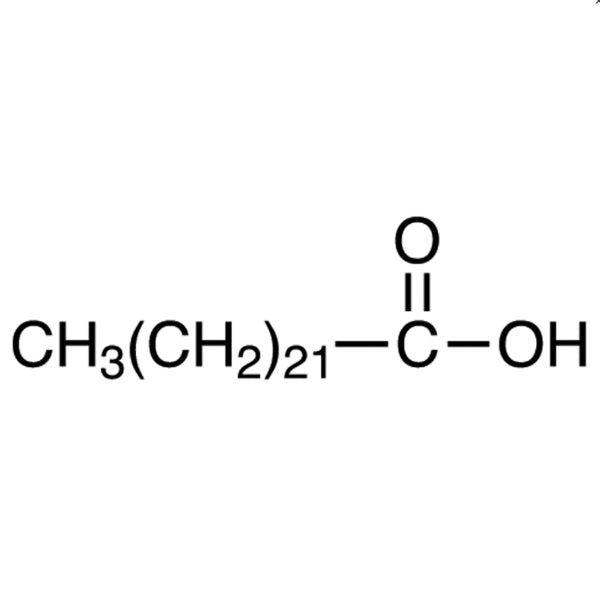
Tricosanoic Acid (TCI T0402), with CAS number 2433-96-7, is a chemical compound widely used in scientific research, particularly in the field of electronic materials and nanotechnology. This material plays a crucial role in the synthesis of colloidal quantum dots (QDs), which are nanoscale semiconductor particles with unique optical and electronic properties. Its long molecular structure enables it to act as a ligand or solvent during the fabrication process, influencing the optical characteristics and stability of the resulting quantum dots. Due to its chemical stability under specific conditions, it is a reliable choice for researchers working with sensitive nanomaterials.
Tricosanoic Acid is preferred for its chemical inertness and ability to form complexes with transition metals, making it suitable for applications requiring stability and consistency. It is soluble in organic solvents such as toluene and hexane, which facilitates its use in various synthetic protocols. Its non-reactive nature ensures minimal interference during chemical reactions, allowing for precise control over the properties of the final product. These properties make it an essential reagent in advanced materials research.
In Indonesian laboratories, Tricosanoic Acid is commonly used in electronic material research, including the development of optoelectronic devices and sensors. Its role in colloidal quantum dot synthesis supports ongoing efforts in nanotechnology and material science. The availability of this compound in different packaging options makes it convenient for both small-scale and larger laboratory applications.
TCI brochures (PDF)
- Colloidal Quantum Dot (QD) Research Reagents 2026-05-21 · p. 3
- Lipids 2025-12-17 · p. 4
- Building Blocks for Organic Semiconductor 2026-03-24 · p. 43
- Colloidal Quantum Dot Synthesis: Tricosanoic Acid serves as a ligand in the synthesis of colloidal quantum dots, enabling precise control over their optical and electronic properties.
- Electronic Material Development: It is used in the creation of advanced electronic materials, supporting the fabrication of optoelectronic devices and nanoscale sensors.
- Nanotechnology Research: Its role in forming stable complexes with transition metals makes it ideal for nanomaterial synthesis and characterization studies.
- Organic Solvent Compatibility: The compound's solubility in organic solvents like toluene and hexane allows for versatile use in various synthetic and analytical processes.
- Stability in Synthesis Processes: Its chemical stability under controlled conditions ensures consistent results in material synthesis and testing.
| Brand | TCI |
|---|---|
| CAS number | 2433-96-7 |
| Molecular formula | — |
| Purity | — |
| Category | Materials Science > Electronic Materials > Colloidal Quantum Dot (QD) Research Reagents |
| Pack sizes | Available in multiple packaging options suitable for laboratory use |
| Physical form | Solid or liquid, depending on the specific product variant |
| Storage | Store in a cool, dry place away from direct sunlight and moisture |
Tricosanoic Acid should be stored in a cool, dry environment, away from direct sunlight and moisture to maintain its chemical stability. It is recommended to use airtight containers to prevent exposure to air and contaminants. Due to its solubility in organic solvents, it should be kept in containers that are compatible with such solvents to avoid leakage or reaction. General laboratory precautions include handling with care to avoid skin contact and ensuring proper ventilation when working with vapors. The compound is non-reactive under normal conditions, but it is advisable to follow standard safety protocols when handling any chemical reagent. Proper labeling and storage are essential to ensure safe and effective use in research settings.
—
Product Categories
Produk Terkait
-
HeneicosanoicAcid TCI H0010
Regular price From Rp 3.843.000,00Regular priceRp 2.702.700,00Sale price From Rp 3.843.000,00 -
ValericAcid TCI V0003
Regular price From Rp 610.050,00Regular priceRp 426.300,00Sale price From Rp 610.050,00 -
UndecanoicAcid TCI U0004
Regular price From Rp 1.008.000,00Regular priceRp 720.300,00Sale price From Rp 1.008.000,00 -
BehenicAcid TCI B1747
Regular price Rp 4.028.850,00Regular priceRp 2.832.900,00Sale price Rp 4.028.850,00 -
ButyricAcid TCI B0754
Regular price From Rp 477.750,00Regular priceRp 333.900,00Sale price From Rp 477.750,00 -
TridecanoicAcid TCI T0412
Regular price From Rp 3.843.000,00Regular priceRp 2.702.700,00Sale price From Rp 3.843.000,00 -
LignocericAcid TCI T0076
Regular price From Rp 2.147.250,00Regular priceRp 1.517.250,00Sale price From Rp 2.147.250,00 -
StearicAcid TCI S0163
Regular price From Rp 477.750,00Regular priceRp 333.900,00Sale price From Rp 477.750,00