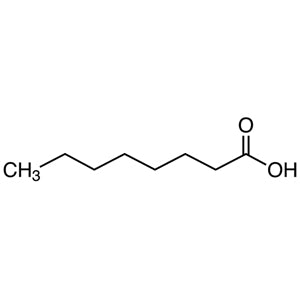
Butyric acid (TCI B0754, CAS 107-92-6) is an essential organic compound widely used in laboratory settings for its versatility and chemical reactivity. As a simple carboxylic acid, it serves as a fundamental building block in organic synthesis, enabling the creation of more complex molecules. Its role in chemical experiments is crucial, particularly in the development of esters, fatty acids, and other derivatives that find applications in various industries. Due to its chemical stability and reactivity, it is a go-to material for chemists seeking reliable and consistent results in their research.
This compound is favored for its high purity, solubility in organic solvents, and relatively high boiling point, which makes it suitable for a wide range of experimental conditions. Its molecular structure is straightforward yet highly functional, allowing it to participate in numerous chemical reactions. The compound’s solubility and reactivity contribute to its effectiveness in both analytical and synthetic applications. Additionally, its well-defined chemical properties ensure reproducibility and accuracy in laboratory experiments.
In Indonesian laboratories, butyric acid is commonly used in organic synthesis and chemical analysis. It plays a key role in research related to pharmaceuticals, cosmetics, and food science. Its presence in these fields highlights its importance as a foundational reagent. Despite its strong, distinctive odor, its utility in the laboratory is unquestionable due to its purity and chemical behavior. It is a staple in many research facilities across Indonesia, supporting both academic and industrial chemical investigations.
TCI brochures (PDF)
- Colloidal Quantum Dot (QD) Research Reagents 2026-05-21 · p. 3
- Lipids 2025-12-17 · p. 4
- Building Blocks for Organic Semiconductor 2026-03-24 · p. 40
- Reagents for Biological Research 2025-03-11 · p. 63
- Organic synthesis is a primary application where butyric acid is used to create esters, fatty acids, and other derivatives due to its reactivity and chemical stability.
- Chemical analysis benefits from butyric acid’s solubility in organic solvents, making it ideal for chromatographic and spectroscopic studies.
- Pharmaceutical research utilizes butyric acid as a building block for synthesizing compounds with therapeutic applications.
- Cosmetic formulation relies on butyric acid for creating fragrance compounds and modifying the texture of products.
- Food science applications involve butyric acid in the study of flavor compounds and the development of food additives.
| Brand | TCI |
|---|---|
| CAS number | 107-92-6 |
| Molecular formula | — |
| Purity | — |
| Category | Chemistry > Building Blocks > Non-Heterocyclic Building Blocks |
| Pack sizes | — |
| Physical form | Liquid |
| Storage | Store in a cool, dry place away from direct sunlight and incompatible materials. |
Butyric acid should be stored in a cool, dry location, away from direct sunlight and sources of heat. It is recommended to use sealed containers made of glass or high-density polyethylene to prevent contamination and evaporation. Due to its strong odor, it is advisable to handle it in a well-ventilated area or fume hood to minimize exposure. The compound is corrosive to certain materials, so it should not be stored near reactive substances such as strong bases or oxidizers. Always ensure proper personal protective equipment, including gloves and goggles, is worn when handling this material. Its chemical reactivity necessitates careful storage to maintain its integrity and ensure safe laboratory practices.
—
Product Categories
Produk Terkait
-
ValericAcid TCI V0003
Regular price From Rp 610.050,00Regular priceRp 426.300,00Sale price From Rp 610.050,00 -
UndecanoicAcid TCI U0004
Regular price From Rp 1.008.000,00Regular priceRp 720.300,00Sale price From Rp 1.008.000,00 -
BehenicAcid TCI B1747
Regular price Rp 4.028.850,00Regular priceRp 2.832.900,00Sale price Rp 4.028.850,00 -
StearicAcid TCI S0163
Regular price From Rp 477.750,00Regular priceRp 333.900,00Sale price From Rp 477.750,00 -
PalmiticAcid TCI P1145
Regular price Rp 2.704.800,00Regular priceRp 1.891.050,00Sale price Rp 2.704.800,00 -
NonanoicAcid TCI P0952
Regular price From Rp 530.250,00Regular priceRp 386.400,00Sale price From Rp 530.250,00 -
PalmiticAcid TCI P0002
Regular price From Rp 505.050,00Regular priceRp 352.800,00Sale price From Rp 505.050,00 -
n-OctanoicAcid TCI O0027
Regular price From Rp 557.550,00Regular priceRp 405.300,00Sale price From Rp 557.550,00