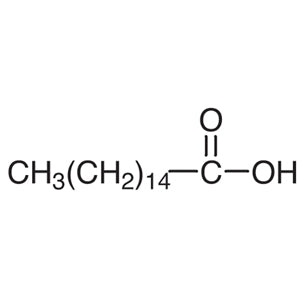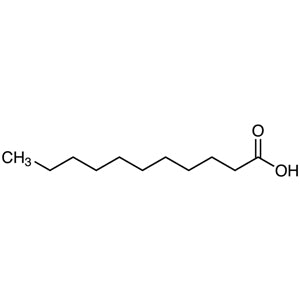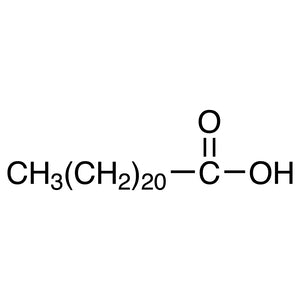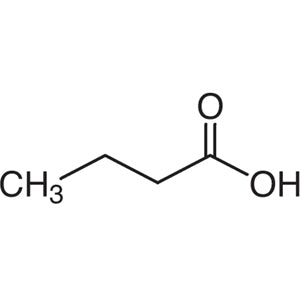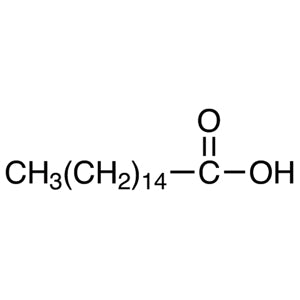
Palmitic Acid from TCI is a straight-chain saturated fatty acid with sixteen carbon atoms (C16). It is one of the most abundant fatty acids in nature and occurs widely in palm oil, animal fats, and cell membranes. In the laboratory, palmitic acid serves as a non-heterocyclic building block for synthesizing esters, amides, metal salts, and other lipid derivatives. It is also widely used as a standard or model compound in lipid, surfactant, and materials research. Its simple, well-defined structure makes it easy to compare experimental results with published scientific literature.
Researchers choose palmitic acid because it combines a long, hydrophobic hydrocarbon chain with a reactive carboxylic acid group. The carboxyl group can be readily modified through esterification, amidation, or salt formation, giving chemists a reliable starting point for many derivatives. This amphiphilic character makes the compound useful in studies of thin films, micelles, and surface modification. Because its chain is fully saturated, palmitic acid resists oxidation better than unsaturated fatty acids and stays relatively stable in storage. It is also studied as a thermal energy storage material (phase change material) because of its melting and freezing behavior.
In Indonesian laboratories, palmitic acid is especially relevant because palm oil is such an important commodity in the country. University chemistry departments, agro-industrial research centers, and quality control laboratories use it as a reference compound when studying fatty acid composition, oleochemical derivatives, and palm-based materials. Organic synthesis groups use it as a dependable C16 building block, while materials science and renewable energy researchers look at its potential in surfactant formulations, surface coatings, and thermal storage systems suited to tropical conditions.
TCI brochures (PDF)
- Colloidal Quantum Dot (QD) Research Reagents 2026-05-21 · p. 3
- Lipids 2025-12-17 · p. 4
- Building Blocks for Organic Semiconductor 2026-03-24 · p. 42
- Ester and amide synthesis: the reactive carboxylic acid group undergoes straightforward esterification and amidation, so it is a convenient C16 building block for preparing lipid derivatives.
- Metal salt (soap) preparation: palmitic acid readily forms salts with metal bases, which supports research on metallic soaps, lubricant additives, and surfactant behavior in controlled laboratory systems.
- Lipid and fatty acid reference studies: its simple, well-characterized saturated structure makes it a dependable standard or model compound for comparing results against established literature on lipids and membranes.
- Thin film, micelle, and surface modification research: its amphiphilic structure, with a hydrophobic chain and a polar head group, suits studies of monolayers, self-assembly, and hydrophobic surface treatments.
- Phase change material research: its melting and freezing behavior makes it a candidate for thermal energy storage studies, including work on palm-derived materials for building and energy applications.
| Brand | TCI (product code P0002) |
|---|---|
| CAS number | 57-10-3 |
| Molecular formula | — |
| Purity | — |
| Category | Chemistry > Building Blocks > Non-Heterocyclic Building Blocks |
| Pack sizes | as listed on the product page |
| Physical form | solid at room temperature (saturated long-chain fatty acid) |
| Storage | keep tightly closed in a cool, dry place; follow the storage conditions on the TCI label and Safety Data Sheet |
Store palmitic acid in its original, tightly sealed container in a cool, dry, well-ventilated area, away from direct sunlight, heat sources, and strong oxidizing agents. Glass or chemically compatible plastic containers with secure caps work well for transferring portions into smaller lots. Its saturated chain gives it good oxidative stability, but limiting exposure to moisture and air still helps preserve quality over time. Handle it according to standard laboratory practice: wear safety glasses, gloves, and a lab coat, avoid creating or breathing in dust, and wash your hands after use. Check the TCI Safety Data Sheet for detailed hazard, first aid, and disposal information before use.
—
Product Categories
Produk Terkait
-
PalmiticAcid TCI P1145
Regular price Rp 2.704.800,00Regular priceRp 1.891.050,00Sale price Rp 2.704.800,00 -
ValericAcid TCI V0003
Regular price From Rp 610.050,00Regular priceRp 426.300,00Sale price From Rp 610.050,00 -
UndecanoicAcid TCI U0004
Regular price From Rp 1.008.000,00Regular priceRp 720.300,00Sale price From Rp 1.008.000,00 -
BehenicAcid TCI B1747
Regular price Rp 4.028.850,00Regular priceRp 2.832.900,00Sale price Rp 4.028.850,00 -
ButyricAcid TCI B0754
Regular price From Rp 477.750,00Regular priceRp 333.900,00Sale price From Rp 477.750,00 -
StearicAcid TCI S0163
Regular price From Rp 477.750,00Regular priceRp 333.900,00Sale price From Rp 477.750,00 -
SuccinicAcid TCI S0100
Regular price From Rp 530.250,00Regular priceRp 386.400,00Sale price From Rp 530.250,00 -
SorbicAcid TCI S0053
Regular price From Rp 505.050,00Regular priceRp 368.550,00Sale price From Rp 505.050,00