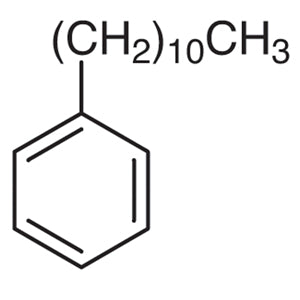
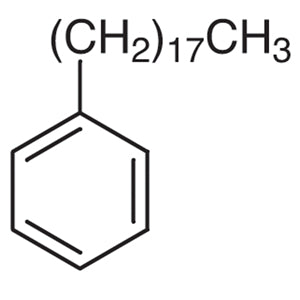
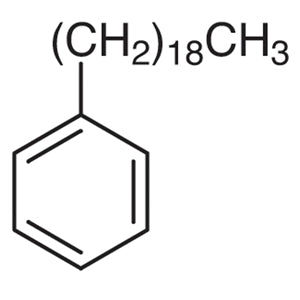
Tridecylbenzene is a chemical compound classified under non-heterocyclic building blocks, commonly used in laboratory settings as a foundational material for various chemical reactions. It serves as a versatile reagent in the synthesis of complex compounds, offering stability and compatibility with a wide range of chemical processes. Its molecular structure is robust, making it an essential component in both academic and industrial research environments. Due to its inert nature, it is often preferred for experiments requiring minimal reactivity with other substances.
One of the key attributes that make Tridecylbenzene a preferred choice is its high boiling point, which allows it to remain stable under elevated temperatures. This property is particularly valuable in high-temperature applications such as distillation or thermal decomposition processes. Additionally, its non-toxic composition ensures a safer working environment, reducing health and safety risks in the laboratory. The compound’s inertness also minimizes the risk of unintended side reactions, enhancing the reliability of experimental outcomes.
In Indonesian laboratories, Tridecylbenzene is frequently utilized in chemical, pharmaceutical, and materials science research. It is commonly found in academic institutions and industrial laboratories where it supports the development of new compounds and materials. Its stability and safety profile make it a reliable choice for a wide range of experimental applications, contributing to the success of various research projects.
- Chemical synthesis: Tridecylbenzene is widely used in the synthesis of complex organic compounds due to its stable molecular structure and inert nature.
- Pharmaceutical research: It serves as a building block in the development of new drug compounds, providing a reliable and non-reactive base for further modifications.
- Material science experiments: Its high boiling point and chemical stability make it suitable for experiments involving high-temperature processes and polymer synthesis.
- Analytical chemistry: It is used as a reference standard in chromatographic and spectroscopic analyses due to its predictable behavior and purity.
- Industrial process development: It is employed in the formulation of specialty chemicals and industrial materials where chemical stability is crucial.
| Brand | TCI |
|---|---|
| CAS number | 123-02-4 |
| Molecular formula | — |
| Purity | — |
| Category | Chemistry > Building Blocks > Non-Heterocyclic Building Blocks |
| Pack sizes | Available in various quantities as per supplier specifications |
| Physical form | Liquid |
| Storage | Store in a cool, dry place away from direct sunlight and incompatible materials |
Tridecylbenzene should be stored in a cool, dry environment to maintain its stability and prevent degradation. It is recommended to keep it in a tightly sealed container made of materials compatible with its chemical properties, such as glass or high-density polyethylene. Due to its inert nature, it does not react readily with air or moisture, but it should still be handled with care to avoid contamination. In laboratory settings, it is important to ensure proper ventilation and use appropriate personal protective equipment when handling the compound. Regular monitoring of storage conditions is advised to maintain the integrity of the material and ensure safe usage in all experimental applications.
—
Produk Terkait
-
Decylbenzene TCI D0034
Regular price From Rp 1.087.800,00Regular priceRp 760.200,00Sale price From Rp 1.087.800,00 -
Undecylbenzene TCI U0010
Regular price From Rp 1.140.300,00Regular priceRp 796.950,00Sale price From Rp 1.140.300,00 -
Dodecylbenzene TCI D1074
Regular price From Rp 1.510.950,00Regular priceRp 1.056.300,00Sale price From Rp 1.510.950,00 -
Dodecylbenzene(hardtype)(mixtureofbranchedchainisomers) TCI D0988
Regular price From Rp 637.350,00Regular priceRp 445.200,00Sale price From Rp 637.350,00 -
Tetradecylbenzene TCI T0866
Regular price From Rp 1.458.450,00Regular priceRp 1.019.550,00Sale price From Rp 1.458.450,00 -
Pentadecylbenzene TCI P0665
Regular price From Rp 2.625.000,00Regular priceRp 1.835.400,00Sale price From Rp 2.625.000,00 -
Octadecylbenzene TCI O0160
Regular price From Rp 3.127.950,00Regular priceRp 2.187.150,00Sale price From Rp 3.127.950,00 -
Nonadecylbenzene TCI N0349
Regular price Rp 3.738.000,00Regular priceRp 2.613.450,00Sale price Rp 3.738.000,00