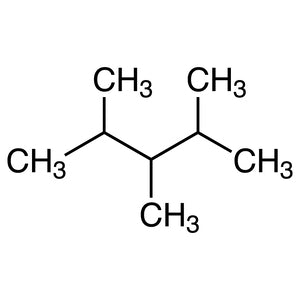
2,3,4-Trimethylpentane is a chemical compound widely used as a building block in various laboratory applications, particularly in the synthesis of complex organic compounds. It serves as a versatile reagent that can be incorporated into reaction mixtures to facilitate the formation of specific products. Due to its stable molecular structure, it is often preferred in environments where chemical reactivity needs to be minimized. This compound is commonly found in chemical laboratories across Indonesia, where it supports both fundamental and applied research. Its non-reactive nature makes it an essential component in many synthetic processes, contributing to the reliability and reproducibility of experimental outcomes.
The compound’s high boiling point and non-polar characteristics make it an ideal solvent for reactions requiring thermal stability. These properties allow it to maintain its integrity under varying temperature conditions, ensuring consistent performance in laboratory settings. Additionally, its resistance to degradation and non-corrosive nature reduce the risk of accidents or equipment damage, enhancing laboratory safety. The compound’s inertness also makes it suitable for use in controlled environments where chemical stability is critical. Its reliability and consistent performance have made it a trusted choice for researchers and technicians in Indonesia.
In Indonesian laboratories, 2,3,4-Trimethylpentane is frequently used in both academic and industrial research settings. It is a staple in chemical synthesis, where it acts as a solvent or a component in reaction mixtures. Its availability and reliability have made it a preferred material for institutions and universities that require a stable and dependable chemical for their experiments. Its non-reactive and stable properties ensure that it can be safely used in a wide range of laboratory applications without compromising the integrity of the research process.
- Organic synthesis reactions benefit from 2,3,4-Trimethylpentane due to its non-reactive nature and stability, making it a reliable solvent for complex compound formation.
- It is commonly used in solvent systems for chromatographic separations, where its non-polar properties help in the efficient separation of compounds.
- In analytical chemistry, this compound is used as a reference standard for calibration purposes, offering consistent and accurate results.
- It serves as a component in reaction mixtures for the preparation of specialized organic compounds, ensuring controlled and reproducible outcomes.
- The compound is also utilized in the formulation of custom chemical mixtures for specific experimental requirements, enhancing the versatility of laboratory processes.
| Brand | TCI |
|---|---|
| CAS number | 565-75-3 |
| Molecular formula | — |
| Purity | — |
| Category | Chemistry > Building Blocks > Non-Heterocyclic Building Blocks |
| Pack sizes | Available in various sizes as per standard laboratory supply |
| Physical form | Liquid |
| Storage | Store in a cool, dry place away from direct sunlight and incompatible materials |
2,3,4-Trimethylpentane should be stored in a cool, dry location, away from direct sunlight and sources of heat. It is recommended to use airtight containers made of materials compatible with hydrocarbons, such as glass or stainless steel. Due to its non-reactive and non-corrosive nature, it does not pose significant hazards during storage. However, it is important to ensure that the storage area is well-ventilated to prevent the accumulation of vapors. In laboratory settings, it should be handled with care, using appropriate personal protective equipment when necessary. Its stability under normal conditions makes it safe for routine use, provided standard safety protocols are followed.
—
Produk Terkait
-
2,2,3-Trimethylpentane TCI T0689
Regular price Rp 7.817.250,00Regular priceRp 5.466.300,00Sale price Rp 7.817.250,00 -
2,2,4,4-Tetramethylpentane TCI T1704
Regular price From Rp 1.220.100,00Regular priceRp 852.600,00Sale price From Rp 1.220.100,00 -
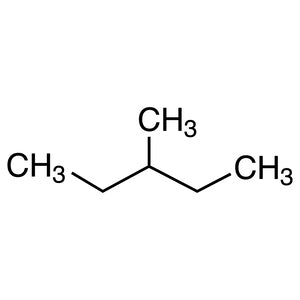
3-Methylpentane TCI M0383
Regular price From Rp 955.500,00Regular priceRp 667.800,00Sale price From Rp 955.500,00 -
2-Methylpentane TCI M0382
Regular price From Rp 928.200,00Regular priceRp 648.900,00Sale price From Rp 928.200,00 -
3-Ethyl-2-methylpentane TCI E0259
Regular price Rp 10.044.300,00Regular priceRp 7.023.450,00Sale price Rp 10.044.300,00 -
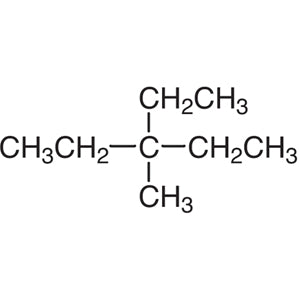
3-Ethyl-3-methylpentane TCI E0258
Regular price Rp 5.034.750,00Regular priceRp 3.520.650,00Sale price Rp 5.034.750,00 -
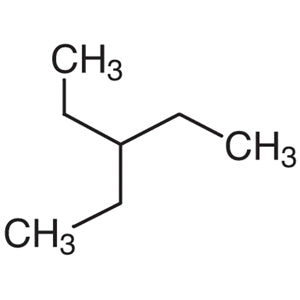
3-Ethylpentane TCI E0046
Regular price Rp 5.274.150,00Regular priceRp 3.687.600,00Sale price Rp 5.274.150,00 -
2,2-Dimethylpentane TCI D1673
Regular price From Rp 848.400,00Regular priceRp 593.250,00Sale price From Rp 848.400,00