DL-Tyrosine is a chemical compound widely used in various chemical and biochemical experiments, particularly in the study of proteins and peptides. As an essential amino acid, it plays a crucial role in the synthesis of complex compounds and the development of pharmaceuticals. This compound is commonly utilized in laboratories to produce bioactive substances, making it a key component in pharmacological and biotechnological research. Its chemical stability and solubility in water make it a versatile reagent for a wide range of experimental applications.
DL-Tyrosine is preferred due to its high purity and consistent quality, which ensures reliable results in scientific experiments. Its solid form allows for safe and convenient storage, reducing the risk of contamination or degradation. The compound’s ability to dissolve easily in water enhances its usability in various reaction conditions, making it suitable for both small-scale and large-scale laboratory processes. Additionally, its chemical inertness under normal conditions contributes to its stability and ease of handling.
In Indonesian laboratories, DL-Tyrosine is frequently used in scientific research and pharmaceutical product development. Its availability and reliability make it a popular choice among researchers and institutions. It is commonly employed in studies related to biochemistry, molecular biology, and drug discovery. The compound’s versatility and effectiveness in various experimental setups have made it an essential tool for both academic and industrial research in Indonesia.
TCI brochures (PDF)
- Amino Acids and Peptide Synthesis Reagents 2025-08-14 · p. 5
- Peptide Synthesis: DL-Tyrosine is essential for building peptide chains due to its amino acid structure, enabling the creation of bioactive molecules.
- Pharmacological Research: It is used to develop and test new drugs, particularly in the study of neurotransmitters and enzyme inhibitors.
- Biochemical Analysis: DL-Tyrosine serves as a standard in analytical techniques, aiding in the identification and quantification of amino acids in biological samples.
- Molecular Biology Studies: It supports research on protein structure and function, contributing to advancements in genetic and cellular studies.
- Biotechnology Applications: DL-Tyrosine is integral in the production of recombinant proteins and other biopharmaceuticals.
| Brand | TCI |
|---|---|
| CAS number | 556-03-6 |
| Molecular formula | — |
| Purity | — |
| Category | Chemistry > Chemical Biology > Peptide Chemistry |
| Pack sizes | Available in various quantities to suit different laboratory needs |
| Physical form | Solid |
| Storage | Store in a cool, dry place away from moisture and light |
DL-Tyrosine should be stored in a cool, dry place, away from moisture and direct sunlight to maintain its chemical stability. It is recommended to use airtight containers to prevent exposure to air and humidity, which could affect its purity. Since it is a solid, it can be stored in a standard laboratory cabinet, but care should be taken to avoid contamination. Proper labeling of containers is essential for safe handling and identification. In laboratory settings, it is important to use appropriate personal protective equipment, such as gloves and safety goggles, when handling the compound. Regular inspection of storage conditions ensures the compound remains in optimal condition for use in experiments.
—
Product Categories
Produk Terkait
-
L-TyrosineDisodiumSaltHydrate TCI T1423
Regular price Rp 2.068.500,00Regular priceRp 1.461.600,00Sale price Rp 2.068.500,00 -
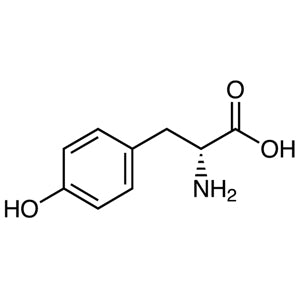
D-Tyrosine TCI T1141
Regular price From Rp 875.700,00Regular priceRp 627.900,00Sale price From Rp 875.700,00 -
L-(-)-Tyrosine TCI T0550
Regular price From Rp 928.200,00Regular priceRp 664.650,00Sale price From Rp 928.200,00 -
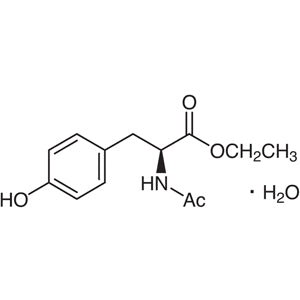
N-Acetyl-L-tyrosineEthylEsterMonohydrate TCI A0118
Regular price From Rp 662.550,00Regular priceRp 478.800,00Sale price From Rp 662.550,00 -
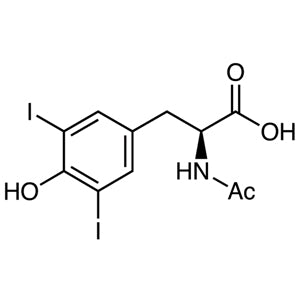
N-Acetyl-3,5-diiodo-L-tyrosine TCI A0087
Regular price Rp 1.060.500,00Regular priceRp 757.050,00Sale price Rp 1.060.500,00 -
L-TyrosineMethylEster TCI T2736
Regular price From Rp 1.167.600,00Regular priceRp 831.600,00Sale price From Rp 1.167.600,00 -
L-Tyrosinetert-ButylEster TCI T2446
Regular price From Rp 1.801.800,00Regular priceRp 1.275.750,00Sale price From Rp 1.801.800,00 -
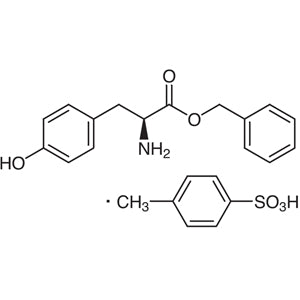
L-TyrosineBenzylEsterp-Toluenesulfonate TCI T2443
Regular price From Rp 1.670.550,00Regular priceRp 1.183.350,00Sale price From Rp 1.670.550,00