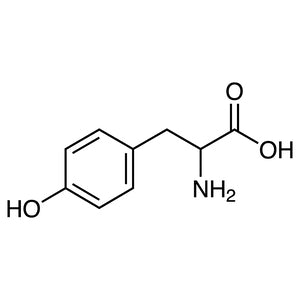
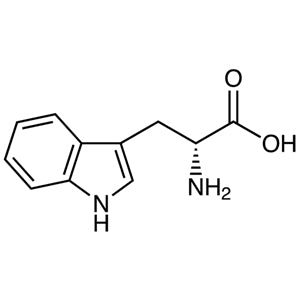
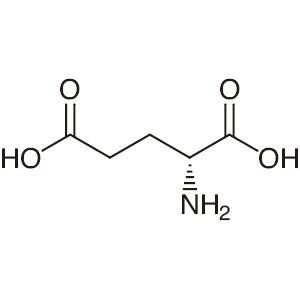
D-Tyrosine is a chemical compound widely used in chemical and biochemical experiments, particularly in the field of peptide and protein research. As a key component in biochemical studies, it plays a vital role in the synthesis of various compounds and the investigation of enzymatic activities. Its unique spatial configuration distinguishes it from its counterpart, L-Tyrosine, which significantly influences its biological activity. This compound is essential for understanding the mechanisms of chemical reactions and for developing new pharmaceuticals and biochemical tools.
D-Tyrosine is valued for its chemical stability under controlled conditions and its solubility in organic solvents such as ethyl acetate and acetone. These properties make it highly suitable for a range of laboratory applications, including synthesis processes and analytical techniques. Its ability to dissolve easily in organic solvents simplifies handling and enhances its usability in experimental settings. Additionally, its consistent performance in various chemical environments ensures reliable results in research and development.
In Indonesian laboratories, D-Tyrosine is extensively used in scientific research across disciplines such as chemistry, molecular biology, and pharmacy. It is commonly found in university laboratories and research institutions where it supports studies on protein structure, enzyme function, and drug development. Its versatility and reliability make it a preferred choice for researchers seeking to explore biochemical interactions and chemical synthesis.
TCI brochures (PDF)
- D-Amino Acids 2026-03-19 · p. 1
- Biofilm Research Reagents 2024-06-21 · p. 2
- Amino Acids and Peptide Synthesis Reagents 2025-08-14 · p. 5
- Peptide Synthesis: D-Tyrosine is used in the synthesis of peptides and proteins due to its structural similarity to L-Tyrosine and its role in forming peptide bonds.
- Enzymatic Activity Testing: It serves as a substrate or inhibitor in enzyme assays to study catalytic mechanisms and substrate specificity.
- Biochemical Research: D-Tyrosine is integral to studies on protein folding, conformational changes, and molecular interactions in biological systems.
- Pharmaceutical Development: It is used in the formulation of drugs and the investigation of pharmacological effects in various biological models.
- Chemical Reaction Mechanism Studies: D-Tyrosine helps in understanding the stereochemistry and reactivity of chemical compounds in different environments.
| Brand | TCI |
|---|---|
| CAS number | 556-02-5 |
| Molecular formula | — |
| Purity | — |
| Category | Chemistry > Chemical Biology > Peptide Chemistry |
| Pack sizes | Available in various quantities as per standard laboratory supply |
| Physical form | White crystalline powder |
| Storage | Store in a cool, dry place away from moisture and light |
D-Tyrosine should be stored in a cool, dry environment to prevent degradation due to moisture and exposure to air. It is recommended to use airtight containers to maintain its chemical stability and prevent contamination. Due to its sensitivity to humidity, it should be kept away from sources of moisture such as open containers or humid storage areas. When handling, it is important to use appropriate personal protective equipment, including gloves and safety goggles, to ensure safety. The compound is non-hazardous under normal conditions but requires careful handling to maintain its integrity and effectiveness in laboratory applications. Proper storage and handling practices ensure its reliability and usability in scientific research.
—
Product Categories
Produk Terkait
-
L-TyrosineDisodiumSaltHydrate TCI T1423
Regular price Rp 2.068.500,00Regular priceRp 1.461.600,00Sale price Rp 2.068.500,00 -
L-(-)-Tyrosine TCI T0550
Regular price From Rp 928.200,00Regular priceRp 664.650,00Sale price From Rp 928.200,00 -
DL-Tyrosine TCI T0549
Regular price From Rp 742.350,00Regular priceRp 534.450,00Sale price From Rp 742.350,00 -
D-Tryptophan TCI T0539
Regular price From Rp 742.350,00Regular priceRp 534.450,00Sale price From Rp 742.350,00 -
D-Proline TCI P0994
Regular price From Rp 1.431.150,00Regular priceRp 1.016.400,00Sale price From Rp 1.431.150,00 -
D-Methionine TCI M0102
Regular price From Rp 900.900,00Regular priceRp 645.750,00Sale price From Rp 900.900,00 -
D-Histidine TCI H0998
Regular price From Rp 1.008.000,00Regular priceRp 720.300,00Sale price From Rp 1.008.000,00 -
D-GlutamicAcid TCI G0057
Regular price From Rp 1.881.600,00Regular priceRp 1.331.400,00Sale price From Rp 1.881.600,00