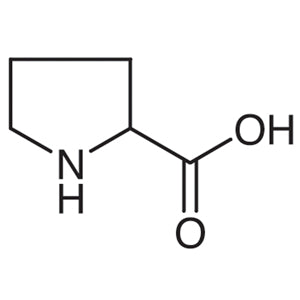
D-Proline from TCI is the D-enantiomer of the amino acid proline. It is the mirror image of L-proline, the form commonly found in proteins. In the laboratory, D-Proline plays an important role in asymmetric synthesis as a chiral organocatalyst, a chiral ligand and a chiral starting material. Proline organocatalysis is widely seen as one of the milestones of modern chemistry. With D-Proline, researchers can obtain products with the opposite absolute configuration to those given by L-proline catalysts. This flexibility is especially valuable when both enantiomers of a target compound need to be prepared.
Chemists choose this material because its structure is simple but effective. A rigid pyrrolidine ring holds a secondary amine group and a carboxylic acid group in the same molecule. The secondary amine can form enamine or iminium intermediates with carbonyl compounds. The carboxylic acid group helps direct the substrate through hydrogen bonding. Together, the two groups give good stereochemical control in aldol, Mannich and Michael reactions. D-Proline dissolves readily in water and polar solvents, has relatively low toxicity and needs no transition metal. This makes it a good fit with the principles of green chemistry.
In Indonesia, D-Proline is used in university organic chemistry research groups, pharmaceutical research and development laboratories, and institutes working on chiral synthesis methods. Researchers often use it alongside L-proline to compare stereochemical outcomes or to reach the less common enantiomer of a target molecule. Graduate students studying organocatalysis also use it as a reference catalyst when developing new methods. Because it needs no metal catalyst, it suits laboratories that want to cut heavy-metal waste and simplify how products are purified.
TCI brochures (PDF)
- Proline-type Organocatalysts 2025-01-30 · p. 2
- D-Amino Acids 2026-03-19 · p. 1
- Biofilm Research Reagents 2024-06-21 · p. 2
- Asymmetric Organocatalysts 2025-06-12 · p. 7
- Asymmetric Synthesis 2026-03-18 · p. 7
- Amino Acids and Peptide Synthesis Reagents 2025-08-14 · p. 4
- Asymmetric aldol reactions: D-Proline forms enamine intermediates with ketones, and its carboxylic acid group guides the aldehyde through hydrogen bonding to give enantioenriched aldol products.
- Asymmetric Mannich reactions: Its secondary amine and carboxylic acid act together to control stereochemistry. This gives chiral β-amino carbonyl compounds with the opposite configuration to L-proline products.
- Asymmetric Michael additions: D-Proline activates carbonyl donors through enamine or iminium pathways. This allows controlled carbon–carbon bond formation with predictable stereochemistry and no transition metal.
- Chiral ligand preparation: Its rigid pyrrolidine ring and two functional groups make D-Proline a useful scaffold for building chiral ligands and catalysts for enantioselective transformations.
- Chiral starting material: As an enantiomerically defined building block, D-Proline gives synthetic chemists a reliable source of D-configured stereocenters for chiral target molecules and intermediates.
| Brand | TCI (product code P0994) |
|---|---|
| CAS number | 344-25-2 |
| Molecular formula | — |
| Purity | — |
| Category | Chemistry > Asymmetric Synthesis > Chiral Catalysts, Chiral Ligands, Chiral Reagents |
| Pack sizes | standard TCI pack sizes, as listed in the TCI catalogue |
| Physical form | solid; see the TCI product label and certificate of analysis for details |
| Storage | keep tightly closed in a cool, dry place |
Store D-Proline in its original, tightly sealed TCI container in a cool, dry, well-ventilated area. Keep it away from moisture, direct sunlight and strong oxidizing agents. Close the container promptly after each use to keep out humidity and contamination. Handle the material according to good laboratory practice. Wear safety glasses, gloves and a lab coat, avoid creating or breathing in dust, and wash your hands after handling. Always check the TCI Safety Data Sheet for full hazard, first-aid and disposal information before use, and dispose of waste according to local regulations.
—
Product Categories
- Asymmetric SynthesisChiral Catalysts, Chiral Ligands, Chiral ReagentsProline-Based Organocatalysts [Asymmetric Synthesis]
- Catalysis and Inorganic ChemistryOrganocatalysts [Catalysis]Asymmetric Organocatalysts
- Chemical BiologyPeptide ChemistryAmino Acid Derivatives [Peptide Chemistry]
- Pharmaceutical Development and Drug Discovery Research ReagentsPeptide ChemistryAmino Acid Derivatives [Peptide Chemistry]
Produk Terkait
-
L-Proline TCI P0481
Regular price From Rp 980.700,00Regular price -
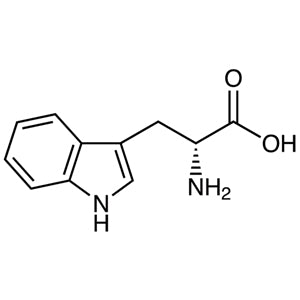
D-Tryptophan TCI T0539
Regular price From Rp 689.850,00Regular price -
D-Methionine TCI M0102
Regular price From Rp 848.400,00Regular price -
trans-4-(tert-Butyldiphenylsilyloxy)-L-proline TCI B3440
Regular price From Rp 4.823.700,00Regular price -
DL-Proline TCI P0480
Regular price From Rp 557.550,00Regular price -
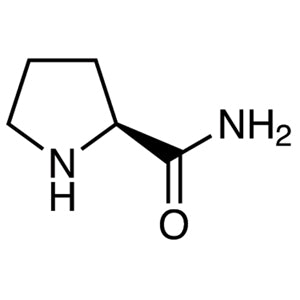
D-Prolinamide TCI P2083
Regular price From Rp 1.087.800,00Regular price -
L-Prolinamide TCI P1382
Regular price From Rp 530.250,00Regular price -
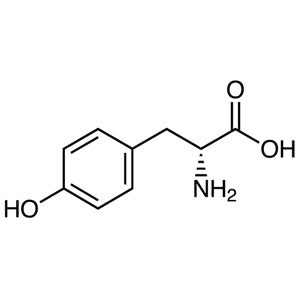
D-Tyrosine TCI T1141
Regular price From Rp 823.200,00Regular price