D-Tryptophan is an organic compound widely used in chemical and biochemical experiments within laboratory settings. As one of the essential amino acids, it plays a crucial role in the synthesis of complex compounds, particularly in catalytic and organic reactions. Its unique chemical structure, featuring both an amino and a carboxyl group, allows for versatile participation in various chemical transformations. This compound is particularly valuable in research fields such as biochemistry, pharmacology, and synthetic chemistry due to its functional versatility and reactivity.
D-Tryptophan is preferred for its stability under controlled conditions and its ability to participate in a wide range of chemical reactions. Its chemical properties make it an ideal candidate for applications requiring precise molecular interactions. The compound is sensitive to moisture and air exposure, which necessitates careful handling and storage. Despite these sensitivities, its chemical reactivity and structural characteristics make it a reliable and essential material for many laboratory processes.
In Indonesian laboratories, D-Tryptophan is extensively used in chemical, biological, and pharmaceutical research. It is commonly found in experiments related to amino acid metabolism, drug synthesis, and biochemical pathways. Its availability in the local market ensures accessibility for researchers and academic institutions, supporting a wide range of scientific investigations. The compound's relevance across multiple scientific disciplines highlights its importance in both academic and industrial research settings.
TCI brochures (PDF)
- D-Amino Acids 2026-03-19 · p. 1
- Biofilm Research Reagents 2024-06-21 · p. 2
- Asymmetric Organocatalysts 2025-06-12 · p. 8
- Asymmetric Synthesis 2026-03-18 · p. 7
- Amino Acids and Peptide Synthesis Reagents 2025-08-14 · p. 5
- Biochemical research benefits from D-Tryptophan as it is essential for studying amino acid metabolism and protein synthesis in biological systems.
- Pharmaceutical development utilizes D-Tryptophan in the synthesis of various drugs and biologically active compounds due to its structural similarity to other amino acids.
- Organic chemistry experiments rely on D-Tryptophan for its reactivity in catalytic and synthetic reactions, making it a key component in the creation of complex molecules.
- Biotechnology applications incorporate D-Tryptophan in the production of enzymes and bioactive compounds, supporting advancements in molecular biology.
- Nutritional and dietary research uses D-Tryptophan to analyze its role in human health and its effects on metabolic processes.
| Brand | TCI |
|---|---|
| CAS number | 153-94-6 |
| Molecular formula | — |
| Purity | — |
| Category | Chemistry > Catalysis and Inorganic Chemistry > Organocatalysts [Catalysis] |
| Pack sizes | Available in various quantities as per standard laboratory supply |
| Physical form | White crystalline powder |
| Storage | Must be stored in a dry, cool, and airtight container to prevent degradation |
D-Tryptophan should be stored in a dry, cool environment to maintain its chemical integrity and prevent moisture-induced degradation. It is recommended to use airtight containers made of glass or high-density polyethylene to minimize exposure to air and humidity. Due to its sensitivity, the compound should be handled with care, ideally in a controlled laboratory setting with proper ventilation. Avoid direct contact with moisture and ensure that storage conditions are consistent to preserve its reactivity and effectiveness. Regular monitoring of storage conditions is advised to ensure the compound remains suitable for use in research applications.
—
Product Categories
Produk Terkait
-
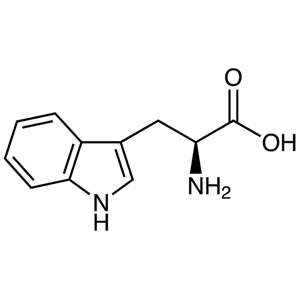
L-Tryptophan TCI T0541
Regular price Rp 955.500,00Regular price -
D-Proline TCI P0994
Regular price From Rp 1.378.650,00Regular price -
D-Methionine TCI M0102
Regular price From Rp 848.400,00Regular price -
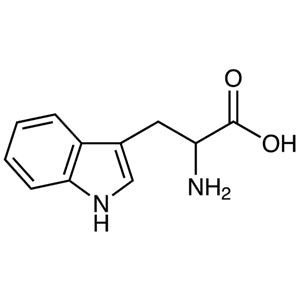
DL-Tryptophan TCI T0540
Regular price Rp 1.829.100,00Regular price -
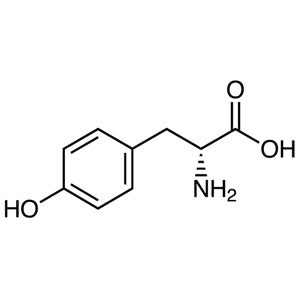
D-Tyrosine TCI T1141
Regular price From Rp 823.200,00Regular price -
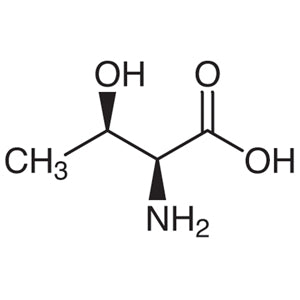
L-(-)-Threonine TCI T0230
Regular price From Rp 584.850,00Regular price -
D-(+)-Threonine TCI T0228
Regular price From Rp 1.908.900,00Regular price -
L-Proline TCI P0481
Regular price From Rp 980.700,00Regular price