L-Tryptophan is a chemical compound that plays a crucial role in various chemical reactions and organic synthesis processes. As an essential amino acid, it is widely used in chemical research, particularly in the fields of catalysis and inorganic chemistry. This compound is valued for its ability to accelerate specific chemical reactions and serve as a building block for the synthesis of complex compounds. Its applications span across multiple scientific disciplines, including pharmaceuticals and biotechnology. In the laboratory, L-Tryptophan is essential for the development of new drugs and other chemical substances.
L-Tryptophan is favored due to its chemical stability under certain conditions and its complex molecular structure. This structure allows it to interact effectively with various reactants and catalysts, making it ideal for high reactivity and molecular specificity in research. Its sensitivity to moisture and air exposure requires careful handling and storage to maintain its quality and effectiveness. These properties make it a reliable and versatile material for advanced chemical experimentation.
In Indonesian laboratories, L-Tryptophan is commonly used in scientific research across multiple fields such as pharmacy, biochemistry, and organic chemistry. It supports the development of new compounds and the study of biochemical processes. Its presence in research settings highlights its importance in both academic and industrial applications, contributing to the advancement of scientific knowledge and innovation.
TCI brochures (PDF)
- Fluorescent Probes for the Characterization of Two Specific Drug Binding Sites on HSA 2025-04-01 · p. 4
- Asymmetric Organocatalysts 2025-06-12 · p. 8
- Asymmetric Synthesis 2026-03-18 · p. 7
- Amino Acids and Peptide Synthesis Reagents 2025-08-14 · p. 5
- Reagents for Biological Research 2025-03-11 · p. 57
- Organic synthesis where L-Tryptophan acts as a building block for complex molecule creation due to its amino acid structure.
- Pharmaceutical research for the development of new drugs and therapeutic agents requiring specific molecular interactions.
- Biochemical studies involving protein synthesis and enzymatic reactions due to its role as an essential amino acid.
- Catalytic processes where its molecular structure enhances reaction efficiency and specificity in chemical transformations.
- Analytical chemistry applications for the identification and quantification of amino acids in various biological samples.
| Brand | TCI |
|---|---|
| CAS number | 73-22-3 |
| Molecular formula | — |
| Purity | — |
| Category | Chemistry > Catalysis and Inorganic Chemistry > Organocatalysts [Catalysis] |
| Pack sizes | — |
| Physical form | — |
| Storage | Must be stored in a dry, airtight container to prevent moisture and air exposure |
L-Tryptophan should be stored in a cool, dry place away from moisture and direct sunlight to maintain its chemical integrity. It is recommended to use airtight containers to prevent exposure to air, which can degrade its quality. In laboratory settings, it should be handled with care to avoid contamination and ensure its effectiveness in experiments. Proper labeling and storage conditions are essential to maintain its stability and usability. Regular monitoring of storage conditions helps in preserving the compound’s properties for research applications. All handling should follow standard laboratory safety protocols to ensure safe and effective use.
References cited in the TCI brochure
- Jamie Ghuman. Structural Basis of the Drug-binding Specificity of Human Serum Albumin Journal of Molecular Biology, 2005. doi:10.1016/j.jmb.2005.07.075
- Masaki OTAGIRI. Study on Binding of Drug to Serum Protein YAKUGAKU ZASSHI, 2009. doi:10.1248/yakushi.129.413
Product Categories
Produk Terkait
-
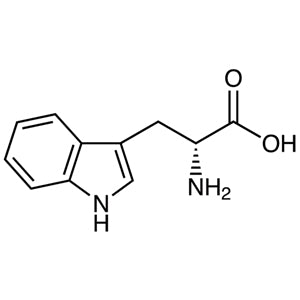
D-Tryptophan TCI T0539
Regular price From Rp 689.850,00Regular price -
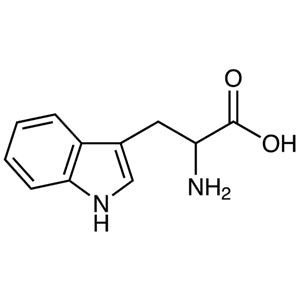
DL-Tryptophan TCI T0540
Regular price Rp 1.829.100,00Regular price -
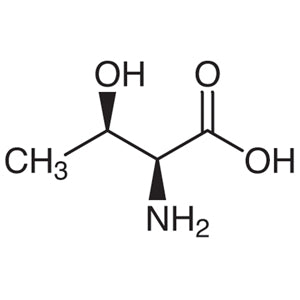
L-(-)-Threonine TCI T0230
Regular price From Rp 584.850,00Regular price -
D-(+)-Threonine TCI T0228
Regular price From Rp 1.908.900,00Regular price -
D-Proline TCI P0994
Regular price From Rp 1.378.650,00Regular price -
L-Proline TCI P0481
Regular price From Rp 980.700,00Regular price -
D-Methionine TCI M0102
Regular price From Rp 848.400,00Regular price -
L-Methionine TCI M0099
Regular price From Rp 530.250,00Regular price