L-Proline is a chemical compound widely used in organic synthesis, particularly in asymmetric reactions that require chiral catalysts or reagents. As a key component in the field of asymmetric synthesis, it plays a vital role in the creation of molecules with specific stereochemical configurations. This compound is essential for the development of pharmaceutical compounds, fine chemicals, and industrial components that require precise molecular structures. Its versatility makes it a valuable tool for chemists working in both academic and industrial research settings.
L-Proline is preferred for its chemical stability and reactivity under various reaction conditions. Its simple molecular structure contributes to its effectiveness in accelerating specific chemical reactions. The compound’s ability to act as a chiral reagent or catalyst makes it highly suitable for applications requiring high selectivity and efficiency. These properties make it a reliable choice for researchers aiming to achieve precise control over reaction outcomes.
In Indonesian laboratories, L-Proline is commonly used in chemical research, especially in pharmaceutical and organic chemistry studies. It is also employed in material science research to develop new compounds with specific structural properties. Its availability in various packaging options facilitates its use in both small-scale and large-scale experiments. The compound’s relevance in academic and industrial research makes it a standard item in many Indonesian laboratories.
Advantages (TCI brochure)
- Gives 92% yield and 95% ee (anti) in the depicted aldol reaction
TCI brochures (PDF)
- Proline-type Organocatalysts 2025-01-30 · p. 2
- Regenerative Medicine Research Reagents 2016-03-18 · p. 2
- Asymmetric Organocatalysts 2025-06-12 · p. 2
- Asymmetric Synthesis 2026-03-18 · p. 7
- Amino Acids and Peptide Synthesis Reagents 2025-08-14 · p. 4
- Reagents for Biological Research 2025-03-11 · p. 57
- Asymmetric synthesis applications benefit from L-Proline due to its chiral nature and ability to control reaction stereochemistry.
- Pharmaceutical research utilizes L-Proline to synthesize chiral compounds necessary for drug development and formulation.
- Organic chemistry experiments rely on L-Proline as a reagent to achieve selective and efficient reaction pathways.
- Industrial chemical production uses L-Proline to create compounds with specific stereochemical configurations.
- Material science studies incorporate L-Proline to develop new materials with precise molecular structures and properties.
From the TCI brochure
- Aldol-type reaction of a TIPS-protected oxy-acetaldehyde giving a syn/anti aldol product
| Brand | TCI |
|---|---|
| CAS number | 147-85-3 |
| Molecular formula | — |
| Purity | — |
| Category | Chemistry > Asymmetric Synthesis > Chiral Catalysts, Chiral Ligands, Chiral Reagents |
| Pack sizes | Available in various sizes to suit different experimental needs |
| Physical form | Solid |
| Storage | Store in a cool, dry place away from direct sunlight |
Data from the TCI brochure
| Yield | Y. 92% (10 mol% P0481) |
|---|---|
| syn:anti | 1:4 (10 mol% P0481) |
| ee (anti isomer) | 95% ee (10 mol% P0481) |
Source: TCI brochure RR101 (2025-01-30)
L-Proline should be stored in a cool, dry environment to maintain its chemical stability. It is recommended to keep the compound in airtight containers to prevent moisture absorption and contamination. Since it is a solid, it should be stored in a container that is resistant to chemical reactions and provides a barrier against environmental factors. Proper labeling of storage containers is essential for safety and traceability. In laboratory settings, it is important to handle L-Proline with care, using appropriate personal protective equipment when necessary. Regular inspection of storage conditions ensures the compound remains in optimal condition for use in experiments.
—
Product Categories
- Asymmetric SynthesisChiral Catalysts, Chiral Ligands, Chiral ReagentsProline-Based Organocatalysts [Asymmetric Synthesis]
- Catalysis and Inorganic ChemistryOrganocatalysts [Catalysis]Asymmetric Organocatalysts
- Chemical BiologyPeptide ChemistryAmino Acid Derivatives [Peptide Chemistry]
- Pharmaceutical Development and Drug Discovery Research ReagentsPeptide ChemistryAmino Acid Derivatives [Peptide Chemistry]
Produk Terkait
-
D-Proline TCI P0994
Regular price From Rp 1.378.650,00Regular price -
trans-4-(tert-Butyldiphenylsilyloxy)-L-proline TCI B3440
Regular price From Rp 4.823.700,00Regular price -
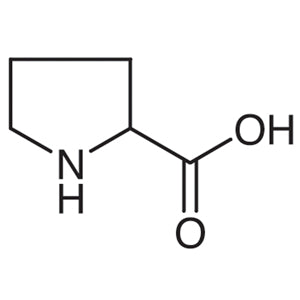
DL-Proline TCI P0480
Regular price From Rp 557.550,00Regular price -
D-Prolinamide TCI P2083
Regular price From Rp 1.087.800,00Regular price -
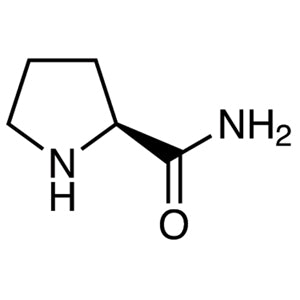
L-Prolinamide TCI P1382
Regular price From Rp 530.250,00Regular price -
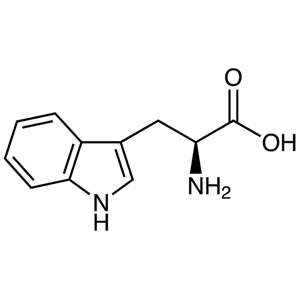
L-Tryptophan TCI T0541
Regular price Rp 955.500,00Regular price -
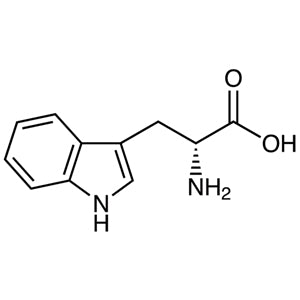
D-Tryptophan TCI T0539
Regular price From Rp 689.850,00Regular price -
L-(-)-Threonine TCI T0230
Regular price From Rp 584.850,00Regular price