D-(+)-Threonine is a chiral amino acid with a unique chemical structure that plays a crucial role in various chemical reactions and organic synthesis processes within the laboratory. As a key component in catalytic and enzymatic reactions, it is widely used in research settings to facilitate complex molecular transformations. Its stability and reactivity make it a valuable tool for scientists working in fields such as bioorganic chemistry and pharmaceutical development. This compound is particularly useful for experiments requiring controlled reactivity and precise chemical behavior.
D-(+)-Threonine is preferred due to its high purity, excellent solubility in water, and compatibility with a wide range of organic compounds. These properties allow it to serve as a substrate or cofactor in multiple chemical reactions, enhancing the efficiency and reproducibility of laboratory experiments. Its ability to interact with various organic molecules under different reaction conditions makes it a versatile reagent. Additionally, its chemical stability ensures consistent performance across repeated experiments, making it a reliable choice for researchers.
In Indonesian laboratories, D-(+)-Threonine is commonly used in bioorganic research, synthesis of biologically active compounds, and the development of pharmaceutical products. Its availability and reliability make it an essential component in academic and industrial research settings. The compound’s well-defined chemical properties support its application in both basic and applied scientific investigations. Its role in supporting scientific innovation aligns with the goals of modern laboratory practices in Indonesia.
TCI brochures (PDF)
- D-Amino Acids 2026-03-19 · p. 1
- Asymmetric Organocatalysts 2025-06-12 · p. 8
- Asymmetric Synthesis 2026-03-18 · p. 7
- Amino Acids and Peptide Synthesis Reagents 2025-08-14 · p. 5
- Bioorganic research benefits from D-(+)-Threonine due to its role in catalytic and enzymatic reactions, supporting the synthesis of complex organic molecules.
- Pharmaceutical development utilizes this compound for the creation of biologically active compounds, aiding in drug discovery and formulation.
- Organic synthesis experiments rely on D-(+)-Threonine for its reactivity and stability, enabling precise control over chemical transformations.
- Enzymatic reaction studies use this amino acid as a substrate or cofactor, enhancing the accuracy and reproducibility of biochemical processes.
- Analytical chemistry applications leverage its solubility and chemical properties for the identification and quantification of compounds in various matrices.
| Brand | TCI |
|---|---|
| CAS number | 632-20-2 |
| Molecular formula | — |
| Purity | — |
| Category | Chemistry > Catalysis and Inorganic Chemistry > Organocatalysts [Catalysis] |
| Pack sizes | — |
| Physical form | — |
| Storage | Store in a cool, dry place away from moisture and light |
D-(+)-Threonine should be stored in a cool, dry place, away from moisture and direct light to maintain its chemical integrity. It is recommended to use airtight containers to prevent exposure to humidity and contaminants. In laboratory settings, it is important to handle the compound with care, using appropriate personal protective equipment such as gloves and safety goggles. Since it is a chemical reagent, it should be kept in a well-ventilated area to minimize any potential risks. Proper labeling of storage containers is essential to ensure safe handling and prevent accidental use. Following these guidelines helps maintain the quality and effectiveness of the compound during experimental use.
—
Product Categories
Produk Terkait
-
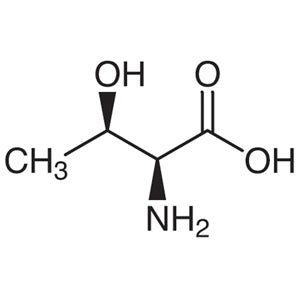
L-(-)-Threonine TCI T0230
Regular price From Rp 637.350,00Regular priceRp 460.950,00Sale price From Rp 637.350,00 -
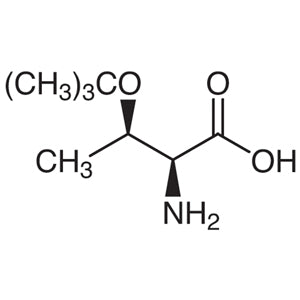
O-tert-Butyl-L-threonine TCI B3398
Regular price From Rp 875.700,00Regular priceRp 627.900,00Sale price From Rp 875.700,00 -
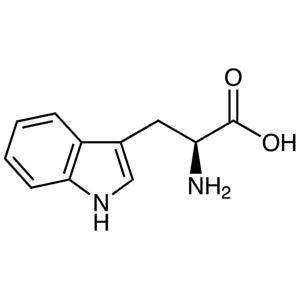
L-Tryptophan TCI T0541
Regular price Rp 1.008.000,00Regular priceRp 720.300,00Sale price Rp 1.008.000,00 -
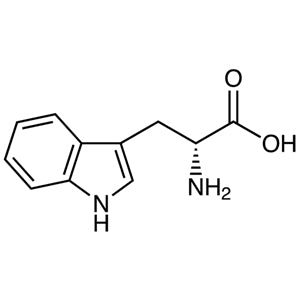
D-Tryptophan TCI T0539
Regular price From Rp 742.350,00Regular priceRp 534.450,00Sale price From Rp 742.350,00 -
D-Proline TCI P0994
Regular price From Rp 1.431.150,00Regular priceRp 1.016.400,00Sale price From Rp 1.431.150,00 -
L-Proline TCI P0481
Regular price From Rp 1.033.200,00Regular priceRp 738.150,00Sale price From Rp 1.033.200,00 -
D-Methionine TCI M0102
Regular price From Rp 900.900,00Regular priceRp 645.750,00Sale price From Rp 900.900,00 -
L-Methionine TCI M0099
Regular price From Rp 582.750,00Regular priceRp 423.150,00Sale price From Rp 582.750,00