O-tert-Butyl-L-threonine is a chemical compound widely used in catalytic reactions and organic synthesis within laboratory settings. As an organocatalyst, it plays a crucial role in accelerating chemical reactions without the need for heavy metals. This makes it a valuable tool in modern synthetic chemistry, where the use of environmentally friendly and cost-effective reagents is increasingly important. Its ability to facilitate asymmetric reactions and substitution reactions has made it a popular choice among researchers aiming to produce chiral compounds with high enantiomeric purity.
The compound is known for its stability and controlled reactivity, which are key factors in its preference for organic chemistry research. It exhibits good solubility in organic solvents, which simplifies the process of dissolution and reaction setup in the lab. Additionally, its thermal stability allows it to be used in a variety of reaction conditions, including those that require precise temperature control. These properties make it a reliable and versatile reagent for both academic and industrial research applications.
In Indonesian laboratories, O-tert-Butyl-L-threonine is commonly used in organic chemistry research, particularly in the synthesis of asymmetric compounds and organic catalysis. It is a standard material in many research institutions and universities, where it supports the development of new synthetic methodologies and the exploration of catalytic mechanisms. Its availability and effectiveness have made it an essential component in the chemical toolkit of Indonesian scientists.
TCI brochures (PDF)
- Asymmetric Organocatalysts 2025-06-12 · p. 8
- Asymmetric Synthesis 2026-03-18 · p. 7
- Amino Acids and Peptide Synthesis Reagents 2025-08-14 · p. 30
Related TCI products
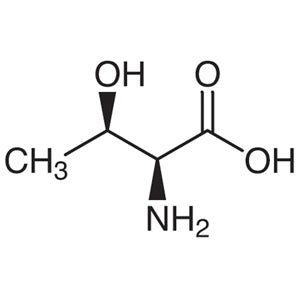
- TCI T0230 72-19-5 L-(-)-Threonine
- TCI T0228 632-20-2 D-(+)-Threonine
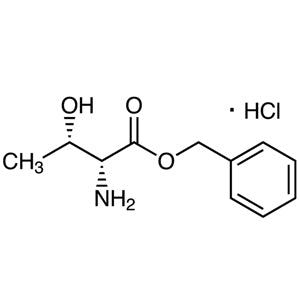
- TCI T2788 75748-36-6 D-Threonine Benzyl Ester Hydrochloride
- TCI T2677 33645-24-8 L-Threonine Benzyl Ester Hydrochloride
- TCI T2435 69320-90-7 L-Threonine tert-Butyl Ester Hydrochloride
- TCI B3340 5854-78-4 O-tert-Butyl-L-threonine tert-Butyl Ester
- Asymmetric synthesis applications benefit from O-tert-Butyl-L-threonine's ability to control stereochemistry in reaction products, making it ideal for creating chiral compounds with high enantiomeric purity.
- Organic catalysis research relies on this compound due to its role in accelerating reactions without the need for metal-based catalysts, aligning with green chemistry principles.
- Substitution reactions in synthetic pathways often use this material because of its reactivity and compatibility with various functional groups, enhancing reaction efficiency.
- Structural modification of organic molecules is supported by its use in controlled reaction environments, allowing for precise molecular design and functional group manipulation.
- Research into catalytic mechanisms benefits from its stability and predictable behavior, enabling detailed kinetic and mechanistic studies in controlled laboratory settings.
| Brand | TCI |
|---|---|
| CAS number | 4378-13-6 |
| Molecular formula | — |
| Purity | — |
| Category | Chemistry > Catalysis and Inorganic Chemistry > Organocatalysts [Catalysis] |
| Pack sizes | — |
| Physical form | — |
| Storage | Store in a cool, dry place away from moisture and direct sunlight |
O-tert-Butyl-L-threonine should be stored in a cool, dry environment to maintain its stability and prevent degradation. It is recommended to keep the compound in airtight containers to minimize exposure to moisture and air, which could affect its reactivity. Since it is a chemical reagent, it should be handled with appropriate personal protective equipment, such as gloves and safety goggles, to ensure laboratory safety. While it is generally stable under normal storage conditions, it is important to avoid prolonged exposure to extreme temperatures or high humidity. Proper labeling and storage in designated chemical cabinets are essential to maintain a safe and organized laboratory environment.
—
Product Categories
Produk Terkait
-
L-(-)-Threonine TCI T0230
Regular price From Rp 637.350,00Regular priceRp 460.950,00Sale price From Rp 637.350,00 -
D-(+)-Threonine TCI T0228
Regular price From Rp 1.961.400,00Regular priceRp 1.387.050,00Sale price From Rp 1.961.400,00 -
D-ThreonineBenzylEsterHydrochloride TCI T2788
Regular price From Rp 875.700,00Regular priceRp 627.900,00Sale price From Rp 875.700,00 -
L-ThreonineBenzylEsterHydrochloride TCI T2677
Regular price From Rp 1.060.500,00Regular priceRp 757.050,00Sale price From Rp 1.060.500,00 -
L-Threoninetert-ButylEsterHydrochloride TCI T2435
Regular price From Rp 1.961.400,00Regular priceRp 1.387.050,00Sale price From Rp 1.961.400,00 -
O-tert-Butyl-L-threoninetert-ButylEster TCI B3340
Regular price From Rp 1.881.600,00Regular priceRp 1.331.400,00Sale price From Rp 1.881.600,00 -
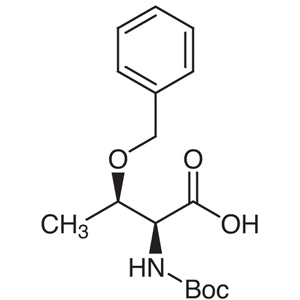
N-(tert-Butoxycarbonyl)-O-benzyl-L-threonine TCI B1630
Regular price Rp 955.500,00Regular priceRp 683.550,00Sale price Rp 955.500,00 -
N-[(9H-Fluoren-9-ylmethoxy)carbonyl]-O-tert-butyl-D-threonine TCI F1128
Regular price From Rp 900.900,00Regular priceRp 645.750,00Sale price From Rp 900.900,00