N-(tert-Butoxycarbonyl)-O-benzyl-L-threonine is a chemical compound widely used in organic and biochemical research. It plays a crucial role in peptide chemistry, particularly in the synthesis of bioactive molecules. This compound is essential for researchers aiming to develop complex structures that require specific chemical reactions. Its presence in laboratory settings ensures the production of high-quality peptides with precise functional groups. Due to its chemical stability and reactivity, it is a key component in various synthetic processes.
The compound’s structural features, including the tert-butoxycarbonyl and benzyl groups, make it highly suitable for coupling reactions in peptide synthesis. These functional groups contribute to its reactivity and compatibility with standard chemical protocols. Additionally, its solubility in organic solvents simplifies purification and isolation steps in laboratory workflows. These properties make it a reliable and efficient reagent for synthetic chemists. Its non-toxic nature also ensures safe handling in laboratory environments.
In Indonesian laboratories, N-(tert-Butoxycarbonyl)-O-benzyl-L-threonine is commonly used in biochemical and pharmacological research. It supports studies related to drug development, molecular biology, and structural analysis. Many research institutions and universities in Indonesia rely on this compound for experimental work, particularly in the field of peptide synthesis. Its availability and reliability make it a preferred choice for academic and industrial research.
TCI brochures (PDF)
- Amino Acids and Peptide Synthesis Reagents 2025-08-14 · p. 12
Related TCI products
- TCI B4303 34404-30-3 1-Benzyl N-(tert-Butoxycarbonyl)-D-glutamate
- TCI B2408 30925-18-9 1-Benzyl N-(tert-Butoxycarbonyl)-L-aspartate
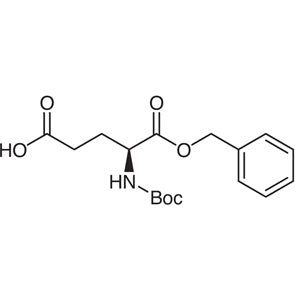
- TCI B1864 30924-93-7 1-Benzyl N-(tert-Butoxycarbonyl)-L-glutamate
- TCI B1863 47173-80-8 O-Benzyl-N-(tert-butoxycarbonyl)-D-serine
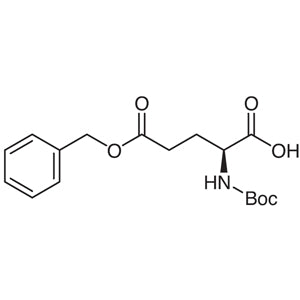
- TCI B1633 13574-13-5 5-Benzyl N-(tert-Butoxycarbonyl)-L-glutamate
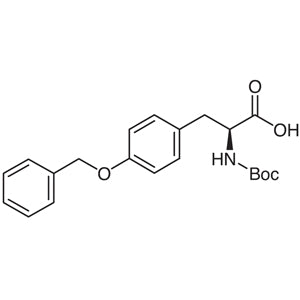
- TCI B1631 2130-96-3 N-(tert-Butoxycarbonyl)-O-benzyl-L-tyrosine
- Peptide Synthesis: This compound is ideal for constructing complex peptide sequences due to its reactive functional groups and compatibility with coupling reactions.
- Bioactive Molecule Development: Its chemical structure supports the creation of molecules with specific biological activities, making it valuable in pharmaceutical research.
- Organic Chemistry Research: The compound’s stability and solubility make it suitable for a wide range of synthetic reactions in organic chemistry laboratories.
- Structural Analysis: It is used in studies that require precise molecular structures, aiding in the understanding of chemical behavior and interactions.
- Drug Discovery: Its role in synthesizing bioactive compounds supports early-stage drug discovery efforts in academic and industrial settings.
| Brand | TCI |
|---|---|
| CAS number | 15260-10-3 |
| Molecular formula | — |
| Purity | — |
| Category | Chemistry > Chemical Biology > Peptide Chemistry |
| Pack sizes | Available in standard laboratory quantities |
| Physical form | Solid powder |
| Storage | Store in a cool, dry place away from light |
This compound should be stored in a cool, dry environment, away from direct sunlight and sources of heat. It is recommended to keep it in a sealed container to prevent moisture absorption and maintain its chemical integrity. Due to its stability, it does not require refrigeration but should be protected from environmental contaminants. In laboratory settings, it is important to handle the compound with appropriate personal protective equipment, such as gloves and safety goggles, to ensure safe handling. Proper labeling of storage containers is essential for easy identification and safe access. Regular inspection of storage conditions ensures the compound remains in optimal condition for use in research applications.
—
Product Categories
Produk Terkait
-
1-BenzylN-(tert-Butoxycarbonyl)-D-glutamate TCI B4303
Regular price From Rp 1.246.350,00Regular priceRp 887.250,00Sale price From Rp 1.246.350,00 -
1-BenzylN-(tert-Butoxycarbonyl)-L-aspartate TCI B2408
Regular price From Rp 1.008.000,00Regular priceRp 720.300,00Sale price From Rp 1.008.000,00 -
1-BenzylN-(tert-Butoxycarbonyl)-L-glutamate TCI B1864
Regular price From Rp 1.618.050,00Regular priceRp 1.146.600,00Sale price From Rp 1.618.050,00 -
O-Benzyl-N-(tert-butoxycarbonyl)-D-serine TCI B1863
Regular price From Rp 582.750,00Regular priceRp 423.150,00Sale price From Rp 582.750,00 -
5-BenzylN-(tert-Butoxycarbonyl)-L-glutamate TCI B1633
Regular price From Rp 1.643.250,00Regular priceRp 1.164.450,00Sale price From Rp 1.643.250,00 -
N-(tert-Butoxycarbonyl)-O-benzyl-L-tyrosine TCI B1631
Regular price From Rp 900.900,00Regular priceRp 645.750,00Sale price From Rp 900.900,00 -
N-(tert-Butoxycarbonyl)-O-benzyl-L-serine TCI B1629
Regular price Rp 1.060.500,00Regular priceRp 757.050,00Sale price Rp 1.060.500,00 -
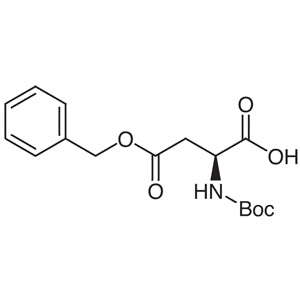
4-BenzylN-(tert-Butoxycarbonyl)-L-aspartate TCI B1628
Regular price From Rp 769.650,00Regular priceRp 553.350,00Sale price From Rp 769.650,00