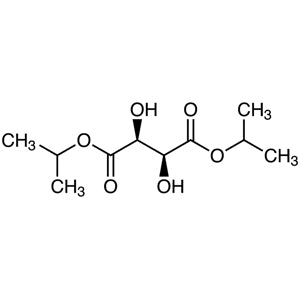
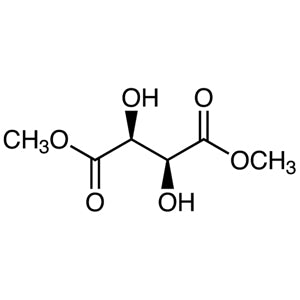
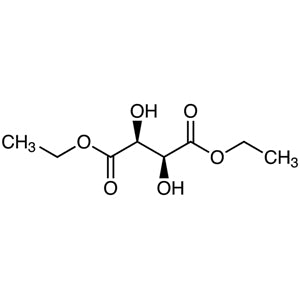
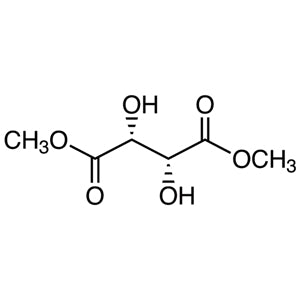
Diisopropyl L-(+)-Tartrate is a chiral compound widely used in asymmetric synthesis to construct molecules with optical activity. As a key chiral building block, it plays a crucial role in the development of complex organic structures that exhibit specific biological activities. This compound is essential in laboratories where precise control over molecular configuration is required, particularly in the synthesis of pharmaceuticals and specialty chemicals. Its unique stereochemical properties make it an indispensable tool for chemists working in research and development.
The compound is valued for its high purity, stability, and solubility in organic solvents, which facilitate efficient chemical reactions and purification processes. Its ability to interact selectively with other reagents under controlled conditions enhances its utility in synthetic pathways. Additionally, its consistent performance across various reaction conditions ensures reliable results, making it a preferred choice for both academic and industrial applications.
In Indonesian laboratories, Diisopropyl L-(+)-Tartrate is commonly used in organic chemistry research, particularly in asymmetric synthesis and the development of new compounds. It is also utilized in educational settings to teach students about chirality and its importance in chemical synthesis. Its versatility and reliability make it a standard component in many research protocols within the country.
TCI brochures (PDF)
- Chiral Auxiliaries and Optical Resolving Agents 2025-06-17 · p. 7
- Asymmetric Synthesis 2026-03-18 · p. 6
- Chiral Building Blocks 2025-04-14 · p. 11
- Asymmetric Synthesis: This compound is ideal for creating enantiomerically pure compounds, which are essential in pharmaceutical development and drug synthesis.
- Chiral Compound Development: Its stereochemical properties make it a key reagent in the synthesis of optically active molecules with specific biological activities.
- Organic Chemistry Research: Widely used in academic and industrial research for constructing complex molecular frameworks with defined stereochemistry.
- Educational Purposes: Frequently employed in teaching laboratories to demonstrate the principles of chirality and its impact on molecular behavior.
- Industrial Chemical Synthesis: Preferred in the production of specialty chemicals where precise stereocontrol is necessary for product efficacy.
| Brand | TCI |
|---|---|
| CAS number | 2217-15-4 |
| Molecular formula | — |
| Purity | — |
| Category | Chemistry > Asymmetric Synthesis > Chiral Building Blocks |
| Pack sizes | Available in various quantities to suit different research needs |
| Physical form | Solid powder |
| Storage | Store in a cool, dry place away from light and moisture |
Diisopropyl L-(+)-Tartrate should be stored in a cool, dry environment, away from direct sunlight and moisture to maintain its stability and purity. It is recommended to use airtight containers to prevent exposure to humidity and contaminants. Due to its chemical nature, it should be handled with care, using appropriate personal protective equipment such as gloves and safety goggles. It is not flammable, but it is advisable to keep it away from incompatible substances. In laboratory settings, it should be stored in a designated chemical storage area that complies with safety regulations. Regular monitoring of storage conditions ensures the compound remains suitable for use in chemical synthesis and research applications.
—
Product Categories
- Asymmetric SynthesisChiral Building BlocksChiral Non-Heterocyclic Building Blocks
- Asymmetric SynthesisChiral Catalysts, Chiral Ligands, Chiral ReagentsEpoxidation [Asymmetric Synthesis]
- Asymmetric SynthesisChiral Resolution ReagentsChiral Resolving Reagents
- Building BlocksChiral Building BlocksChiral Non-Heterocyclic Building Blocks
Produk Terkait
-
DiisopropylD-(-)-Tartrate TCI T1387
Regular price From Rp 1.881.600,00Regular priceRp 1.315.650,00Sale price From Rp 1.881.600,00 -
DimethylD-(-)-Tartrate TCI T1659
Regular price From Rp 584.850,00Regular priceRp 408.450,00Sale price From Rp 584.850,00 -
DiethylD-(-)-Tartrate TCI T1195
Regular price From Rp 1.115.100,00Regular priceRp 779.100,00Sale price From Rp 1.115.100,00 -
DimethylL-(+)-Tartrate TCI T0006
Regular price Rp 980.700,00Regular priceRp 685.650,00Sale price Rp 980.700,00 -
DiethylL-(+)-Tartrate TCI T0003
Regular price From Rp 610.050,00Regular priceRp 426.300,00Sale price From Rp 610.050,00 -
DibenzylL-Tartrate TCI T1671
Regular price From Rp 1.298.850,00Regular priceRp 908.250,00Sale price From Rp 1.298.850,00 -
Di-tert-butylL-(+)-Tartrate TCI D3898
Regular price Rp 5.194.350,00Regular priceRp 3.631.950,00Sale price Rp 5.194.350,00 -
(S)-4-(2-Hydroxyethyl)-2,2-diisopropyl-1,3-dioxolane TCI D4077
Regular price Rp 2.279.550,00Regular priceRp 1.609.650,00Sale price Rp 2.279.550,00