Phenyl Trifluoroacetate is a chemical compound widely used in organic reactions, particularly in the synthesis of fluorinated compounds. As a fluorinated building block, it plays a crucial role in the development of complex molecules with unique chemical properties. Its molecular structure contains fluorine atoms, making it highly relevant in organic chemistry research and the creation of compounds with enhanced stability and polarity. This compound is valued for its controlled reactivity and chemical stability, allowing it to be used in a variety of reaction conditions. Its presence in the laboratory supports the advancement of synthetic methodologies and the exploration of new chemical functionalities.
The compound's preference stems from its chemical stability and controlled reactivity, which enable precise manipulation during synthesis. Its fluorinated nature contributes to the formation of compounds with high polarity and chemical resistance, making it ideal for applications requiring precision. Additionally, its hygroscopic nature requires careful handling and storage, which ensures its effectiveness in laboratory settings. These properties make it a reliable choice for researchers aiming to achieve consistent results in their experiments.
In Indonesian laboratories, Phenyl Trifluoroacetate is commonly used in scientific research, especially in the fields of organic chemistry and fluorinated compound synthesis. It is frequently found in laboratories focused on material science, pharmacology, and environmental chemistry. Due to its unique properties, it is an essential component in studies that require accuracy and reproducibility in synthetic processes.
TCI brochures (PDF)
- Fluorination Reagents, Fluorinated Building Blocks 2026-03-18 · p. 37
- Organic synthesis applications benefit from Phenyl Trifluoroacetate due to its fluorinated structure, enabling the creation of stable and polar compounds with tailored properties.
- Fluorinated compound research utilizes this material for its ability to introduce fluorine atoms into complex molecular frameworks, enhancing chemical stability and reactivity.
- Material science laboratories employ it to develop new materials with improved chemical resistance and functional properties through controlled synthetic pathways.
- Pharmaceutical research leverages its role in synthesizing compounds with high polarity, which is essential for drug development and bioavailability studies.
- Environmental chemistry studies use it to investigate the behavior and degradation of fluorinated compounds in natural systems, contributing to ecological research.
| Brand | TCI |
|---|---|
| CAS number | 500-73-2 |
| Molecular formula | — |
| Purity | — |
| Category | Chemistry > Building Blocks > Fluorinated Building Blocks |
| Pack sizes | — |
| Physical form | — |
| Storage | Requires careful storage due to hygroscopic nature |
Phenyl Trifluoroacetate should be stored in a cool, dry place away from moisture and direct sunlight to maintain its chemical integrity. It is recommended to use airtight containers to prevent exposure to humidity, which can affect its stability. Due to its hygroscopic nature, it is important to handle the compound in a controlled environment to avoid degradation. Laboratory personnel should wear appropriate personal protective equipment, such as gloves and safety goggles, when handling this material. Proper ventilation is also essential to ensure safe working conditions. These precautions help preserve the compound’s quality and ensure safe usage in research settings.
—
Produk Terkait
-
CesiumTrifluoroacetate TCI T4207
Regular price From Rp 2.677.500,00Regular priceRp 1.887.900,00Sale price From Rp 2.677.500,00 -
IsopropylTrifluoroacetate TCI T1761
Regular price Rp 1.670.550,00Regular priceRp 1.183.350,00Sale price Rp 1.670.550,00 -
2,2,2-TrifluoroethylTrifluoroacetate TCI T1697
Regular price Rp 2.147.250,00Regular priceRp 1.517.250,00Sale price Rp 2.147.250,00 -
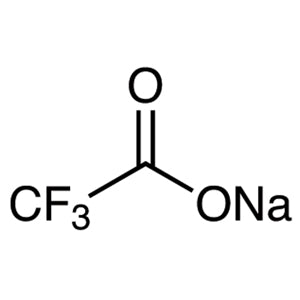
SodiumTrifluoroacetate TCI T1336
Regular price From Rp 689.850,00Regular priceRp 497.700,00Sale price From Rp 689.850,00 -
EthylBromofluoroacetate TCI B1673
Regular price From Rp 1.113.000,00Regular priceRp 793.800,00Sale price From Rp 1.113.000,00 -
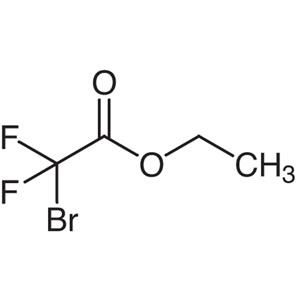
EthylBromodifluoroacetate TCI B1463
Regular price From Rp 769.650,00Regular priceRp 553.350,00Sale price From Rp 769.650,00 -
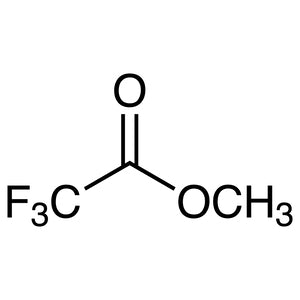
MethylTrifluoroacetate TCI T0680
Regular price Rp 1.563.450,00Regular priceRp 1.108.800,00Sale price Rp 1.563.450,00 -
EthylTrifluoroacetate TCI T0432
Regular price From Rp 795.900,00Regular priceRp 572.250,00Sale price From Rp 795.900,00