Terephthalic Dihydrazide (TCI T0758) is a chemical compound widely used in organic synthesis as a foundational building block in laboratory settings. This compound plays a crucial role in the development of both heterocyclic and non-heterocyclic compounds, making it an essential reagent for chemists working on complex molecular structures. Its unique chemical structure allows it to participate in various reaction mechanisms, enabling the formation of new chemical bonds under controlled conditions. In research environments, it is valued for its versatility and reliability in supporting a wide range of chemical transformations.
The properties of Terephthalic Dihydrazide make it a preferred choice for laboratory applications. It exhibits good solubility in organic solvents, which simplifies mixing and reaction processes. Additionally, its predictable boiling and melting points allow for precise temperature control during synthesis. The compound is chemically stable under normal conditions, ensuring consistent performance and long shelf life. These characteristics contribute to its reliability in both academic and industrial research settings.
In Indonesian laboratories, Terephthalic Dihydrazide is commonly used in chemical research and development. It is a key component in the synthesis of various organic compounds, including pharmaceuticals and polymers. Its availability and chemical properties make it a popular choice among researchers looking to conduct complex chemical reactions with high reactivity and precision.
Advantages (TCI brochure)
- Applicable to the synthesis of COFs linked by stable and flexible hydrazone bond
- Allows for post modifications such as metal coordination, oxidation and cyclization
TCI brochures (PDF)
- Hydrazide Linkers for Covalent Organic Flameworks (COFs) 2026-08-25 · p. 1
- Covalent Organic Framework (COF) Linkers 2026-05-18 · p. 6
- Organic synthesis is a primary application where Terephthalic Dihydrazide is used to create complex molecular structures due to its reactivity and structural versatility.
- Polymer research benefits from this compound as it can participate in cross-linking and chain extension reactions, contributing to the development of advanced materials.
- Medicinal chemistry applications rely on Terephthalic Dihydrazide for the synthesis of drug molecules, where its functional groups can be modified to achieve desired pharmacological properties.
- Analytical chemistry uses this compound as a standard reference material for calibration and quality control in chemical analysis procedures.
- Environmental studies incorporate Terephthalic Dihydrazide to investigate the behavior of organic compounds in different environmental matrices, aiding in pollution monitoring and remediation efforts.
From the TCI brochure
- Synthesis of COFs linked by hydrazone bonds
| Brand | TCI |
|---|---|
| CAS number | 136-64-1 |
| Molecular formula | — |
| Purity | — |
| Category | Chemistry > Building Blocks > Non-Heterocyclic Building Blocks |
| Pack sizes | Available in various quantities as per supplier specifications |
| Physical form | Solid |
| Storage | Store in a cool, dry place away from direct sunlight and moisture |
Terephthalic Dihydrazide should be stored in a cool, dry environment to maintain its chemical stability and prevent degradation. It is recommended to keep the compound in airtight containers to minimize exposure to moisture and air, which can affect its integrity. Laboratory personnel should handle the material with care, using appropriate personal protective equipment such as gloves and safety goggles. While it is generally stable under normal conditions, it is advisable to avoid prolonged exposure to high temperatures or direct sunlight. Proper labeling and storage practices ensure safe handling and long-term usability in research applications.
—
Product Categories
Produk Terkait
-
AdipicDihydrazide TCI A0170
Regular price From Rp 557.550,00Regular priceRp 405.300,00Sale price From Rp 557.550,00 -
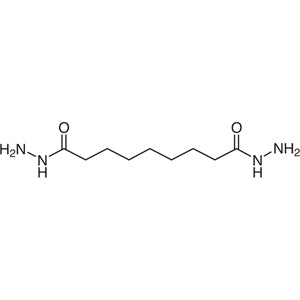
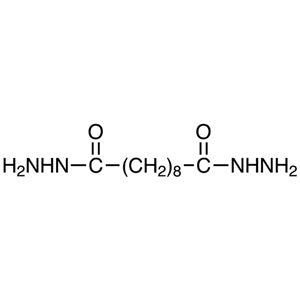
AzelaicDihydrazide TCI A0746
Regular price Rp 2.862.300,00Regular priceRp 2.017.050,00Sale price Rp 2.862.300,00 -
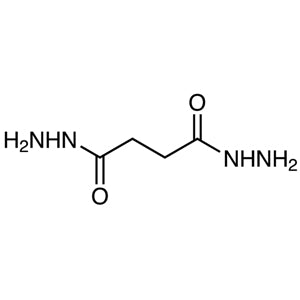
SuccinicDihydrazide TCI S0482
Regular price From Rp 795.900,00Regular priceRp 572.250,00Sale price From Rp 795.900,00 -
SebacicDihydrazide TCI S0224
Regular price From Rp 795.900,00Regular priceRp 572.250,00Sale price From Rp 795.900,00 -
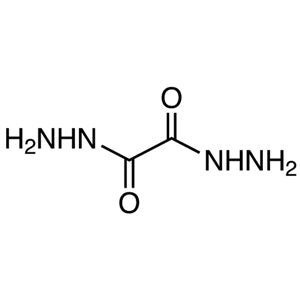
OxalylDihydrazide TCI O0083
Regular price Rp 1.590.750,00Regular priceRp 1.127.700,00Sale price Rp 1.590.750,00 -
MalonicAcidDihydrazide TCI M3206
Regular price From Rp 928.200,00Regular priceRp 664.650,00Sale price From Rp 928.200,00 -
IsophthalicDihydrazide TCI I0257
Regular price From Rp 900.900,00Regular priceRp 645.750,00Sale price From Rp 900.900,00 -
DodecanedioicDihydrazide TCI D2342
Regular price From Rp 822.150,00Regular priceRp 590.100,00Sale price From Rp 822.150,00