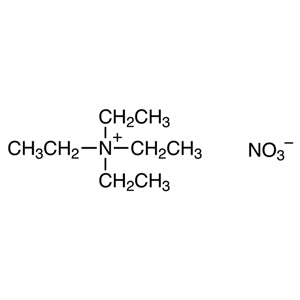
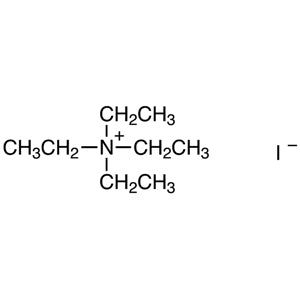
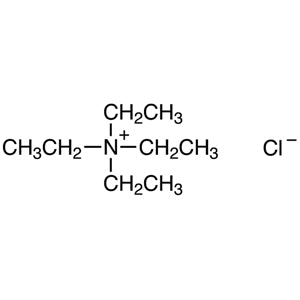
Tetraethylammonium Tetrafluoroborate is a chemical compound widely used as a phase transfer catalyst in various chemical reactions. It plays a crucial role in laboratory settings by facilitating the transfer of ions or electrons between different phases, such as organic and aqueous phases. This property makes it particularly valuable in reactions where interfacial interactions are essential for reaction efficiency. Its application extends to synthetic chemistry, where it helps accelerate complex synthesis processes, including nucleophilic substitution and polymerization reactions.
The compound is favored for its stability and high reactivity, which allow it to function effectively under diverse reaction conditions. It is soluble in both organic solvents and water, making it versatile for use in a wide range of experimental setups. Additionally, its non-corrosive nature and relative safety during normal handling make it an ideal choice for laboratory use. These characteristics ensure that it remains a reliable and efficient catalyst for researchers and scientists working in various fields of chemistry.
In Indonesian laboratories, Tetraethylammonium Tetrafluoroborate is commonly used in synthetic and analytical chemistry applications. It is particularly useful in reactions that require phase transfer catalysis, such as those involving ionic reactions or complex molecule synthesis. Its availability and performance make it a preferred reagent for both academic and industrial research in the region.
TCI brochures (PDF)
- Molecular Conductors 2025-11-13 · p. 5
- Quaternary Ammonium Salts 2025-11-10 · p. 8
- Boron Compounds 2025-10-07 · p. 25
Related TCI products
- TCI T2648 429-42-5 Tetrabutylammonium Tetrafluoroborate
- TCI T0914 429-42-5 Tetrabutylammonium Tetrafluoroborate
- TCI T3506 16873-13-5 Tetraethylammonium Hydrogen Sulfate
- TCI T3082 1941-26-0 Tetraethylammonium Nitrate
- TCI T1745 35895-69-3 Tetraethylammonium Trifluoromethanesulfonate
- TCI T0937 733-44-8 Tetraethylammonium p-Toluenesulfonate
- Phase transfer catalysis in organic synthesis reactions due to its ability to facilitate ion transfer between aqueous and organic phases.
- Nucleophilic substitution reactions where efficient ion transfer is essential for reaction progression and yield optimization.
- Polymerization processes that benefit from the compound's ability to enhance interfacial interactions and reaction rates.
- Analytical chemistry applications requiring stable and reactive reagents for accurate and reproducible results.
- Industrial chemical synthesis where high reactivity and solubility in multiple solvents are required for process efficiency.
| Brand | TCI |
|---|---|
| CAS number | 429-06-1 |
| Molecular formula | — |
| Purity | — |
| Category | Chemistry > Synthetic Reagents > Phase Transfer Catalysts |
| Pack sizes | Available in various quantities as per standard reagent packaging |
| Physical form | Solid powder |
| Storage | Store in a cool, dry place away from moisture and direct sunlight |
Tetraethylammonium Tetrafluoroborate should be stored in a cool, dry place away from moisture and direct sunlight to maintain its stability and effectiveness. It is recommended to use airtight containers to prevent exposure to humidity, which could affect its performance. Due to its non-corrosive nature, it is generally safe to handle with standard laboratory precautions. However, it is advisable to wear appropriate personal protective equipment, such as gloves and safety goggles, when handling the compound. Proper ventilation should be ensured during use to minimize any potential exposure. Its chemical stability ensures that it remains safe for use under normal laboratory conditions.
—
Produk Terkait
-
TetrabutylammoniumTetrafluoroborate TCI T2648
Regular price Rp 2.809.800,00Regular priceRp 1.980.300,00Sale price Rp 2.809.800,00 -
TetrabutylammoniumTetrafluoroborate TCI T0914
Regular price From Rp 1.590.750,00Regular priceRp 1.127.700,00Sale price From Rp 1.590.750,00 -
TetraethylammoniumHydrogenSulfate TCI T3506
Regular price From Rp 795.900,00Regular priceRp 572.250,00Sale price From Rp 795.900,00 -
TetraethylammoniumNitrate TCI T3082
Regular price From Rp 1.458.450,00Regular priceRp 1.035.300,00Sale price From Rp 1.458.450,00 -
TetraethylammoniumTrifluoromethanesulfonate TCI T1745
Regular price From Rp 2.889.600,00Regular priceRp 2.035.950,00Sale price From Rp 2.889.600,00 -
Tetraethylammoniump-Toluenesulfonate TCI T0937
Regular price From Rp 742.350,00Regular priceRp 534.450,00Sale price From Rp 742.350,00 -
TetraethylammoniumIodide TCI T0097
Regular price From Rp 1.033.200,00Regular priceRp 738.150,00Sale price From Rp 1.033.200,00 -
TetraethylammoniumChloride TCI T0095
Regular price From Rp 1.167.600,00Regular priceRp 831.600,00Sale price From Rp 1.167.600,00