Tetraethylammonium p-Toluenesulfonate (TEATS), with CAS number 733-44-8, is a chemical compound widely used as a phase transfer catalyst in laboratory settings. It plays a crucial role in facilitating reactions between polar and non-polar phases, which is essential in many synthetic processes. This compound is particularly valuable in organic synthesis and heterogeneous reactions where efficient ion transfer is required. Its ability to enhance reaction efficiency without altering the main reactants makes it a versatile tool in both academic and industrial research environments.
TEATS is favored for its strong ionic properties, stability under various reaction conditions, and non-volatility. These characteristics ensure that it remains effective even in challenging environments, such as high temperatures or varying pH levels. Its chemical stability and reactivity make it an ideal choice for a wide range of applications. Additionally, its non-volatile nature minimizes the risk of evaporation during prolonged reactions, ensuring consistent performance and safety in laboratory operations.
In Indonesian laboratories, TEATS is commonly used in chemical research, especially in higher education institutions and research centers. Its reliability and effectiveness have made it a preferred reagent for students and researchers working on synthetic chemistry projects. The compound's widespread use reflects its importance in advancing chemical processes and supporting scientific innovation in the region.
TCI brochures (PDF)
- Quaternary Ammonium Salts 2025-11-10 · p. 9
Related TCI products
- TCI T3506 16873-13-5 Tetraethylammonium Hydrogen Sulfate
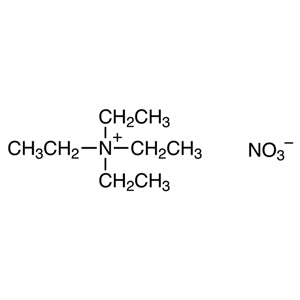
- TCI T3082 1941-26-0 Tetraethylammonium Nitrate
- TCI T1745 35895-69-3 Tetraethylammonium Trifluoromethanesulfonate
- TCI T0983 429-06-1 Tetraethylammonium Tetrafluoroborate
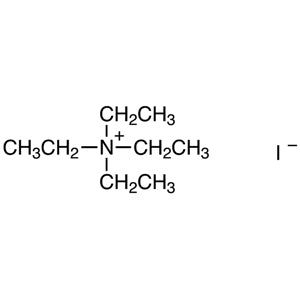
- TCI T0097 68-05-3 Tetraethylammonium Iodide
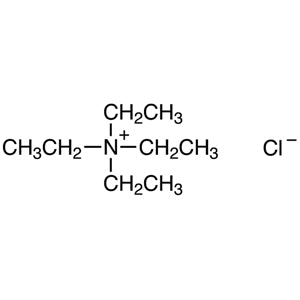
- TCI T0095 56-34-8 Tetraethylammonium Chloride
- Organic synthesis reactions benefit from TEATS as it enhances ion transfer between aqueous and organic phases, improving reaction efficiency and yield.
- Heterogeneous catalytic processes utilize TEATS to facilitate the movement of ions across different reaction phases, promoting faster and more complete reactions.
- Analytical chemistry applications leverage TEATS for its stability and non-volatility, ensuring accurate and consistent results in complex sample analyses.
- Industrial chemical processes rely on TEATS to maintain reaction efficiency without altering the composition of reactants, supporting sustainable production methods.
- Teaching laboratories use TEATS in demonstrations and experiments to illustrate phase transfer catalysis and its impact on chemical reactivity.
| Brand | TCI |
|---|---|
| CAS number | 733-44-8 |
| Molecular formula | — |
| Purity | — |
| Category | Chemistry > Synthetic Reagents > Phase Transfer Catalysts |
| Pack sizes | Available in various quantities as per standard laboratory supply |
| Physical form | Solid powder |
| Storage | Store in a cool, dry place away from moisture and direct sunlight |
TEATS should be stored in a cool, dry environment to maintain its chemical stability and prevent degradation. It is recommended to keep it in airtight containers to avoid moisture exposure, which could affect its performance. Due to its non-volatile nature, it does not require special containment for evaporation concerns. Laboratory personnel should handle the compound with care, using appropriate personal protective equipment such as gloves and safety goggles. It is important to ensure that storage areas are well-ventilated to minimize any potential inhalation risks. Proper labeling of storage containers is essential to ensure safe handling and easy identification.
—
Produk Terkait
-
TetraethylammoniumHydrogenSulfate TCI T3506
Regular price From Rp 795.900,00Regular priceRp 572.250,00Sale price From Rp 795.900,00 -
TetraethylammoniumNitrate TCI T3082
Regular price From Rp 1.458.450,00Regular priceRp 1.035.300,00Sale price From Rp 1.458.450,00 -
TetraethylammoniumTrifluoromethanesulfonate TCI T1745
Regular price From Rp 2.889.600,00Regular priceRp 2.035.950,00Sale price From Rp 2.889.600,00 -
TetraethylammoniumTetrafluoroborate TCI T0983
Regular price From Rp 875.700,00Regular priceRp 627.900,00Sale price From Rp 875.700,00 -
TetraethylammoniumIodide TCI T0097
Regular price From Rp 1.033.200,00Regular priceRp 738.150,00Sale price From Rp 1.033.200,00 -
TetraethylammoniumChloride TCI T0095
Regular price From Rp 1.167.600,00Regular priceRp 831.600,00Sale price From Rp 1.167.600,00 -
TetraethylammoniumBromide TCI T0094
Regular price From Rp 530.250,00Regular priceRp 386.400,00Sale price From Rp 530.250,00 -
Tetrabutylammoniump-Toluenesulfonate TCI T3660
Regular price From Rp 1.405.950,00Regular priceRp 998.550,00Sale price From Rp 1.405.950,00