TCI T1038 is 2,4,6-Trifluoroaniline, CAS number 363-81-5, an aromatic aniline whose ortho and para positions are all occupied by fluorine atoms. It belongs to the fluorinated building blocks family and combines a reactive amino group with a fluorine-rich benzene ring. In the laboratory it serves as a starting point for preparing amides, imines and other derivatives. It is also used as a building block for introducing a trifluorophenyl unit into more complex target molecules.
The fluorine atoms on the aromatic ring withdraw electron density and change the basicity of the amino group compared with ordinary aniline. The symmetrical substitution pattern at the 2, 4 and 6 positions also gives the compound distinctive reactivity and spectroscopic character, which makes it attractive for studying fluorine effects. In medicinal chemistry and agrochemistry, fluorine is often introduced to modulate physicochemical properties and metabolic stability. Fluorinated anilines are a practical starting material for that purpose.
In Indonesia, organic chemistry laboratories at universities and research institutions that are exploring fluorinated compounds can use this product for early-stage synthesis experiments. The 5 g pack suits route scouting and optimization work, where researchers need a manageable quantity of a specialized building block. It fits teaching and research settings that want to examine how fluorine substitution influences aromatic amine chemistry before committing to larger synthetic programs.
TCI brochures (PDF)
- Fluorination Reagents, Fluorinated Building Blocks 2026-03-18 · p. 33
- Amide synthesis: the amino group can be acylated to form amides, and the electron-poor trifluorinated ring lets chemists study how reduced nucleophilicity affects coupling behavior.
- Imine and Schiff base preparation: the amine can be condensed with carbonyl compounds to give imines, and the fluorinated aromatic ring carries through into the resulting derivatives.
- Introduction of a trifluorophenyl unit: this compound is a convenient building block for adding a fluorine-rich aromatic fragment into larger target molecules during multistep organic synthesis.
- Studies of fluorine effects: the symmetrical 2,4,6-substitution pattern makes it a useful model for comparing reactivity, basicity and spectral features against unsubstituted aniline.
- Medicinal chemistry and agrochemical research: fluorinated anilines serve as practical starting materials when researchers want to tune physicochemical properties and metabolic stability in candidate structures.
| Brand | TCI |
|---|---|
| CAS number | 363-81-5 |
| Molecular formula | — |
| Purity | — |
| Category | Chemistry > Building Blocks > Fluorinated Building Blocks |
| Pack sizes | 5 g |
| Physical form | — |
| Storage | keep in a tightly closed container and follow the storage instructions on the manufacturer's label and safety data sheet. |
- Product code: T1038
Store 2,4,6-Trifluoroaniline in its original tightly closed container, in a cool, dry and well-ventilated place away from direct sunlight, heat sources and incompatible materials such as strong oxidizers and strong acids. Always follow the storage conditions printed on the manufacturer's label. As with other aromatic amines, handle it with standard laboratory precautions. Wear gloves, safety glasses and a lab coat, and work in a fume hood to avoid inhaling dust or vapor. Avoid contact with skin and eyes. Consult the safety data sheet before use, and dispose of waste according to your institution's chemical waste procedures.
—
Produk Terkait
-
3,4,5-Trifluoroaniline TCI T2355
Regular price From Rp 1.035.300,00Regular priceRp 723.450,00Sale price From Rp 1.035.300,00 -
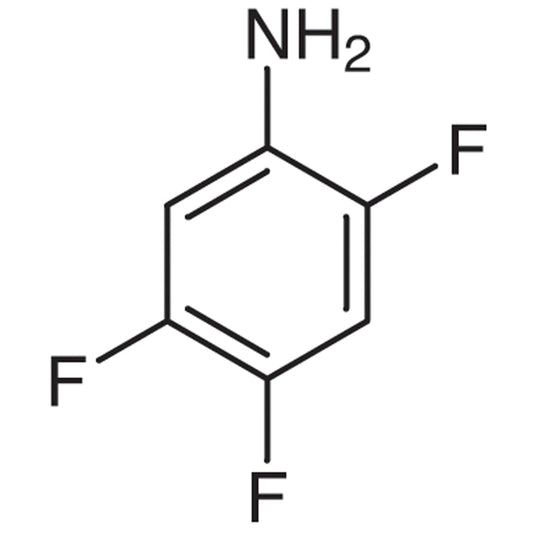
2,4,5-Trifluoroaniline TCI T1645
Regular price Rp 3.155.250,00Regular priceRp 2.206.050,00Sale price Rp 3.155.250,00 -
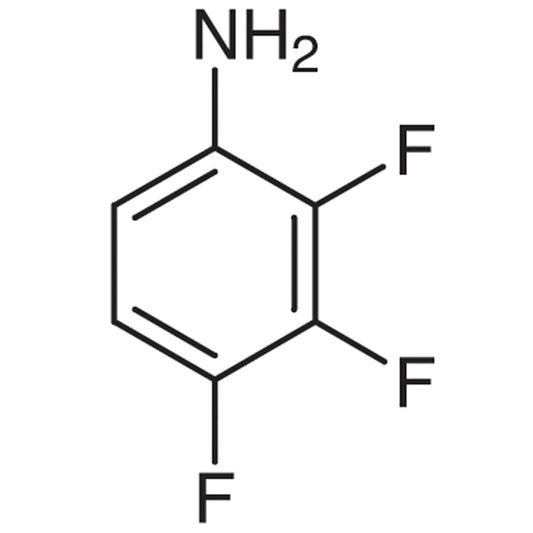
2,3,4-Trifluoroaniline TCI T1385
Regular price From Rp 769.650,00Regular priceRp 537.600,00Sale price From Rp 769.650,00 -
2,3,4,5-Tetrafluoroaniline TCI T2782
Regular price From Rp 1.803.900,00Regular priceRp 1.261.050,00Sale price From Rp 1.803.900,00 -
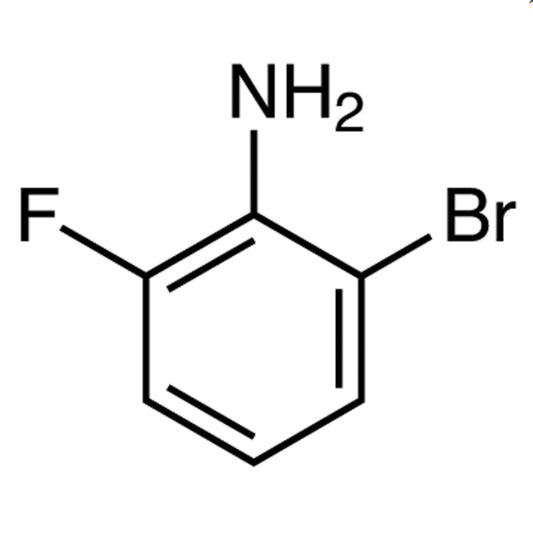
2-Bromo-6-fluoroaniline TCI B4803
Regular price From Rp 1.724.100,00Regular priceRp 1.205.400,00Sale price From Rp 1.724.100,00 -
4'-(Benzyloxy)benzylidene-4-fluoroaniline TCI B4301
Regular price From Rp 662.550,00Regular priceRp 478.800,00Sale price From Rp 662.550,00 -
2-Bromo-6-chloro-4-fluoroaniline TCI B3681
Regular price Rp 1.485.750,00Regular priceRp 1.038.450,00Sale price Rp 1.485.750,00 -
4-Bromo-3,5-difluoroaniline TCI B3416
Regular price From Rp 1.538.250,00Regular priceRp 1.075.200,00Sale price From Rp 1.538.250,00