TCI T1042 is 4-Methoxy-3-nitrobenzotrifluoride, registered under CAS number 394-25-2. It is an aromatic compound that carries three functional groups on a single benzene ring: a trifluoromethyl group, a nitro group, and a methoxy group. The material belongs to the family of fluorinated building blocks and is used as a synthetic intermediate. In the laboratory it serves as a starting point or mid-stage component for constructing more elaborate molecules, especially where several functional handles are needed on one aromatic core.
The combination of groups gives researchers many options for transformation, which is why this compound is attractive to those who want to build multifunctional aromatic molecules through relatively clear reaction pathways. The nitro group can be reduced to an amino group, giving an aniline that carries both methoxy and trifluoromethyl substituents; such anilines are useful for forming amides, ureas, or heterocycles. The trifluoromethyl group contributes electron-withdrawing and lipophilic character, which is often sought in the design of bioactive molecules. The methoxy group modulates electron density and offers an additional site for modification. Together these features make the compound a versatile scaffold for stepwise synthetic routes that begin from simple starting materials.
For laboratories in Indonesia, a building block of this kind is relevant to research groups working in medicinal chemistry, agrochemistry, and general organic synthesis. University research laboratories, academic synthesis groups, and industrial R&D teams can use it when planning multi-step routes that call for a fluorinated aromatic intermediate. Supplied under the TCI brand through AMI Scientific, it can be incorporated into discovery-stage synthesis programs and exploratory method development without changing established laboratory workflows.
Related TCI products
- TCI B5333 630125-49-4 3-Bromo-5-nitrobenzotrifluoride
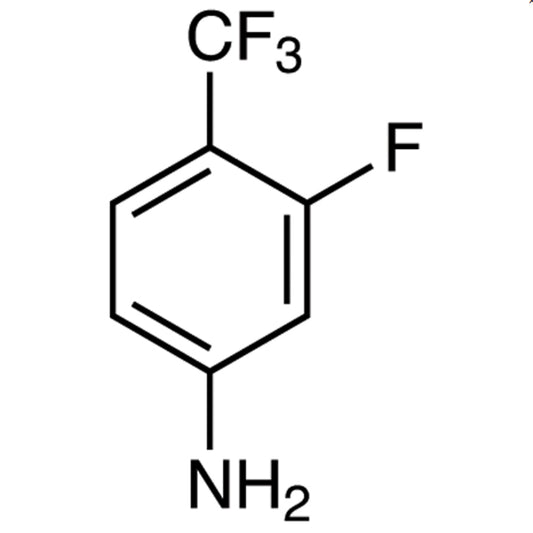
- TCI A2469 69411-68-3 4-Amino-2-fluorobenzotrifluoride
- TCI A1582 535-52-4 3-Amino-4-fluorobenzotrifluoride
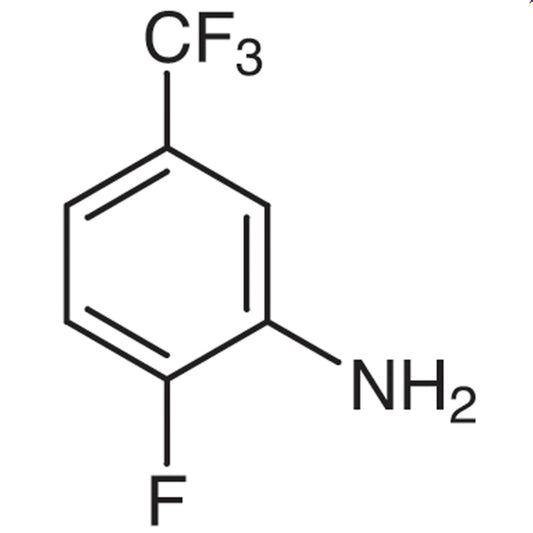
- TCI A1164 2357-47-3 5-Amino-2-fluorobenzotrifluoride
- TCI A1158 393-39-5 2-Amino-5-fluorobenzotrifluoride
- TCI A0376 400-98-6 4-Amino-3-nitrobenzotrifluoride
- Reduction of the nitro group to an amine: the nitro substituent can be converted to an amino group, giving a methoxy- and trifluoromethyl-substituted aniline that serves as a key intermediate for further synthetic steps.
- Amide and urea formation: after nitro reduction, the resulting aniline can be coupled with acids, acyl chlorides, or isocyanates, so this compound is a convenient entry point to amide and urea libraries.
- Heterocycle construction in medicinal chemistry research: the aniline derived from this material can be built into heterocyclic ring systems, and the trifluoromethyl group helps introduce the electron-withdrawing, lipophilic character often sought in bioactive molecules.
- Agrochemical intermediate research: fluorinated aromatic frameworks are commonly explored in agrochemical discovery, and this trifunctional compound offers a defined starting structure for assembling candidate molecules in stepwise routes.
- General organic synthesis and method development: with three distinct functional groups on one ring, the compound is well suited for teaching and exploring selective transformations, and for testing reaction conditions on a multifunctional aromatic substrate.
| Brand | TCI |
|---|---|
| CAS number | 394-25-2 |
| Molecular formula | — |
| Purity | — |
| Category | Chemistry > Building Blocks > Fluorinated Building Blocks |
| Pack sizes | please refer to the available options listed on the product page or confirm with AMI Scientific |
| Physical form | — |
| Storage | keep tightly closed in a cool, dry place, and consult the supplier's safety data sheet for exact conditions |
- Product code: T1042
Store 4-Methoxy-3-nitrobenzotrifluoride in its original, tightly closed container in a cool, dry, well-ventilated place, away from direct sunlight, heat sources, and incompatible materials such as strong oxidizing agents or strong bases. Use containers made of glass or other chemically compatible materials, and keep them clearly labeled. As with any nitro-containing aromatic compound, handle it with care: wear safety glasses, chemical-resistant gloves, and a laboratory coat, and work in a fume hood to avoid inhaling dust or vapors. Avoid contact with skin and eyes, and wash hands thoroughly after handling. Always read the safety data sheet before use, and dispose of waste according to institutional and local regulations.
—
Produk Terkait
-
3-Bromo-5-nitrobenzotrifluoride TCI B5333
Regular price From Rp 584.850,00Regular priceRp 408.450,00Sale price From Rp 584.850,00 -
4-Amino-2-fluorobenzotrifluoride TCI A2469
Regular price From Rp 1.856.400,00Regular priceRp 1.297.800,00Sale price From Rp 1.856.400,00 -
3-Amino-4-fluorobenzotrifluoride TCI A1582
Regular price From Rp 477.750,00Regular priceRp 333.900,00Sale price From Rp 477.750,00 -
5-Amino-2-fluorobenzotrifluoride TCI A1164
Regular price From Rp 477.750,00Regular priceRp 333.900,00Sale price From Rp 477.750,00 -
2-Amino-5-fluorobenzotrifluoride TCI A1158
Regular price From Rp 1.140.300,00Regular priceRp 796.950,00Sale price From Rp 1.140.300,00 -
4-Amino-3-nitrobenzotrifluoride TCI A0376
Regular price Rp 2.782.500,00Regular priceRp 1.945.650,00Sale price Rp 2.782.500,00 -
4-Nitrobenzotrifluoride TCI N0902
Regular price Rp 2.491.650,00Regular priceRp 1.741.950,00Sale price Rp 2.491.650,00 -
3-Nitrobenzotrifluoride TCI N0280
Regular price From Rp 980.700,00Regular priceRp 685.650,00Sale price From Rp 980.700,00