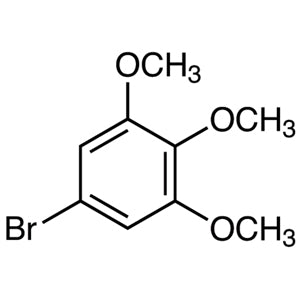
1,2,3-Trimethoxybenzene is an organic chemical compound widely used in various synthetic chemical reactions. It belongs to the category of non-heterocyclic building blocks and is commonly found in chemical synthesis processes. This compound features a symmetrical aromatic ring with three methoxy groups attached, making it a versatile reagent in organic chemistry. Its stable chemical properties and controlled reactivity make it a reliable choice for laboratory applications. The compound is known for its non-polar nature and volatility, which contribute to its effectiveness in different reaction conditions.
The unique properties of 1,2,3-Trimethoxybenzene, such as its non-polar character and volatility, make it a preferred choice for synthetic chemists. Its stability under various reaction conditions ensures consistent results, while its controlled reactivity allows for precise manipulation in complex syntheses. The absence of heterocyclic structures also makes it ideal for experiments requiring structural stability. These characteristics make it a valuable tool in both research and educational settings, supporting the development of new chemical compounds.
In Indonesian laboratories, 1,2,3-Trimethoxybenzene is commonly used in scientific research and educational programs. It plays a key role in expanding the understanding of organic chemical reactions. Its application is widespread in both academic and industrial research, supporting the development of new compounds and materials. The compound’s availability in various packaging formats makes it suitable for use in different experimental scales, from small-scale research to larger production processes.
Related TCI products
- TCI T4215 21852-50-6 5-(Bromomethyl)-1,2,3-trimethoxybenzene
- TCI T4144 25245-29-8 5-Iodo-1,2,3-trimethoxybenzene
- TCI T1563 60241-74-9 2,3,6-Trimethoxybenzoic Acid
- TCI T1236 6443-69-2 3,4,5-Trimethoxytoluene
- TCI B4739 2675-79-8 5-Bromo-1,2,3-trimethoxybenzene
- TCI B4721 20129-11-7 1-Bromo-2,4,5-trimethoxybenzene
- Organic Synthesis: This compound is widely used in the synthesis of complex organic molecules due to its stable structure and controlled reactivity.
- Pharmaceutical Research: It serves as a building block in the development of new drugs and medicinal compounds, especially in pharmaceutical studies.
- Educational Purposes: It is commonly used in teaching laboratories to demonstrate chemical reactions and synthesis techniques.
- Material Science: Its unique properties make it suitable for the development of new materials in research and development settings.
- Analytical Chemistry: It is used as a reference standard in analytical procedures to ensure accurate and reliable results.
| Brand | TCI |
|---|---|
| CAS number | 634-36-6 |
| Molecular formula | — |
| Purity | — |
| Category | Chemistry > Building Blocks > Non-Heterocyclic Building Blocks |
| Pack sizes | Available in various sizes to suit different experimental needs |
| Physical form | Liquid |
| Storage | Store in a cool, dry place away from direct sunlight |
This compound should be stored in a cool, dry place away from direct sunlight to maintain its chemical stability. It is recommended to use airtight containers to prevent exposure to moisture and air, which could affect its purity. Due to its volatility, it is important to ensure proper ventilation in the laboratory when handling this material. Always use appropriate personal protective equipment, such as gloves and safety goggles, to minimize exposure. The compound should be kept away from incompatible substances, such as strong oxidizing agents, to prevent any potential chemical reactions. Proper storage and handling are essential to ensure the safety of laboratory personnel and the integrity of the compound.
—
Produk Terkait
-
5-(Bromomethyl)-1,2,3-trimethoxybenzene TCI T4215
Regular price Rp 3.419.850,00Regular priceRp 2.390.850,00Sale price Rp 3.419.850,00 -
5-Iodo-1,2,3-trimethoxybenzene TCI T4144
Regular price From Rp 3.021.900,00Regular priceRp 2.112.600,00Sale price From Rp 3.021.900,00 -
2,3,6-TrimethoxybenzoicAcid TCI T1563
Regular price From Rp 1.483.650,00Regular priceRp 1.053.150,00Sale price From Rp 1.483.650,00 -
3,4,5-Trimethoxytoluene TCI T1236
Regular price Rp 1.115.100,00Regular priceRp 779.100,00Sale price Rp 1.115.100,00 -
5-Bromo-1,2,3-trimethoxybenzene TCI B4739
Regular price From Rp 1.087.800,00Regular priceRp 760.200,00Sale price From Rp 1.087.800,00 -
1-Bromo-2,4,5-trimethoxybenzene TCI B4721
Regular price From Rp 1.618.050,00Regular priceRp 1.130.850,00Sale price From Rp 1.618.050,00 -
1,2,4-Trimethoxybenzene TCI T1130
Regular price Rp 1.485.750,00Regular priceRp 1.038.450,00Sale price Rp 1.485.750,00 -
3,4,5-TrimethoxybenzylAlcohol TCI T1103
Regular price From Rp 2.041.200,00Regular priceRp 1.442.700,00Sale price From Rp 2.041.200,00