TCI T1130 1,2,4-Trimethoxybenzene (CAS 135-77-3) is a benzene derivative carrying three methoxy groups at positions 1, 2, and 4 of the ring. In the laboratory it is used as a non-heterocyclic building block and as an electron-rich arene in a wide range of organic reactions. The methoxy substituents give the ring strong nucleophilic character, so the compound is often chosen as a model substrate or as a starting material for assembling more complex aromatic molecules.
The three methoxy groups are electron donors that activate the ring toward electrophilic aromatic substitution, for example Friedel-Crafts acylation, halogenation, or formylation. Because the substitution pattern is unsymmetrical, the molecule offers several possible reaction positions, which makes it an interesting case for studying regioselectivity. The methoxy groups can also be modified further, for instance by demethylation to give phenols. These characteristics make 1,2,4-trimethoxybenzene a convenient and versatile reagent for synthetic chemists who need a predictable, activated aromatic core.
In Indonesian laboratories, the 25 g pack suits repeated synthesis work, optimization experiments, and advanced organic chemistry practicals. That quantity leaves room for several trial reactions without the need to reorder after each experiment. Research groups, university teaching laboratories, and development teams can use it as a starting point for synthesizing oxygenated natural-product-type compounds, while the TCI brand gives users a familiar reference supplier for fine chemicals and building blocks.
Related TCI products
- TCI T4215 21852-50-6 5-(Bromomethyl)-1,2,3-trimethoxybenzene
- TCI T4144 25245-29-8 5-Iodo-1,2,3-trimethoxybenzene
- TCI T1563 60241-74-9 2,3,6-Trimethoxybenzoic Acid
- TCI T1236 6443-69-2 3,4,5-Trimethoxytoluene
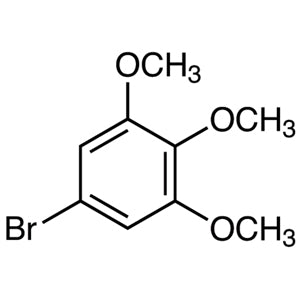
- TCI B4739 2675-79-8 5-Bromo-1,2,3-trimethoxybenzene
- TCI B4721 20129-11-7 1-Bromo-2,4,5-trimethoxybenzene
- Electrophilic aromatic substitution studies: the three electron-donating methoxy groups strongly activate the ring, so this compound serves as a reactive substrate for acylation, halogenation, and formylation experiments.
- Regioselectivity investigations: the unsymmetrical 1,2,4-substitution pattern offers several competing reaction positions, which makes it a useful model for teaching and for research into how substituents direct incoming groups.
- Building block for oxygenated aromatic compounds: as a non-heterocyclic building block, it provides a ready-made, electron-rich aromatic core from which more elaborate natural-product-type molecules can be constructed.
- Demethylation to phenols: the methoxy groups can be cleaved selectively or fully, allowing chemists to prepare phenolic derivatives from a stable, easily handled starting material.
- Advanced organic chemistry practicals: a 25 g pack gives enough material for repeated runs and optimization experiments, so students and researchers can compare conditions without interrupting their work to reorder.
| Brand | TCI (product code T1130) |
|---|---|
| CAS number | 135-77-3 |
| Molecular formula | — |
| Purity | — |
| Category | Chemistry > Building Blocks > Non-Heterocyclic Building Blocks |
| Pack sizes | 25 g |
| Physical form | — |
| Storage | keep tightly closed in a cool, dry place, away from incompatible materials, and follow the supplier's label and safety data sheet |
- Chemical name: 1,2,4-Trimethoxybenzene
Store 1,2,4-Trimethoxybenzene in its original, tightly closed container in a cool, dry, well-ventilated place, away from heat, direct sunlight, and strong oxidizing agents. Keep the label legible and record the date the bottle is first opened. Transfer only the amount needed, using clean and dry spatulas and glassware to avoid contamination. Handle the material in a fume hood or well-ventilated area, and wear a laboratory coat, safety glasses, and chemical-resistant gloves. Avoid inhaling dust or vapor and avoid contact with skin and eyes. Always consult the safety data sheet supplied with the product for specific hazard information and follow your institution's chemical waste procedures for disposal.
—
Produk Terkait
-
5-(Bromomethyl)-1,2,3-trimethoxybenzene TCI T4215
Regular price Rp 3.419.850,00Regular priceRp 2.390.850,00Sale price Rp 3.419.850,00 -
5-Iodo-1,2,3-trimethoxybenzene TCI T4144
Regular price From Rp 3.021.900,00Regular priceRp 2.112.600,00Sale price From Rp 3.021.900,00 -
2,3,6-TrimethoxybenzoicAcid TCI T1563
Regular price From Rp 1.483.650,00Regular priceRp 1.053.150,00Sale price From Rp 1.483.650,00 -
3,4,5-Trimethoxytoluene TCI T1236
Regular price Rp 1.115.100,00Regular priceRp 779.100,00Sale price Rp 1.115.100,00 -
5-Bromo-1,2,3-trimethoxybenzene TCI B4739
Regular price From Rp 1.087.800,00Regular priceRp 760.200,00Sale price From Rp 1.087.800,00 -
1-Bromo-2,4,5-trimethoxybenzene TCI B4721
Regular price From Rp 1.618.050,00Regular priceRp 1.130.850,00Sale price From Rp 1.618.050,00 -
3,4,5-TrimethoxybenzylAlcohol TCI T1103
Regular price From Rp 2.041.200,00Regular priceRp 1.442.700,00Sale price From Rp 2.041.200,00 -
1,2,3-Trimethoxybenzene TCI T1102
Regular price From Rp 1.378.650,00Regular priceRp 963.900,00Sale price From Rp 1.378.650,00