Colloidal Quantum Dot (QD) Research Reagents — includes organic ligand compounds such as long-chain fatty acids, alkyl amines, quaternary ammonium salts, and alkylphosphonic acids that serve as both capping agents and synthesis reagents in colloidal quantum dot preparation. These compounds control the growth, colloidal stability, and surface properties of semiconductor nanocrystals during the synthesis process.
Colloidal Quantum Dot reagents are used by nanomaterials and optoelectronics researchers to synthesize semiconductor nanocrystals with controlled size and particle distribution. Capping agents such as oleic acid or stearic acid coat the quantum dot surface to maintain dispersion in organic solvents, while phosphonate and ammonium ligands are used in ligand exchange for thin film, solar cell, and LED device applications.
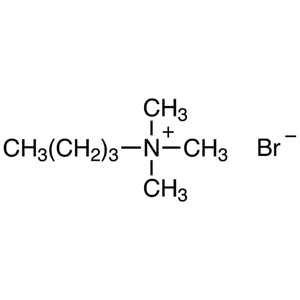
Example products in this collection: TCI S0163 57-11-4 Stearic Acid, TCI B5550 217655-07-7 2-Butyl-n-octan-1-amine, TCI O0180 112-80-1 Oleic Acid, TCI B5798 2650-51-3 Butyltrimethylammonium Bromide, TCI M0476 544-63-8 Myristic Acid, TCI B6044 3321-64-0 Butylphosphonic Acid, TCI L0050 463-40-1 Linolenic Acid, TCI C0416 107-93-7 Crotonic Acid.
Ligand selection should consider alkyl chain length, head group (carboxylate, phosphonate, or ammonium), and high purity so as not to disrupt the uniformity of size and optical properties of the resulting nanocrystals. All products are genuine Tokyo Chemical Industry (TCI) Japan products, with purity, packaging, and storage conditions listed on each item's page.
Other parallel categories under Organic Electronic Materials, often used together in one laboratory workflow:
This collection is further divided into 2 more specific groups:
Back to Organic Electronic Materials. For large-volume procurement, special packaging, or specific grades, contact the AMI Scientific team — the official TCI Japan distributor in Indonesia — to check availability and lead time directly from Japan.